A Look Inside: The Virgin Suicides
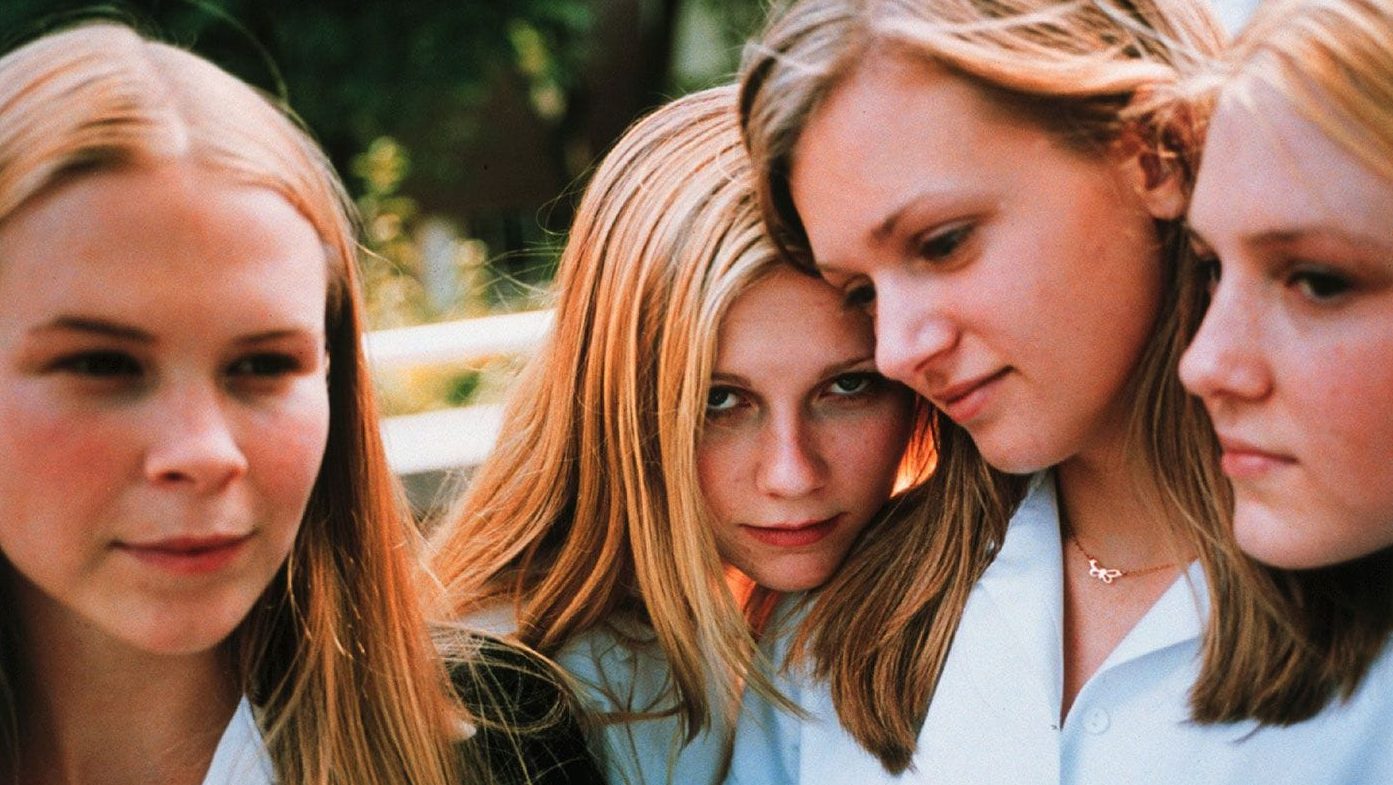
I felt it was time to look further into Sofia Coppola’s debut film, The Virgin Suicides I felt it was time to look further into Sofia Coppola’s debut film, The Virgin Suicides (1999) and how it explores the weight of societal expectations on teenage girls through the use of montage and the male gaze, particularly that of a group of adolescent boys in the neighborhood who are fascinated by the girls. The Virgin Suicides is based on an adaptation of Jeffrey Eugenides’ celebrated 1993 novel of the same name and follows the lives of five attractive teenage sisters, in an upper-middle-class suburb of Detroit during the mid-1970s. Upon watching the film for the first time, I knew this wasn’t just another teen movies of the 90s – there was something deeper and darker about this film. It looked to focus on the harsh realities of teenage girls, like depression and alienation, while not all teenage girls had such dramatic experiences there is a strong sense of relatability to the feelings and desires we watch the Lisbon sisters experience throughout the film. From the voice-over narration to the way Coppola layers in the montage of images we are left with the idea that the inner lives of teenage girls are sometimes not entirely as they seem.
Five sisters – Cecilia, Lux, Bonnie, Mary and Therese – are at the center of the film and their lives fascinate the local boys at their school in Grosse Pointe, Michigan and it is their memories of the girls that tell their story throughout the film. Even when viewed through a nostalgic prism, the Lisbon sisters’ troubled inner lives are not erased by director Sofia Coppola’s lens…the girls’ pain is even more important to the story than the boys’ overwhelming sense of curiosity. The film starts when the youngest of the girls, Cecilia (Hanna Hall), attempts suicide. Right off the bat she tells the doctor what so many other teen girls have told adults through the years about how they can’t possibly understand the experience of being a 13-year-old girl. As Cecilia reenters society she looks and feels aloof, you can see how it feels to not be heard by the adults around. An interesting point to note is that the adults try to patronize the sisters’ feelings at various points in the film, but Coppola is mindful not to chastise or belittle their feelings, however dark they get. Having been a teenage girl who struggled with depression and some dark experiences, experiences I wasn’t willing to share with hardly anyone this aspect of The Virgin Suicides made me feel that those feelings I had weren’t as uncommon as I thought. Looking back at that period in my life maybe I just wasn’t talking to the right people.
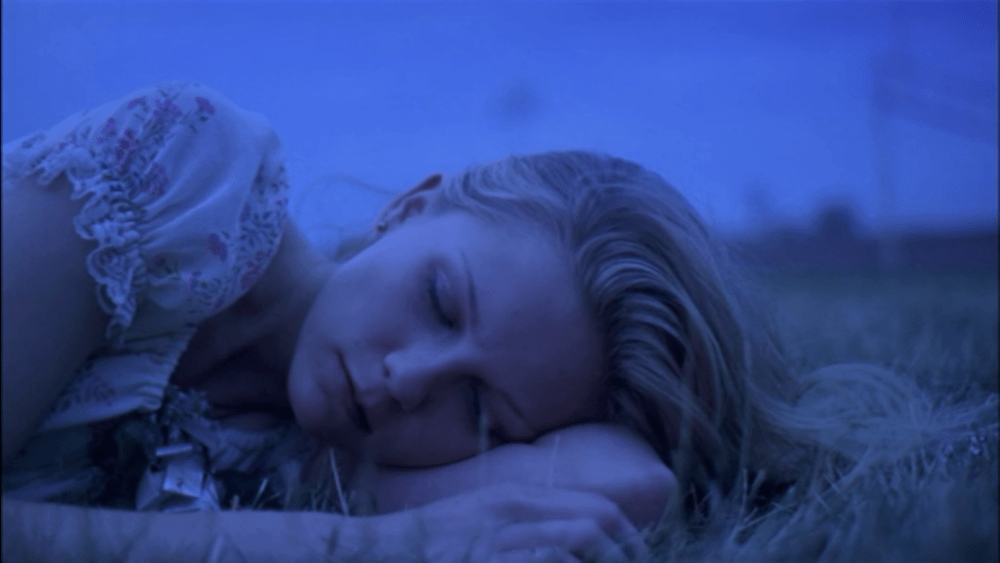
At first glance and quite honestly the first watch you might not see how the film is told from the lens of the teenage boys outside the narration, which seems odd when its a story about teenage girls. As the story slowly progresses we are shown a dreamy montage, while reading Cecilia’s diary, the boys imagine the sisters playing in a warm, sunny field, looking flirtatiously at the camera (and them). It’s so fantastical, there’s even a shot of the unicorn, yes a unicorn, neighing in the same field. The girls act like carefree spirits unbridled by sadness or loss in the sequence, which at this point in the story, is so incredibly far from the truth. After the ending of this sequence we start to understand the boys intentions with reading Cecilia’s diary, they were looking for answers about her suicide. When doing so, they skip over many pages about dying trees, overlooking something which is clearly very important to her, and skip straight to what they assumed was significant to her – boys. The dreamy passages about crushes is the stereotypical expectation of what you would find in a teenage girl’s diary and the boys impose this expectation of femininity onto Cecilia. This assumption that her suicide was influenced by a boy, alongside the montage that plays while reading her diary, allows the male gaze to impose a romanticized version of femininity onto Cecilia and therefore ignores her true personality. It is clear that in this montage, the girls seem happy and free, however, the realization that this is a presentation of the boys’ fantasies alerts us to the presence of that male gaze, making this a performance rather than natural female expression. It is important to note that nature is used in this scene to expose the male gaze and societal expectations that are put onto teenage girls as they’re discovering themselves, and how personalities are hidden in order to project fantasies and expectations onto them. This is one of the biggest aspects of the film and probably the most relatable – as a teenage girl I was always try to act as a certain way based on what I thought was expected of me and this has and will continue to impact me throughout my life.
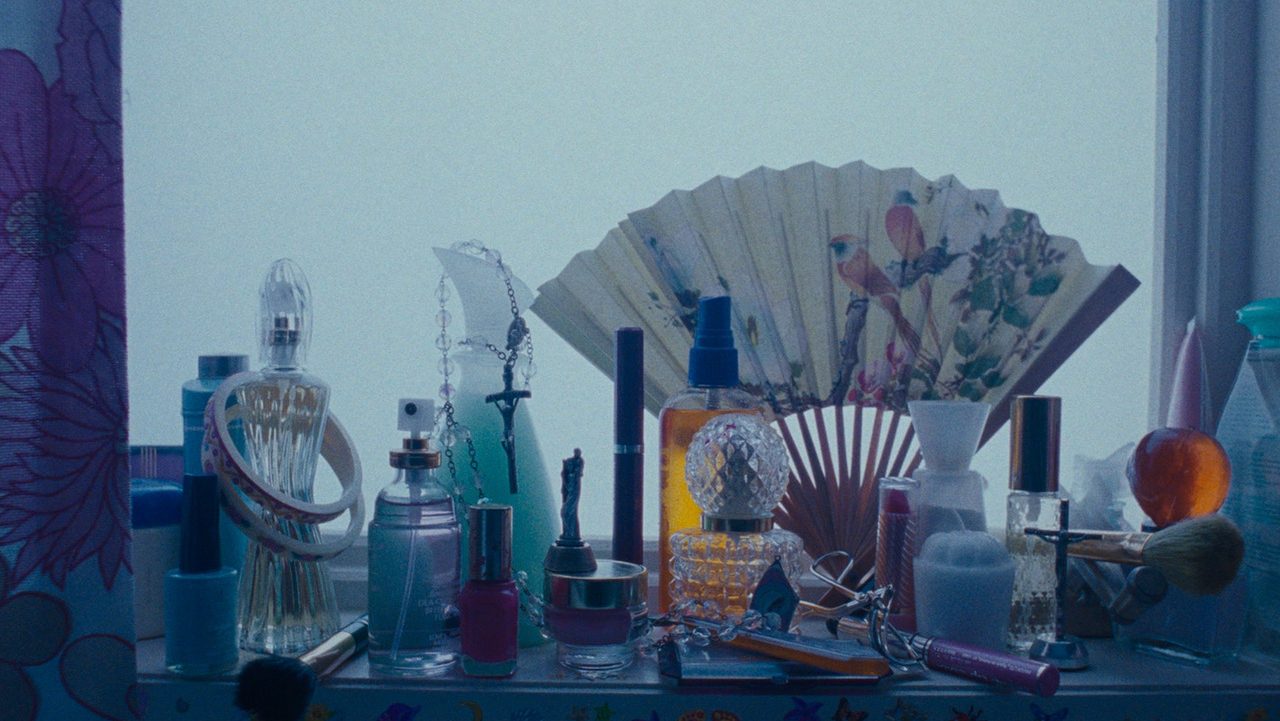
Throughout The Virgin Suicides we see the girls’ very messy bedrooms and bathroom at various points, showing off the pictures, candles, figurines, pink things, hanging tights and crosses in their space. The Lisbons are a strict, religious family and the cross is a near constant visual motif. The parents (James Woods and Kathleen Turner) try to keep their daughters away from boys as long as possible, and their repression creates unintended and extremely unfortunate consequences as the title suggestions. As the second-to-youngest Lisbon daughter, Lux, Kirsten Dunst plays one of the most difficult roles in the film (and plays her very well). Her character experiences the loss of a sister, heartbreak and from an outsider’s perspective, depression. Yet, she balances acting out with a functional calmness that allows her to slip in and out of classes on most days and continue to attract guys on most nights. Her behavior and that of her sisters are subtly varied to show a multifaceted depiction of mental illness. It could happen to anyone, and it doesn’t always look the same – as the narration mentions the girls’ acted if nothing was wrong or had happened. Their fascination grew as they kept looking for something to show what they were feeling or who they really were.
At the end of the film after the suicides, the community has a party themed around the environmental issue that is going on in the town. Coppola utilizes nature to expose negative attitudes through the party at the end of the film. The destruction of the environment is seen as an excuse to have a party; the rich families are choosing to live by an ‘ignorance is bliss’ philosophy. Which ties into the attitude the adults have implemented onto teenagers throughout the film. The gimmicks put in place for the party, such as sparkly gas masks, make a joke out of a serious issue, just as later, a party guest makes a joke about the Lisbon girl’s suicides, ‘you don’t understand me. I’m a teenager, I got problems.’ By placing the community in such a negative light, Coppola critiques societal attitudes towards real issues, placing the smooth running of family values and their rich houses over the welfare of the planet and honestly understanding teenagers. This is driven home through the final panning shot of the boys as they stand outside their house looking at the now empty Lisbon house. The camera pans to reveal various tree stumps, the corpses of the diseased trees, while the narrator talks about not being able to understand the Lisbon girls. The tree stumps surrounding the boys suggests that the answer was always right there in front of them, but instead chose to favor their idealized versions of the girls over the unpleasant truth.
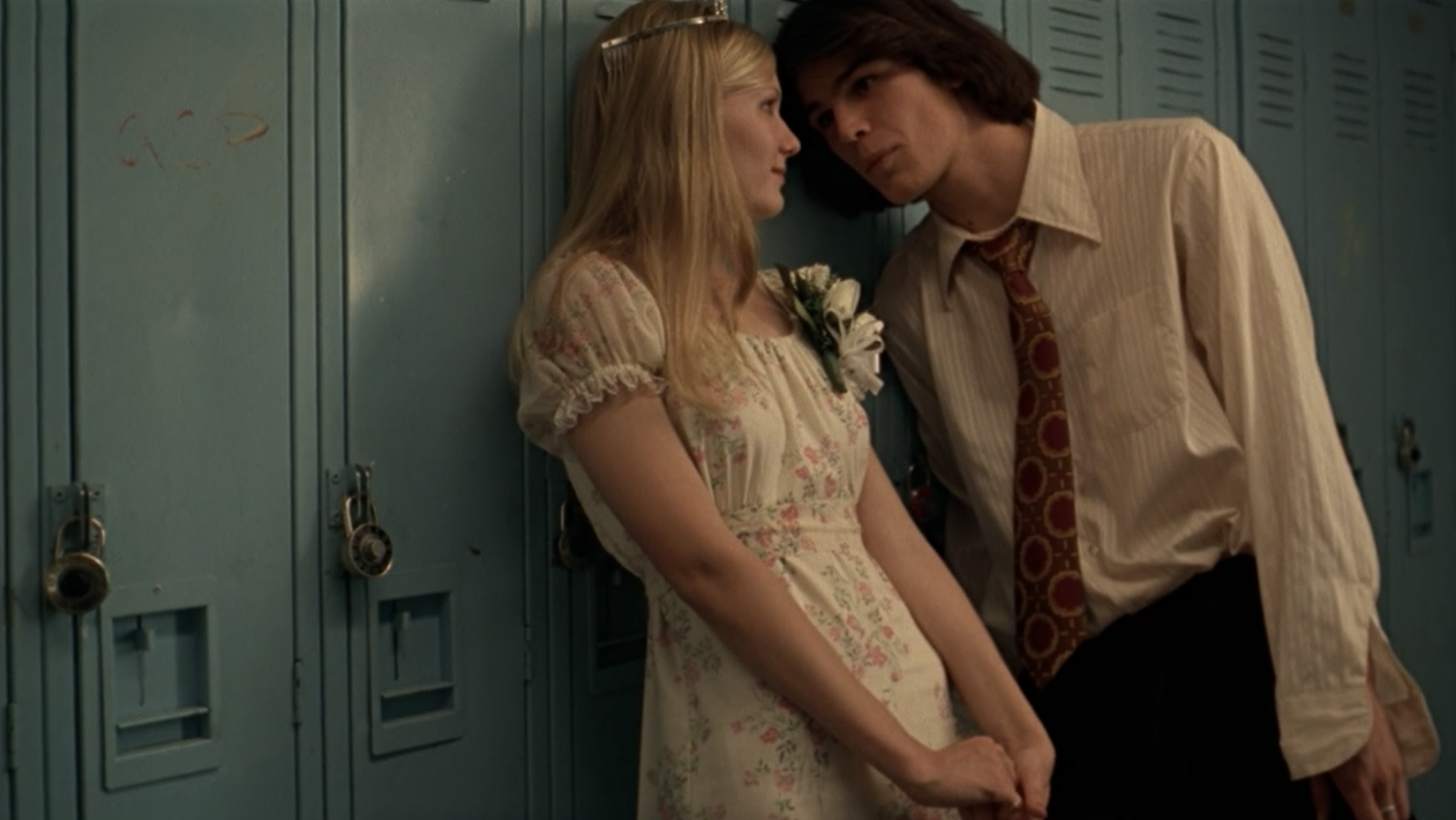
After watching you begin to ask yourself questions like is this how boys really talked about us in school? Was this how adults saw us as teenagers? We may not hear the girls’ innermost thoughts or be privy to every one of their emotions, but we get a sense from secondhand knowledge and experience. Coppola through her direction and the incredible work of Jeffrey Eugenides capture the kind of youthful loneliness many kids go through, something the Lisbon girls never had the chance to grow out of. For women watching the film, The Virgin Suicides is almost like an out-of-body experience, at least for me.
While The Virgin Suicides might contain some developmental and pacing issues, Coppola’s directional debut creates a striking and poignant image of the heart-breaking realities of being a teenage girl through imagery and subtle choice of words that really bring home her point. She artfully uses the male gaze to reflect upon the expectations that are harming young women as they discover who they are and places the blame on those who deserve it. It is films like this and so many others that are so important to society in showcasing and understanding those who we might not completely understand.
 The Fade Out: A Movie Blog