A Look Inside: Another Earth & Melancholia
“Within our lifetimes, we’ve marveled as biologists have managed to look at ever smaller and smaller things. And astronomers have looked further and further into the dark night sky, back in time and out in space. But maybe the most mysterious of all is neither the small nor the large: it’s us, up close.”
Richard Berendzen
Throughout history scientists, historians, economists and even filmmakers have studied the wide spectrum of human emotion and the effects that certain emotions have on humans. Film directors Lars von Trier and Mike Cahill projected people’s internal experiences onto the movie screen with the use of mystery and wonder of space and the discovery of a new planet in their films Another Earth (Cahill, 2011) and Melancholia (von Trier, 2011). Each film expresses the difficulties of life on Earth but approach these difficulties in different ways. The films provoke the spectator to understand how people deal with the traumatic experiences of guilt, depression, isolation and anxiety. Another Earth is based on the concept that there is another planet like Earth that “is a mirror image in every way, but it is also speculated that things have changed since the discovery of the new planet” (Blizek,8). Melancholia is about another planet in the universe closing in on Earth and how people deal with the possibility of impending doom. Although both films present the anxieties of the discovery of another planet, Another Earth presents the opportunity of promise and hope on the new Earth while Melancholia focuses on the devastation of life on Earth and the negative qualities it holds.
The Discovery of Another Earth
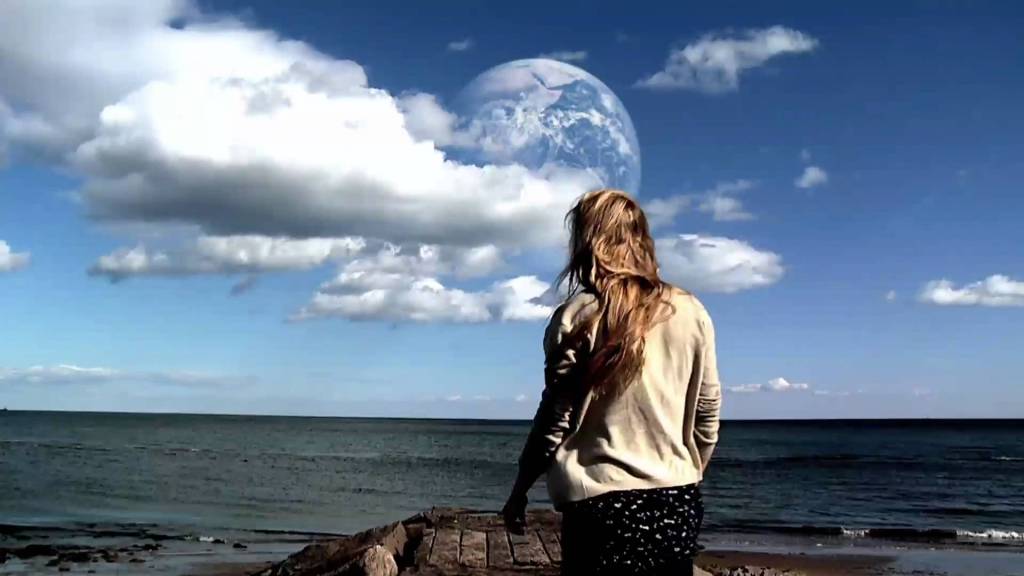
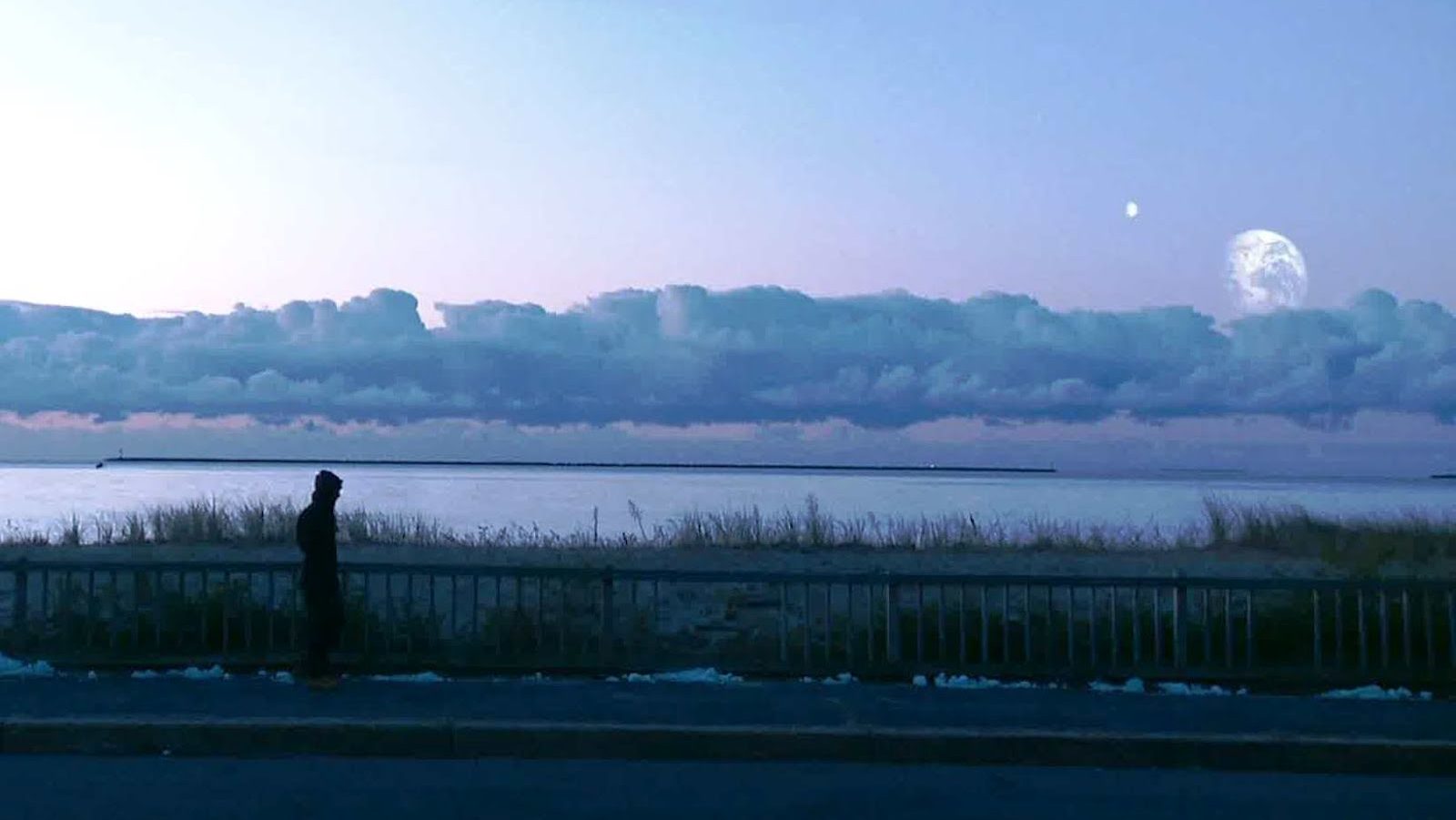
Mike Cahill’s Another Earth looks into the life of someone searching for redemption and a second chance at a better life. The film follows Rhoda Williams (Brit Marling), who managed to change her whole life within one night of partying. After getting accepted into the astrophysics program at MIT Rhoda indulges in a celebration and on her way home in a drunken state she is amazed at the newly discovered duplicate Earth. In the midst of her amazement she crashes head-on into another car killing a boy and his pregnant mother while the father survives but remains in a coma. Since she is a minor she only receives four years in prison and upon being released from prison it is noticeable that she has changed. The horrible crime has left her crippled by guilt and feels that she is fit for nothing but cleaning toilets and isolates herself. Upon visiting the spot where the accident took place she notices a man placing flowers on a light pole. A radio broadcast plays in the background stating that it has been exactly four years since the night Earth 2 was discovered. Rhoda realizes that it is the man whose wife and child she killed. At this point Earth 2 looms in the sky both at night and during the day; which represents Rhoda’s unsettling mind looking for forgiveness.
She visits the home of the man who she found out is a former Yale music professor named John Burroughs (William Mapother). Rhoda looks through the window and sees that the house is in disarray and John looks beyond depressed. She ultimately regrets going to see him and attempts suicide by undressing and lying in a field of snow. This scene is also intercut with images of Earth 2 in the night sky as a sign of redemption. After being saved, she writes her essay to win a trip to the “new Earth” stating that being a felon makes her an unlikely candidate for most things but maybe not this situation. Once again she attempts to apologize to John for the pain and suffering she caused but instead she backs down and states she is a part of a cleaning service. This odd encounter is the formation of a relationship between the two.

The first few meetings involve silence, awkward moments and cleaning but as Rhoda and John progress so does their relationship. In the midst of this bonding, Rhoda returns home one evening to find her family watching a TV broadcast where a scientist is attempting to make contact with Earth 2. In these moments, there is the discovery that Earth 2 is the exact same and there are duplicates of them living on the planet. This discovery continues to bring Rhoda and John closer and their relationship becomes more than just cleaning, she begins making him food and making sure he takes his medication. Just as the two seem to be in perfect harmony, Rhoda informs John that she entered in the contest to visit Earth 2. Oddly, this angers him and he refers Plato’s Allegory of the Cave and states “humans are not ready to find out what is out there.” He tells Rhoda to get out and she returns home. After a few days he goes to apologize to her and he finally opens up completely. They return to his house and begin making love, afterwards he tells her about his wife and son being killed. John tells her that he is so angry and afraid of what he might do to the kid if he ever found out who it was. On the train ride home she is so ashamed and guilty she ends up throwing up.
Finally, news about the essay contest is released and Rhoda is the winner and she will have the opportunity to be the first one to visit Earth 2. She goes to John’s house to tell him about winning but his excitement for her seems forced. After a pleasant dinner he tells her not to go because they are so close to something. Rhoda begins to panic and tells him that they cannot be together, he asks why so she begins to tell him a story. Halfway through the story John realizes Rhoda is the “kid” who killed his family. He yells at her to get out before he could do something to hurt her. Heartbroken she returns home to media outside her door asking how she “a felon” got the ticket to Earth 2. Later that night when she cannot sleep she watches a TV broadcast of a scientist stating a theory that the moment Earth 2 discovered their planet the synchronization between the planets was broken meaning that maybe her other self did not make the same mistakes she did and maybe John’s wife and son are still alive. Rhoda returns to his house and tells him about the theory and leaves her ticket for him on the table. It seems as if a few months have passed and it is the day John will make his trip to Earth 2 and upon returning home Rhoda encounters her better self standing in her backyard.
Melancholy- A State of Depression
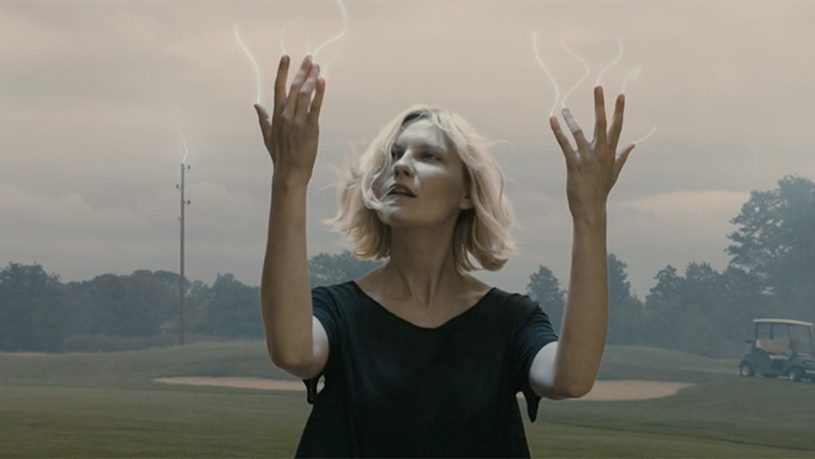
Lars von Trier’s Melancholia reveals the pressures and emotions experienced in the human psyche when disaster is looming. The filmis broken up into two parts, the first focuses on the extravagant wedding reception of Justine (Kirsten Dunst), who is an advertising copywriter and the second half explores the life of Claire (Charlotte Gainsbourg), who is Justine’s sister. The beginning of the film, after an eight-minute prologue, starts off in a quite pleasant manner. Justine and her new husband, Michael (Alexander Skarsgard), are on their way to the reception thrown by her sister and her husband, John (Kiefer Sutherland). After arriving two hours late to their own wedding reception, the two proceed inside but Justine stops and looks into the sky asking John, who is a scientist, what is the name of the red star that is shinning very brightly. He replies that it is called Antares, which is the main star in the Scorpio constellation. Justine continues to look for the star on several different occasions throughout the film. As they begin to walk inside, Justine once again stops and states they need to go to the stables first to see Abraham, her horse. The four finally enter the dinning area, where Justine and Michael greet everyone.
The first to give a toast is Justine’s boss and ironically the best man, Jack (Stellan Skarsgard). After that speech Justine and Claire’s parents proceed to embarrass themselves as well as their daughters. The wedding reception continues and events unravel showing the instability of Justine, the dysfunctional family and the true colors of people around her. As Justine’s depression worsens she tries to find comfort in her mother and father who just disregard what she has to say and ignore her obvious condition. She then goes to Michael and they go upstairs to their room. Michael, of course being the normal newlywed wants to make love to his new wife but Justine is distant and unmoved by his advances and leaves the room. By the end of the evening Jack leaves in anger and Michael is unable to continue on with Justine and leaves. The next morning she is in deep depression but Claire suggests they go for a horseback ride. The two gallop across the trails that go through the beautiful gold course until Abraham suddenly stops at the foot of a bridge. At this point of the trail there is a break in the tree line and Justine looks up once again and states that the red star, Antares is missing from Scorpio. The film then cuts to black and part two begins.

The second half of the film focuses on the life of Claire, sometime after Justine’s failed wedding and reception. It opens with Claire fixing up one of the many rooms in their home and John walks in saying “your sister is on the phone.” She calmly talks to her but still treats her like a child. At this point it is obvious that Justine is returning from being away due to her condition and Claire is suppose to take care of her. As John goes to leave the room he asks if she has been on the Internet, his tone of voice makes it seem like a forbidden activity. Claire says yes and that she is afraid the planet will hit Earth. John being the scientist tells her to trust the real scientists when they say that Melancholia will pass by Earth in five days. Justine finally arrives but she is even in a worse state of melancholia but Claire does her best to make it better and makes meat loaf for her. At dinner Justine is finally able to function but upon the first bit she says it tastes like ashes and breaks down. She is escorted back upstairs and Leo (Cameron Spurr), Claire’s son, follows her with the laptop and tells her about Melancholia. Claire tells him not to worry her with that nonsense but Justine, who has remained somewhat catatonic, replies with “if you think I am afraid of a planet, you’re stupid.” Day by day Melancholia gets bigger and hints closer and closer to Earth and this continually worries Claire. The night before the planet is suppose to pass by she secretly searches the Internet and discovers a theory called “dance of death.” It is a theory that states Melancholia will circle around Earth before colliding with it. This only feeds Claire’s anxiety and the next morning she confines in Justine, who has moved away from her deep depression but remains very apathetic. The conservation only worries Claire more and she is horrified how calm and harsh Justine is about life on Earth and how no one will miss it.
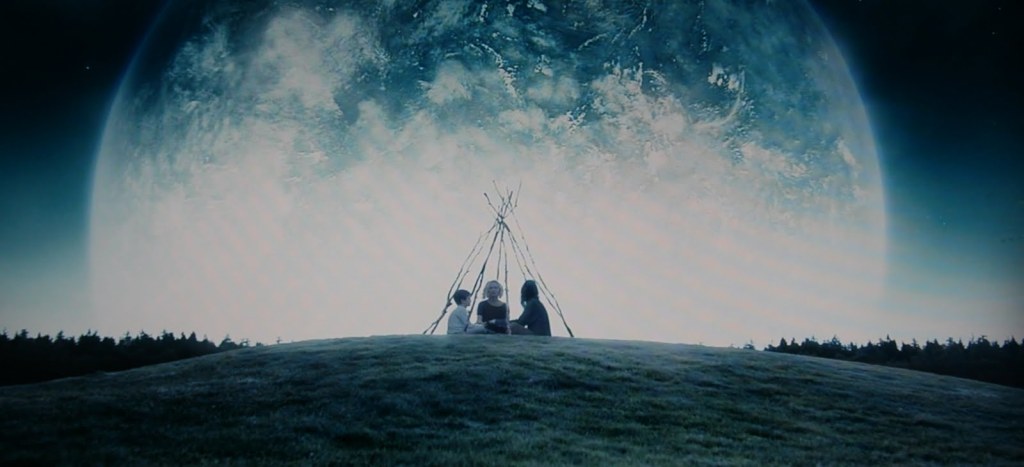
That night Melancholia passes through the night sky and Claire’s anxiety about the planet colliding with Earth settles down. The following morning Claire’s attitude has completely changed, she is happy and content, however John is not he is flustered and confused as he looks through the telescope and writes down calculations. Claire falls asleep on a chair outside and when she wakes up John has disappeared. Still a little paranoid she uses the instrument her son made to see if Melancholia is really moving away. To her amazement it is moving closer and she begins to panic. In the stables she finds John, who killed himself with pills she had bought just in case Melancholia was going to hit. Her hysteria increases while Justine and Leo remain calm. Justine takes Leo outside to talk to him about how he is feeling and she tells him that the “magic cave” will save them, in order to keep him calm. After the two build a teepee out of just sticks, Claire joins them under the teepee. The three of them hold hands and Justine tells Leo to close his eyes. Claire is crying and very hysterical while Justine looks like she is at peace. The last shot is Melancholia crashing into Earth and destroying everything.
Similarities, Differences and Insights
There are many similarities and differences that can be drawn from both of these films. A major difference between the films would be how they display the parallel between the new planet and the emotions of humans on Earth. The new Earth in Another Earth is a metaphor for hope, promise and second chances not only for Rhoda but for John as well.The planet, Melancholia in von Trier’s film is a metaphor for devastation and the disappointment life holds. It is quite obvious that these films wanted to represent different views of life on Earth. In Another Earth the planet hangs in the sky as a place of enhancement while in Melancholia it is seen as a threat. There are small aspects of each film that exemplifies these ideas.
Even though there are looming shadows of isolation and depression in Another Earth, there are qualities of hope and second chances that shine through. These shadows of isolation and depression reside in Rhoda as well as John. Both characters must endure moral and emotional recovery from trauma and the planet places hope for the future but they both remain focused on the past. Rhoda is desperately trying to “find redemption for the bad thing she has done” (Blizek, 8). John is just trying to hold his life together after losing everything. Earth 2 also provides a connection between them because the night it was discovered was the night of the accident. They also connect once again when scientists discover that Earth 2 is a mirror image of their Earth. This helps the two connect while they view the planet in his telescope. This moment poses an immediate bond between John and Rhoda and Earth 2 is at the center of it. In the first half of the film John is very uninterested in the planet while Rhoda constantly looks at it for a sign of hope. Her desire to go to the new planet is vital because it represents repair and the possibility of escape from her pain and guilt. Ultimately, she finds peace in giving up her ticket in hopes that John can have to opportunity to see his wife and son again. The ending of the film is quite ambiguous but it seems as if Rhoda’s other self made better decisions than she did which gives her the opportunity of a second chance.
While Another Earth has a combination of good and bad qualities of life, Melancholia is mostly all bad. From start to finish the film shows how evil life on Earth is and the disaster that it faces. The evilness presented in Melancholia is really just the negative qualities life holds such as the conniving businessman, the egotistical and cowardice scientist, the dysfunctional family and how people look down on depression. Jack, Justine’s boss, is the conniving businessman that won’t leave Justine alone on her wedding day. He does everything in his power to try and get the tagline for a new campaign out of her by the end of the evening. This adds to her already deteriorating state of mind until she finally gives her a piece of her mind claiming that she hates him and his firm. Jack is the ideal archetype of the conniving businessman that won’t stop until he gets what he wants. John on the other hand is the egotistical and cowardice scientist. These words might conflict with each other but they perfectly describe his character. He is the scientist who whole-heartedly believes that science will win out in the end no matter what. His confidence in science and the work they do actually fails and once he discovers this he selfishly kills himself without even thinking about his family. He is such a coward he even hides in the stables when he does it.
The dysfunctional family is represented in both parts of the film, the most obvious is the lack of connection between Justine and Claire as well as the nonsensical, drunk father and the bitter, angry mother. Both parents ignore Justine when she tries to communicate to them how she is feeling. Her father is preoccupied with the two young ladies he met sitting at his table instead of his own daughter on her wedding day. She tries to confine in him multiple times but his mind is elsewhere and just tells her she looks so happy. Justine’s mother is old and bitter and is very much against marriage and even says so in her speech at the reception dinner. When Justine goes to talk to her, her mother just explains that she made the wrong choice and she should get out will she still can instead of truly listening to what she is saying. The dysfunction of the family really lies in the lack of connection between Justine and Claire. There is absolutely no relationship between the two sisters except in the fact that Claire takes care of Justine. Claire constantly treats her like a child, although at times it is called for, but yet protects her when John states that she is a bad influence on her and Leo. Justine, on the other hand, has no connection or sympathy for Claire especially when Claire tries to confide in her about the impending planet. This idea of the dysfunctional family is also present in Another Earth. Rhoda has no connection with her family after the accident and wishes to isolate herself from them. At the end of the film she does not even tell them she won the ticket to Earth 2, they find out via the news. There is no bonding between the family except during a dinner scene where her brother gets accepted into college but Rhoda still remains the outsider. Compared to the one final moment of bonding between Justine and Claire as they embrace each other as the planet impacts Earth. All of these negative qualities within life on Earth only reinforce Justine’s view that no one will mourn for Earth when it is gone.
The whole concept of melancholia is extremely important to Justine’s statement about life being evil and that it should not be missed. Melancholia is “a mental disorder characterized by depression, apathy and withdrawal” (dictionary). Throughout the first half of the film her melancholy attitude is seen as something that should be hidden from the guests and even her new husband. Unlike Rhoda in Another Earth, Justine wants to be normal and tries really hard to make her new life work but the bad feeling overtakes her. Rhoda has no desire to be normal and wishes to isolate herself and be depressed. Also like Rhoda, “Justine’s depression enjoys the ultimate [comparison]- her inner blackness is mirrored by an approaching rogue planet” (MacCabe, 63). Both women are representations and projections of the newly discovered planets. Ironically, the planet in Melancholia is named after the mental disorder which clouds Justine’s life. This state of severe depression is nothing new to director Lars von Trier who based the film off of his own experience with it.
Kristen Dunst’s character is the perfect archetype for the depressive, sick human being that actually is more rational than the sane, normal human being. In an interview, von Trier stated, “the film is based on psychologists’ findings that in a crisis like the one in the film, a melancholic person would act in a more practical manner, because they have been there before” (Feinsten, 2). Throughout the film Justine is the sick one but at the end Claire becomes the sick one and can’t cope with the reality while Justine accepts it. The two sisters are complete opposites and the end of the film emphasizes how a melancholy person and a sane person would handle the Apocalypse. Melancholics like Justine are ready for disaster because they know everything is going to hell and “the scene playing out around her is already overshadowed by what she is long accustomed to, so for her there is no struggle” (Pinter, 3). Claire represents the sane, normal human being that panics because she has something to lose, which is her family. At the threshold of the Apocalypse she “is the defenseless one who has always been shielded from reality by mere illusions” (Pinter, 3). Claire has remained accustom to the ideal lifestyle of family, friends and being a motherly figure for her sister who desperately needs it. She is the all-controlling sister that frantically tries to fix the situation (the end of the world) and becomes more and more desperate each scene while Justine is able to peacefully accept the circumstances of life on Earth.
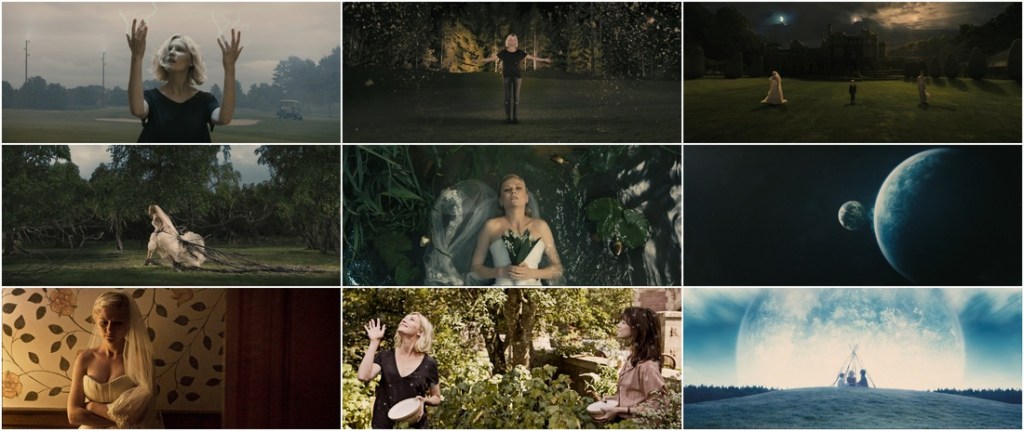
The opening and ending scenes demonstrate how Another Earth presents the opportunity of hope and second chances, while Melancholia focuses on destruction. Although the impressionistic opening scene in Another Earth is just a montage of images of Rhoda, John and his family and a shot of the planet Saturn it is very telling. Rhoda’s first lines in the film speak of how she became so interested in astronomy and astrophysics. She says that once the image of Saturn was shown in rapid succession the planet came to life. This idea of coming to life is important throughout the whole film. However, compared to the eight-minute prologue in Melancholia, Another Earth falls short on extravagance. There are a total of sixteen different images in the prologue and each one represents a theme that exists in the film. Unlike Another Earth where there is narration in the introduction, Melancholia uses Richard Wagner’s musical score and artistic and cinematic representations. Von Trier uses a variety of paintings and literary references that are intertwined with a vantage point shot of Melancholia moving in on Earth. The most famous image in the prologue is Peter Bruegel’s “Hunters in the Snow” which is seen twice in the film. This painting is also displayed in Andrei Tarkovsky’s Solaris. “The play on Solaris prepares [the viewer] to recognize that the soul and planet Earth are stand-ins for each other” (Pinter, 1). Ironically enough, Solaris is about another sort of parallel Earth, like in Mike Cahill’s film. Another important difference between the films is how they end which affirms hope and opportunity in Another Earth and death and destruction in Melancholia. Rhoda supposedly encounters a better self; which leaves the viewer believing that maybe the other Rhoda did not make the same mistakes she did. Her overall appearance is far more sophisticated than the janitor’s uniform Rhoda is wearing throughout most of the film. This is however not the case in Melancholia where the ending is not ambiguous and does not leave the viewer hopeful. From the beginning of the film von Trier made it obvious that the world was going to end in order to keep the viewer out of suspense. Both opening and endings scenes are thought-provoking elements that are heavily emphasized by cinematic techniques.
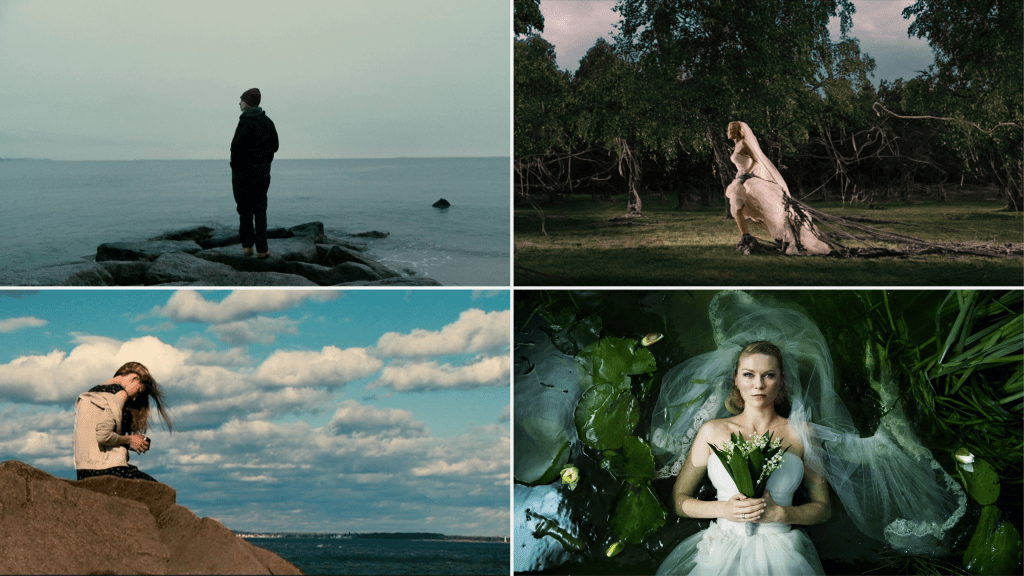
The cinematic elements of the films are comparable factors. Another Earth and Melancholia are both filmed using handheld cameras. Overall, this played to the films’ advantage because it gave a more authentic feel. There are some shots in Melancholia that do not use a handheld camera but most of the film it is used. The musical scores are stunning and play throughout the films during important moments that relate to the new planet. In Another Earth the score is associated with Rhoda and how Earth 2 is a reflection on the infinite possible variations that a human life can take. In Melancholia the score is associated with both Claire and Justine and how their Earth is “ruthlessly thrown into the universe with no chance of escape” (Pinter, 2). There is also a sharp contrast between colors in the films. Another Earth focuses heavily on blue and Melancholia uses a lot of grey, black and dark blue. The use of color goes back to how each film chooses to represent the new planet. The blue that is seen throughout Another Earth is vibrant and is beautifully accentuated by Brit Marling’s bright blue eyes. The blue represents the opportunity of hope and promise, while in Melancholia the grey, black and dark blue colors represent death and depression. In one scene in particular, Justine is being literally confined by a dark grey yarn that is slowing her down. This is one of the sixteen images Lars von Trier put in the eight-minute prologue. The overall film is much darker than Another Earth and the colors help emphasize the director’s point.
Cognitive Psychology
The display of the wide spectrum of human emotions paralleled with another planet is an aesthetically pleasing metaphor that Another Earth and Melancholia hold. The cognitive psychology behind the films plays a huge role in the development of the story as well as the characters. According to the American Psychological Association, cognitive psychology is “the study of higher mental processes such as attention, language use, memory, perception, problem solving and thinking” (Zimbardo). The cognitive psychology that helps develop the story lies in the cognition and the affect divisions of psychology. Both films “acknowledge the importance of affect, or emotion, as well as cognition” or mental processes (Plantinga, 10). Each division contrasts the other and this is seen in Another Earth and Melancholia. In Another Earth cognitive lies in how Rhoda and John understand Earth 2 and the affective (affect) lies in how they understand Earth 2 via emotions and feelings. The same goes for Melancholia where the cognitive lies in how Claire and Justine, more so, know the world they live in and the affective lies in how they understand their world via emotions and feelings. Both films heavily emphasize the wide spectrum of human emotion but “emotions are highly complex involving (1) an internal physiological disturbance, (2) outward manifestations of behavior, (3) the environmental situation, and (4) the individual’s perception or understanding of the situation” (Plantinga, 17). All four characters are controlled by their emotions based on these four qualities that make up the concept.
Justine’s depression is best described in the cognitive approach to psychology. “Cognitive psychology explains depression as threefold in cause: it comes from a more realistic view of the world, of [themselves], and of the future, than that of the average person” (Pinter, 2). Depressives are able to see past the illusions of reality and therefore do not fear death. Justine is the perfect character in terms of cognitive psychology while Rhoda and John only show glimpses of these qualities. Rhoda is able to have a more realistic view because of the crippling guilt she suffers but as the film progress her state of depression diminishes and the illusions of reality begin to cloud her mind. This is not as a bad thing, especially in the cause of Another Earth because the film ends in a hopeful manner. Von Trier wanted Melancholia to show that severe depression is not a terrible quality and that sometimes people in these states are protected from the overwhelming disappointment of reality.
A Touch of Science
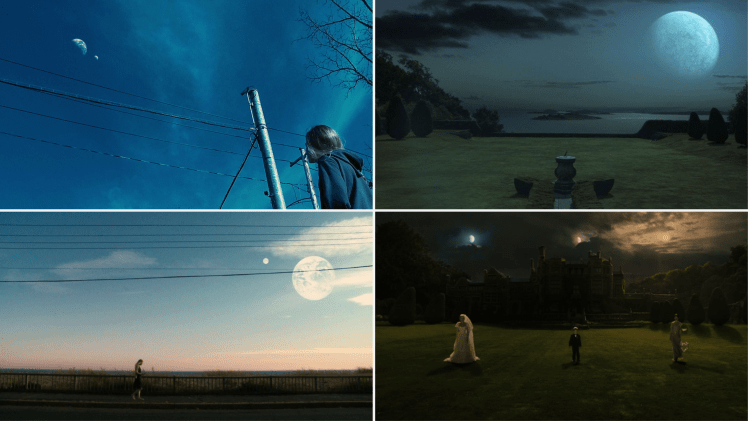
Although the films focus heavily on the psychological elements, there is a touch of science involved in the films that should not be overlooked. Mike Cahill and Brit Marling, the writers for Another Earth took extreme lengths to get some scientific and philosophical questions answered. They approached the director of NASA’s Space Grant Consortium, Richard Berendzen, with these questions in order to start forming the script for the film. In an interview Mr. Berendzen states, “the physics of string theory can lead to quantum-mechanical models in which parallel universes arise” meaning that there could be an existing parallel universe that, in theory, could contain another Earth (Hoffman, 2). The whole idea of a parallel universe is something that will be discussed many years from now but Mike Cahill and Brit Marling present this possibility in their film to contrast science and emotion. Outside the realm of astrophysics the “film raises questions about the human condition, such as how [does one] apologize for the unforgivable?” (Hoffman, 2). This question lies more in the domain of philosophy and maybe even psychology. Although von Trier had no intention of representing astrophysics realistically, the film is based on the proposed theory of planetary collision; which scientists and astronomers have hypothesized for many years (Lovett). The overall science in the films is not the most important theme, but it is represented a specific way. It is presented in the films to express that sometimes phenomena cannot always be answered or solved by science. Sometimes situations, emotions and certain circumstances are beyond that of science and lie within the realm of philosophy, reality and human psychology.
Conclusion
Both Another Earth and Melancholia exemplify the projection of human emotions into the elements of outer space as well as the anxieties experienced with the discovery of these planets. “Von Trier’s provocative films are themselves the result of a philosophy of creativity that emphasizes provocation, or, rather, self-provocation” and Melancholia is no exception (Hjort, 2). Both films provoke the viewer to ask questions about life and death and all the in-between. Another Earth leaves the viewer wondering how to forgive the unforgivable, while Melancholia makes the viewer wonder how they would handle a situation like that. But maybe these aren’t the real questions that one should ask at the end of the films, maybe it is like what Richard Berendzen said “the most mysterious of all is neither the small nor the large: it’s us, up close.” Maybe Another Earth and Melancholia want to provoke the viewer to think more internally about life and death, rather than externally.
Works Cited:
Blizek, William L., Michele Desmarais, and Rubina Ramji. “Report From Sundance 2011: Religion in Independent Film.” Journal of Religion & Film 15.1 (2011): 1-34. Film &Television Literature Index. Web. 1 May 2012.
Hjot, Mette. “The Problem with Provocation: On Lars von Trier, Enfant Terrible of Danish Art Film.” Kinema 36 (2011): 5-29. Film & Television Literature Index. 2 May 2012.
Hoffman, Jascha. “Q&A: The Sci-fi Adviser” Nature 475.7356 (2011): 295. Academic Search Premier. Web. 1 May 2012.
“Lars Von Trier: “I Will Never Do a Press Conference Again.”” Interview by Howard Feinstein. IndieWire. 20 May 2011. Web. <http://www.indiewire.com/article/interview_lars_von_trier_i_will_never_do_a_press_conference_again#>.
Lovett, Richard. “Evidence of Huge Planetary Collision Found.” National Geographic. National Geographic Society, 10 Jan. 2008. Web. 01 May 2012. <http://news.nationalgeographic.com/news/2008/01/080110-worlds-collide.html>.
MacCabe, Colin. “Riviera Eschatology.” Film Quarterly 65.1 (2011): 63-65. Academic Search Premier. Web. 1 May 2012.
Plantinga, Carl. “Affect, Cognition and the Power of Movies.” Post Script 13.1 (1993): 10-29. Film & Television Literature Index. Web. 2 May 2012.
Pinter, Judit. “The Lonely Planet: Lars Von Trier’s Melancholia.” Rev. of Movies. Senses of Cinema 61 (2011). Senses of Cinema. Web.
Zimbardo, Richard J. “Glossary of Psychological Terms.” Glossary of Psychological Terms. Allyn and Bacon, 2002. Web. 01 May 2012. <http://www.apa.org/research/action/glossary.aspx>.
Definition: <http://medical-dictionary.thefreedictionary.com/melancholia>.
Quote: http://www.imdb.com/title/tt1549572/quotes
 The Fade Out: A Movie Blog