
A Look Inside the Films of Wes Anderson
Today we celebrate one of my all-time favorite directors and in my opinion one of the most unique directors of the 21st Century, Wes Anderson. Born on this day back in 1969 in Houston, Texas, Wes Anderson is known for his use of symmetry, eccentricity and distinctive visual and narrative styles, and he is cited by some critics as a modern-day example of the auteur. Anderson’s strength for the purposes of this post lies in both the filmography and the aesthetic quality (and consistency) in his work. He is one of cinema’s great masters of mise-en-scène—production design and décor and it is important to note that he’s a world-creator like David Lynch, Terrence Malick and Tarantino—he’s easily parodied because he’s so stylized and consistent like these auteurs. He has a style—and it’s an impressive one!
Stylistic Innovations & Traits
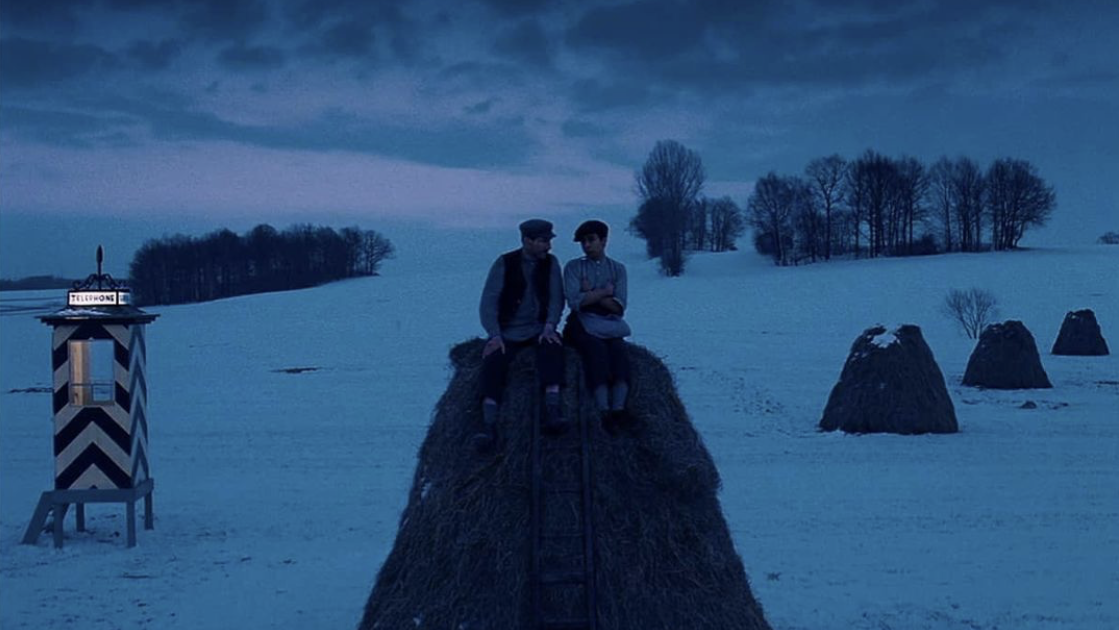
Anderson is one of the true masters of mise-en-scène and production design in the history of film. He creates a world through film style: characters act and dress (from yellow jump suits in Bottle Rocket to the baby blue in Life Aquatic and purple in Grand Budapest) differently in Anderson’s world. Even those who aren’t fans of his films and eccentricities have to marvel at his craftsmanship, colorful compositions and meticulous attention to detail (both in narrative and visuals). He’s not just about mise-en-scène though, his early films all end with great slow-motion sequences to rock music cues —the slow-motion of Gwyneth Paltrow getting off the bus is pure Scorsese brilliance. The editing of the suicide attempt in The Royal Tenenbaums and the helicopter crash in Life Aquatic are marvelous sequences. I was also blown away by the rolling tracking shots in both The Darjeeling Limited and Moonrise Kingdom that reminded me of moving paintings. Similar to Edgar Wright, the whip pans have become a trademark for Anderson and his 1-2 zoom shots per film have proven to be ever so effective.

Anderson has been noted for extensive use of flat space camera moves, obsessively symmetrical compositions, snap-zooms, slow-motion walking shots, a deliberately limited color palette, and hand-made art direction often utilizing miniatures. These stylistic choices give his films a highly distinctive quality that has provoked much discussion, critical study and even parody. It has been noted by many writers, critics, and even Anderson himself that this gives his films the feel of being self-contained worlds, which only adds to the uniqueness of his style. Since The Life Aquatic with Steve Zissou (2004), Anderson has relied more heavily on stop motion animation and miniatures, even making entire features with stop motion animation such as Fantastic Mr. Fox (2009) and Isle of Dogs (2018). Outside of the use of stop motion animation there are a number of other traits present in a majority of his films including:
- Symmetry
- Art Nouveau Color Palette
- Unique Production Design
- Overhead Shot / Framing
- Central Framing
- Long Horizontal Tracking Shots
- POV Shot
- Slow-Motion Shot / Climax
- Handwritten Notes

Wes Anderson Common Themes
Anderson has chosen to direct mostly fast-paced comedies marked by more serious or melancholic elements, which is one of the things I love about his films because I am not the biggest fan of the traditional comedy. His films have been noted for being unusually character-driven, which is also another one of the things I truly love about his style. The plots of his films often feature thefts and unexpected disappearances, with a tendency to borrow liberally from the heist/crime genre. Anderson themes often center on:
- Grief
- Loss of Innocence
- Dysfunctional Families
- Adults Acting Like Children
- Parental Abandonment
- Disconnected Father Figures
- Sibling Rivalry
- Unlikely Friendships / Reliable Friendships
Most Underrated Film
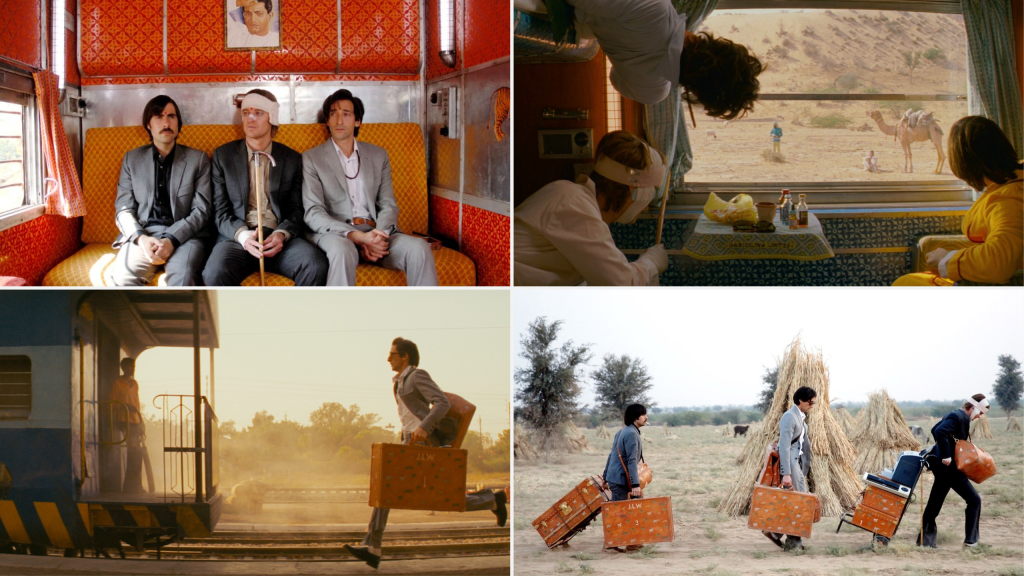
As I working through my posts I like to do a lot of research on the subject at hand and this was no exception. Upon researching I noticed the mass amount of negative reviews for his 2007 film The Darjeeling Limited. I was shocked! I feel this film is a hidden gem and deserves more appreciation than it gets. Those who gave the film a poor review (and there are many) are deaf to the onslaught of beautiful film visual style- this film is filled with it! Even if it doesn’t “gel” for them (which is a cop-out) the visual ambition alone makes for a very compiling film. There are so many stylistic elements vital to the Wes Anderson style and that should not go unnoticed from the music to the laminated itinerary, father issues, camaraderie… Anderson’s auteuristic traits. The film’s mise-en-scène and décor are exploding in colors! From the gorgeous teal to yellow and green—and Wes is rolling the tracking shots back and forth in the carts with gorgeous wallpaper in all of it. But I will admit that these are tougher characters to get behind than some of his better work so I think this was a hold-up for a lot of people but regardless I still think this film is HIGHLY underrated and deserves a little more recognition.
Ranking All 9 Wes Anderson Films
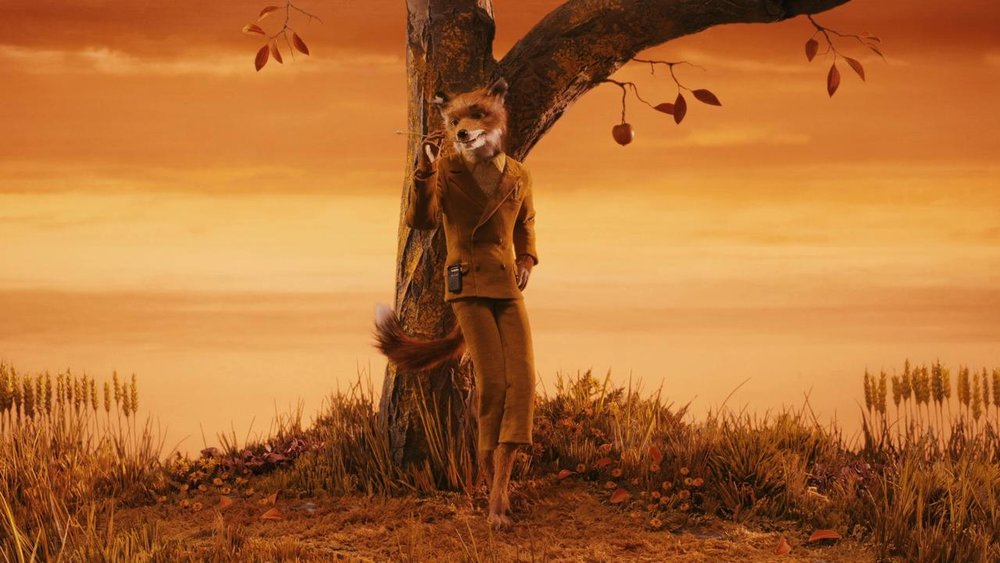
Let’s first note that NONE of his films are bad, I absolutely love all of them but I just happen to love some more than others. My first experience of a Wes Anderson film was Fantastic Mr. Fox back in college, I had bought it at a closing out sale at Blockbuster. Later that night watching the film, I was in love – from the stop-motion animation to the amazingly witty Mr. Fox, it was brilliant. From there I watched The Royal Tenenbaums and The Darjeeling Limited and loved them both. As a person that holds on to nostalgia, my ranking is very reflective of that.
9. Bottle Rocket (1996)

8. The Life Aquatic with Steve Zissou (2004)

7. Rushmore (1998)

6. Isle of Dogs (2018)

5. The Darjeeling Limited (2007)

4. The Royal Tenenbaums (2001)

3. Moonrise Kingdom (2012)

2. The Grand Budapest Hotel (2014)

1. Fantastic Mr. Fox (2009)
 The Fade Out: A Movie Blog