
A Look Inside the Films of Quentin Tarantino
Today we celebrate one of the best directors of the 21st Century, Quentin Tarantino. While he isn’t one of my favorite directors, Tarantino clearly has some auteur director influences but he is also heavily influenced by exploitation cinema such as Brian De Palma, Martin Scorsese, John Woo, and notably Jean-Luc Godard (although I’ve read he disputes that). Despite his influences Tarantino creates this post-modern, violent film world that is entirely his own and beyond unique. His influences might be mostly B-cinema but he is clearly a maker of super-produced films who not only is one of the most accomplished writers in the history of cinema but a masterful craftsman behind the camera as well and we haven’t even addressed his brilliant work on non-linear narratives. Needless to say he has done a lot for the film industry and that should not go unnoticed. Let’s dive into his stylistic innovations & traits next!
Stylistic Innovations & Traits
For me his dialogue is unmistakable but he is mostly known for his use of violence. Also it is important to note that most of his work manipulates the linear narrative structure beautifully and now his recent films have been tackling and rewriting tragic points in history. You can tell he is a writer first as about 75% of his films are dialogue and there is such a focus on conversation, sometimes appearing to be about nothing. He is a creator of a rich mise-en-scene and a sharp editor, especially with action sequences, along with his narrative editing supremacy and his gorgeous tracking shots throughout his films. Like most directors there is repetition in his work but in my opinion more obviously so than say a writer/director like Woody Allen. These traits include but are by no means all – the trunk shot, the God’s Eye POV, there’s the 360-shots from Brian De Palma, the doorway shots, chapter breaks with title cards, music usually from the 60s & 70s and much much more. Here are some of the more noticeable traits:
The Use of Black and White
Tarantino has had black and white sequences in only two of his films with them appearing in Kill Bill and Death Proof. While not as commonly used as his stand-off shots these sequences are definitely inspired by his love of the way movies looked in the early days of cinema up to the way it was used in the French New Wave era. Despite the use of black and white being rare – I have always appreciate the little touches like this to make a film unique.
Non-Linear Narrative Structure
The concept of non-linear narrative structure isn’t anything new but Tarantino is one of the directors that most frequently uses this type of storytelling. He does this in such a way that it creates a sense of mystery and establishes a hook for the audience. Tied in with a number of other elements like music, dialogue and camera angles/shots – he creates such story that is only heighten by this structure.
The Stand-Off
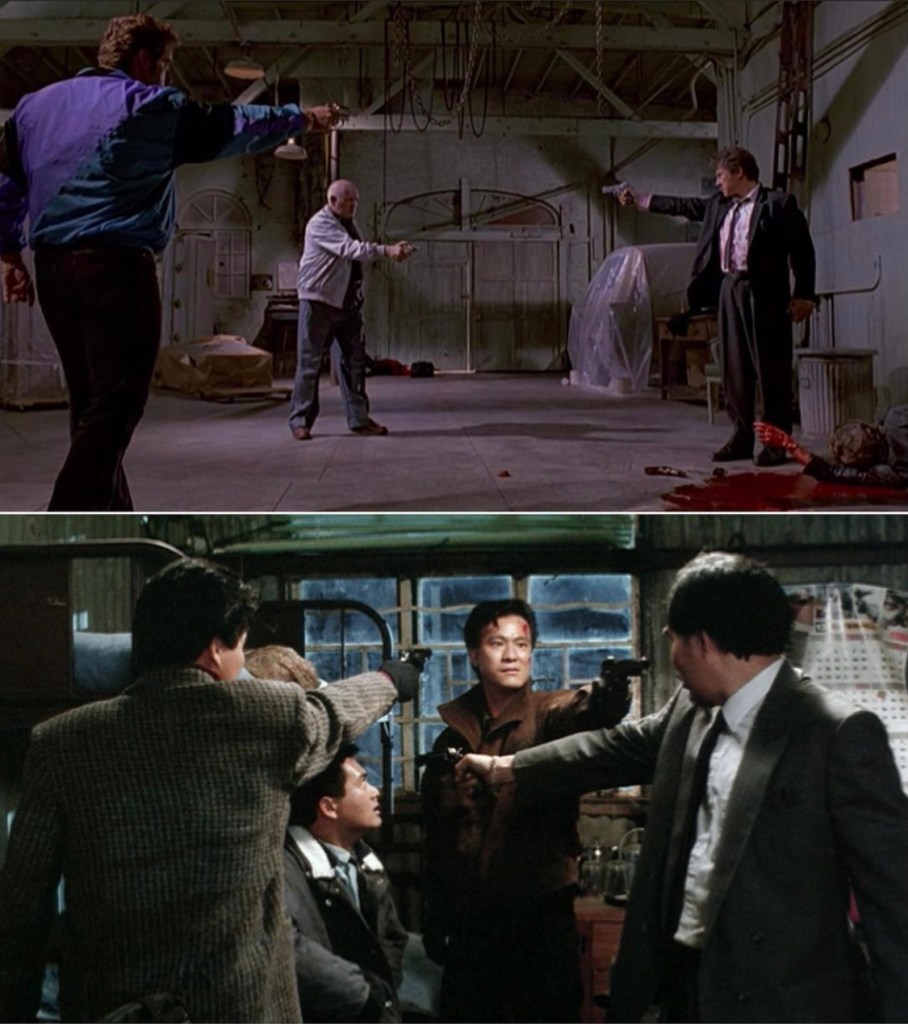
Or known as the Mexican Stand-Off is when more than two opponents aim at each other with guns. It was originated in Sergio Leone’s classic 1966 spaghetti western The Good The Bad and The Ugly, which is one of Tarantino’s favorite films. There are a couple of shots I could show to truly capture this but I feel it is pretty easy to visualize.
Food – Product Placement
One of the most unique and just plain quirky traits in his films is the focus on food and more specifically his creation of fake products and brands ranging from cigarettes to drinks. This just shows us the depth of his unique cinematic worlds.

Camera Angles & Shots:
1. The Trunk Shot
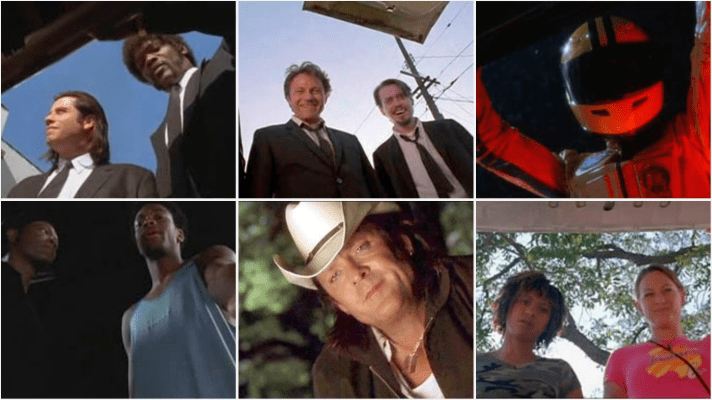
Quentin Tarantino has trademarked the trunk shot camera angle and he’s used it in every movie he has directed. He also uses reverse trunk shots with characters being watched from outside the trunk.
2. The God’s Eye POV
This shot is filmed with the camera directly above the actors. It is used to convey something bigger than the characters is watching them and what they are doing. In other words, a cinematic inner conscious. In Kill Bill, the Gods Eye POV seems to be accompanying The Bride on her justified journey of revenge.

3. Long Takes & Tracking Shot
These kinds of shots let us follow the characters and spend time with them without cuts/edits. There is a real beauty and daring to these kinds of cinematic sequences.
4. The Mirror Shot
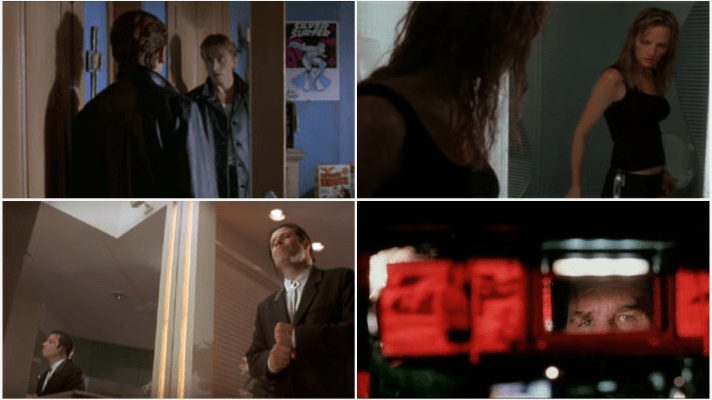
Tarantino characters often speak and look at themselves in a mirror. It literally reflects the intimate moments of being alone.
5. Crash Zoom
The use of the crash-zoom in Tarantino’s films is often used to draw the audience’s attention to a specific part of the screen. Also gives the feel of a 1970s ‘kung-fu’ movie.
6. Extreme Close-Ups
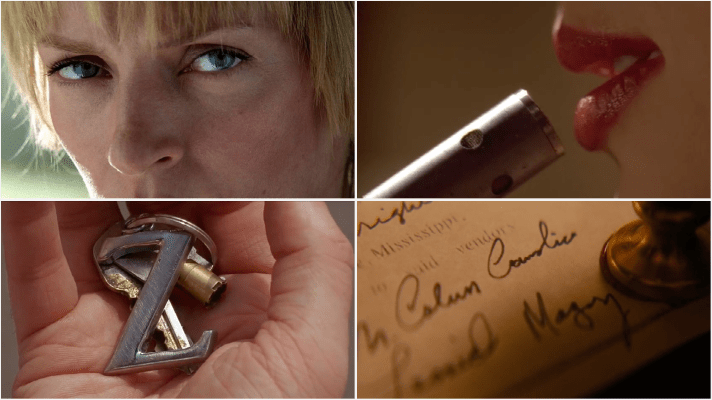
The extreme close-ups tie in usually with the crash zoom (The Bride example for one shown below). Tarantino really likes to focus on the smaller aspects on the screen and there are so many close-up shots to choose from.
Quentin Tarantino Common Themes
Quentin Tarantino is a clever student of film and an expert on using the cinematic language in his own work to express his thrilling stories visually. Here are some of his most well known themes and cinematic motifs ranging from the technical camera flourishes he adds in his scenes to special props that he places throughout his films. All these things let us know we are watching a Tarantino film. They all show us his unique directing style and also show us the kinds of films/pop culture iconography he appreciates the most
1. Glorified Violence
The most obvious theme that is showcased in all of his films is the depiction of gratuitous acts of violence, sometimes artistic/cartoonish (such as in Kill Bill) and at other times more realistic (Reservoir Dogs). With so much violence, guns and blades play an important role in Tarantino’s films. There is rarely a major character who doesn’t have a gun or blade, and, more importantly, isn’t afraid of using it. One could ask the question “is it really needed?” And the simple answer is…not really however violence, and the death resulting from it, are the primary methods by which Tarantino progresses his films forwards and typically, the climax features a lot of violence and a lot of death. It is also important to note that his characters usually live in a world of constant danger because they are seeking something like revenge…
2. Revenge and/or Redemption
Revenge and redemption are on-going themes in Tarantino’s movies. Not only does he give the audience the satisfaction of allowing the protagonist to settle the score and right the wrongs — but in many cases — most of his characters either need saving or are the ones doing the saving. His movies contain iconic moments of revenge, and as of late many have been historical revenge fantasies. Redemption is another running theme across Tarantino’s films. In the director’s latest film Once Upon a Time in Hollywood, the film tells the story of an aging TV actor and his stunt double both searching for meaningful work during the decline of the golden age of 1960s Hollywood. The film follows the characters as they work through their personal insecurities of becoming antiquated in a town that is changing right before their eyes. This is not the first time we’ve seen the characters in a Tarantino film battle their demons and search for the deeper meaning in their lives. The sub-stories in Pulp Fiction can easily be argued as a film about redemption and deliverance. Tarantino’s use of redemption reminds us that life is a series of choices, in which the characters within his films, are constantly waging an internal war between right and wrong.
3. Tarantino Dialogue
Dialogue is one of the main components of Tarantino’s movies as he uses it to introduce the characters in his films. He is known for his cool — yet unique way — of using dialogue that allows the audience to form bonds with the characters. About 75% of his films are dialogue. It is through the dialogue, not actions, which Tarantino introduces his audience to characters and explains his settings and plots. He uses dialogue to set up the violence, not unlike a game of chess, positioning all the pieces before making the next move. The topics of his dialogue scenes can vary, and don’t always have to do with the plot of the film except for helping to explain the way a character is or how they think. Furthermore, the dialogue is used to build the tension layer by layer and leaves the audience awaiting the impending doom. The perfect example is the French tavern scene in Inglourious Basterds which is nearly a 30-minute scene and culminates in an unforgettable climax. Line after line the tension builds and Tarantino takes what could have been a dull drawn-out scene and makes it one of the best sequences in the movie through the dialogue and plot anticipation.
4. Feet are a Focus
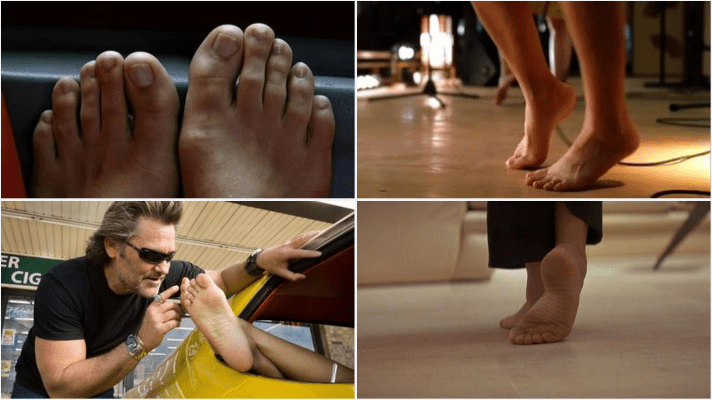
I think we all know at this point that Tarantino has a foot fetish, which he is not ashamed of (good for him!). His use of close-up shots in which bare feet take up most of the frame aid in telling the story. A story of a filmmaker with a mad foot fixation.
5. Use of Music
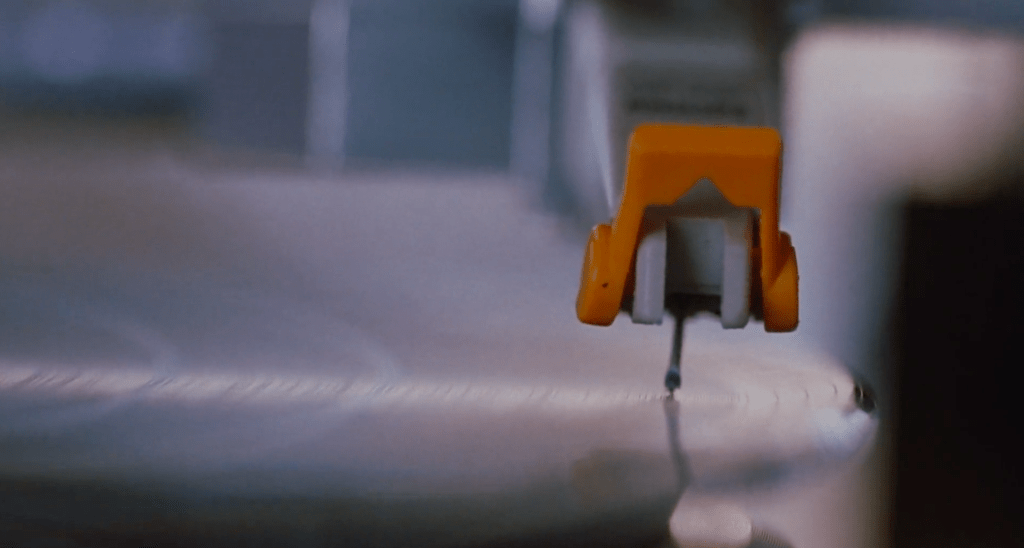
Music is a vital part in all of Tarantino’s films and uses it to create a mood or tone but he relies on it much more than is typical for a director. Tarantino has an eye for picking atypical songs to use for his films rather than relying on a lot of original compositions (The only exception is when he nabbed legendary Italian composer Ennio Morricone to do the original score for The Hateful Eight). His selection of music puts more emphasis on the tone and emotion of the song than how well it goes with the story or setting of the film. This juxtaposition captures the attention of the viewer due to the choice being unexpected, and gives the films an in-your-face attitude. The music acts as another character within the film with a distinctive style that brings a sense of familiarity to the movie. It sets the pace and mood of the film, it’s used to rouse emotion and pays tribute to the movies that came before. Tarantino has gone on the record to say that before he starts writing a screenplay, he goes through his music collection to determine the feel of the movie.
6. “Great artists steal, they don’t do homages.”
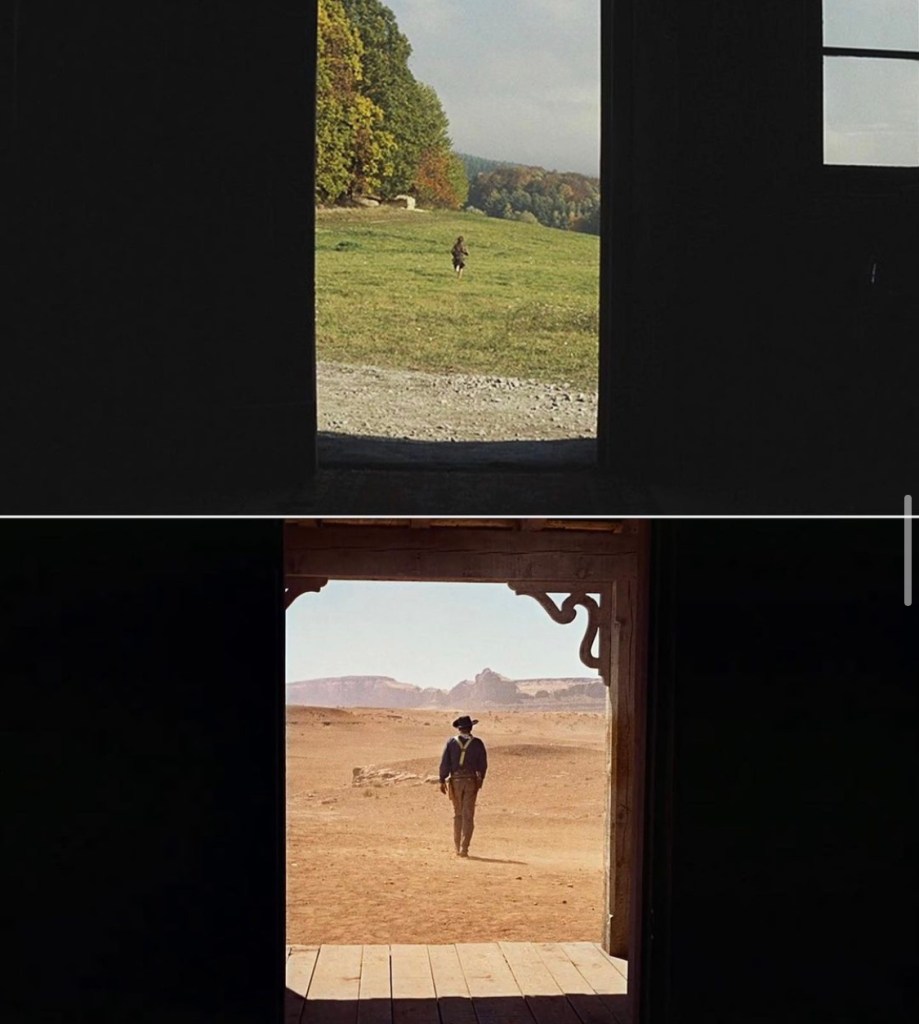
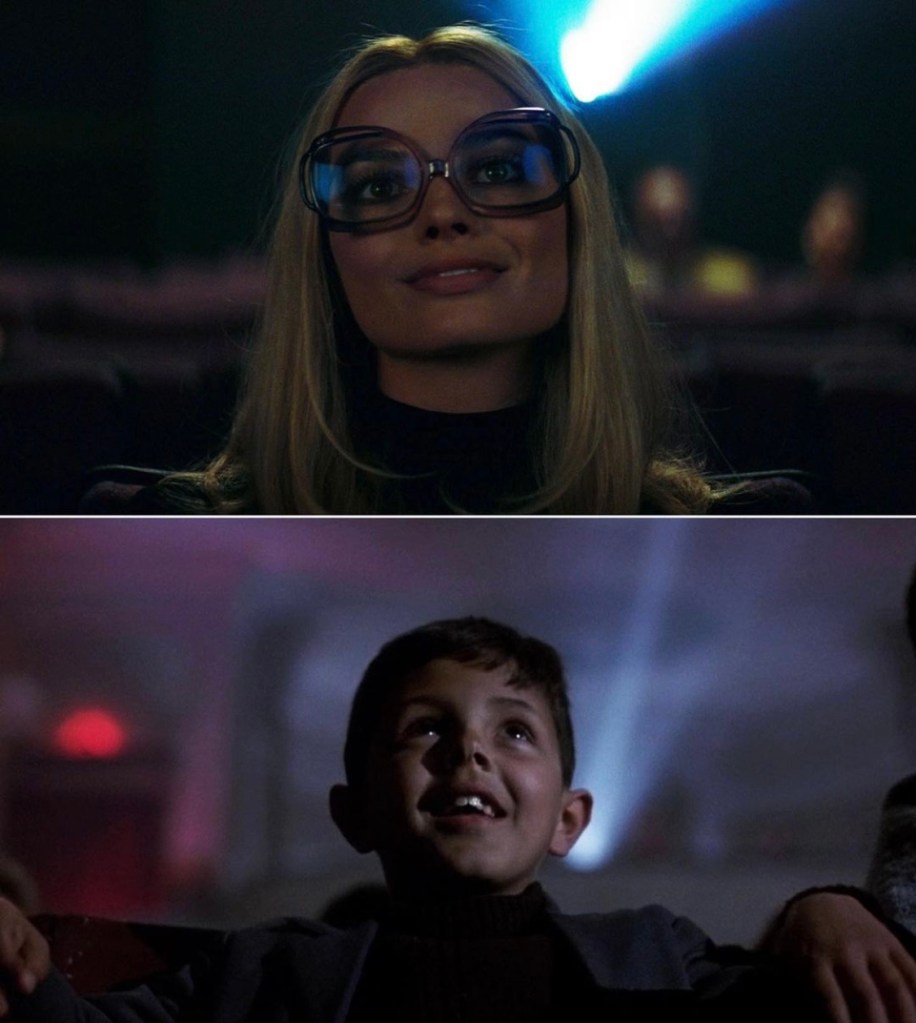
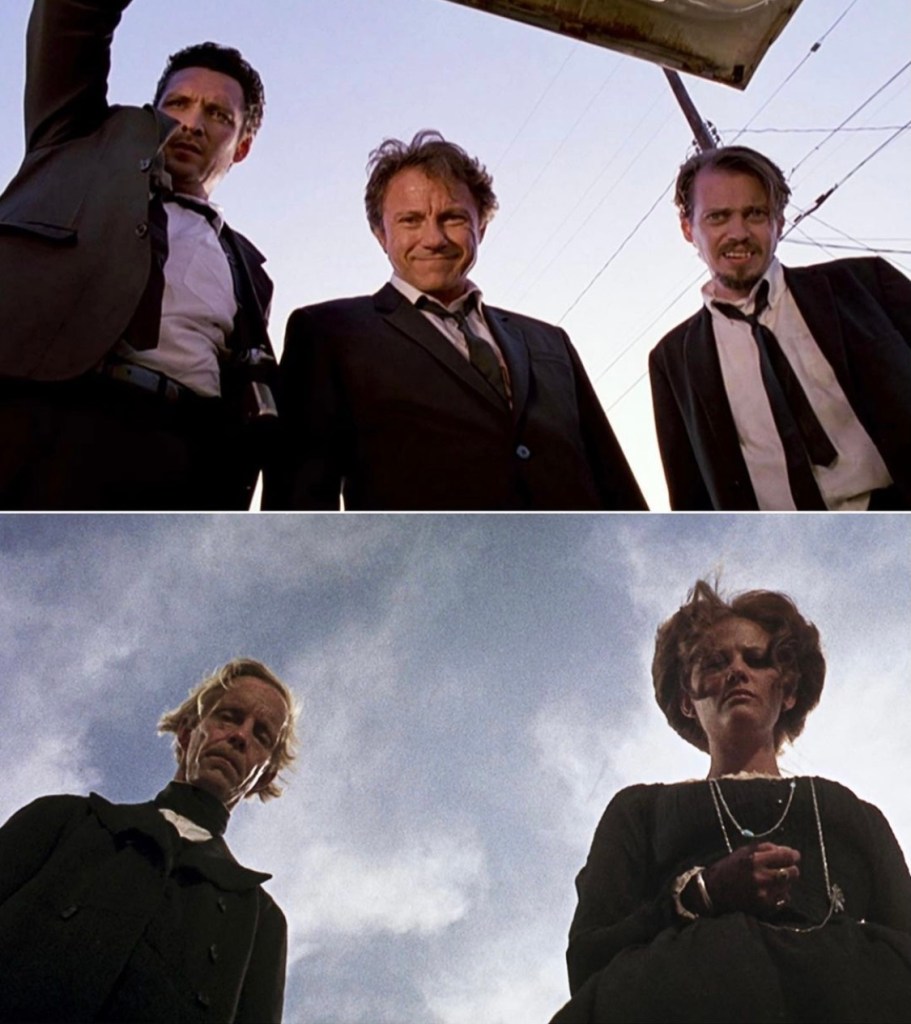
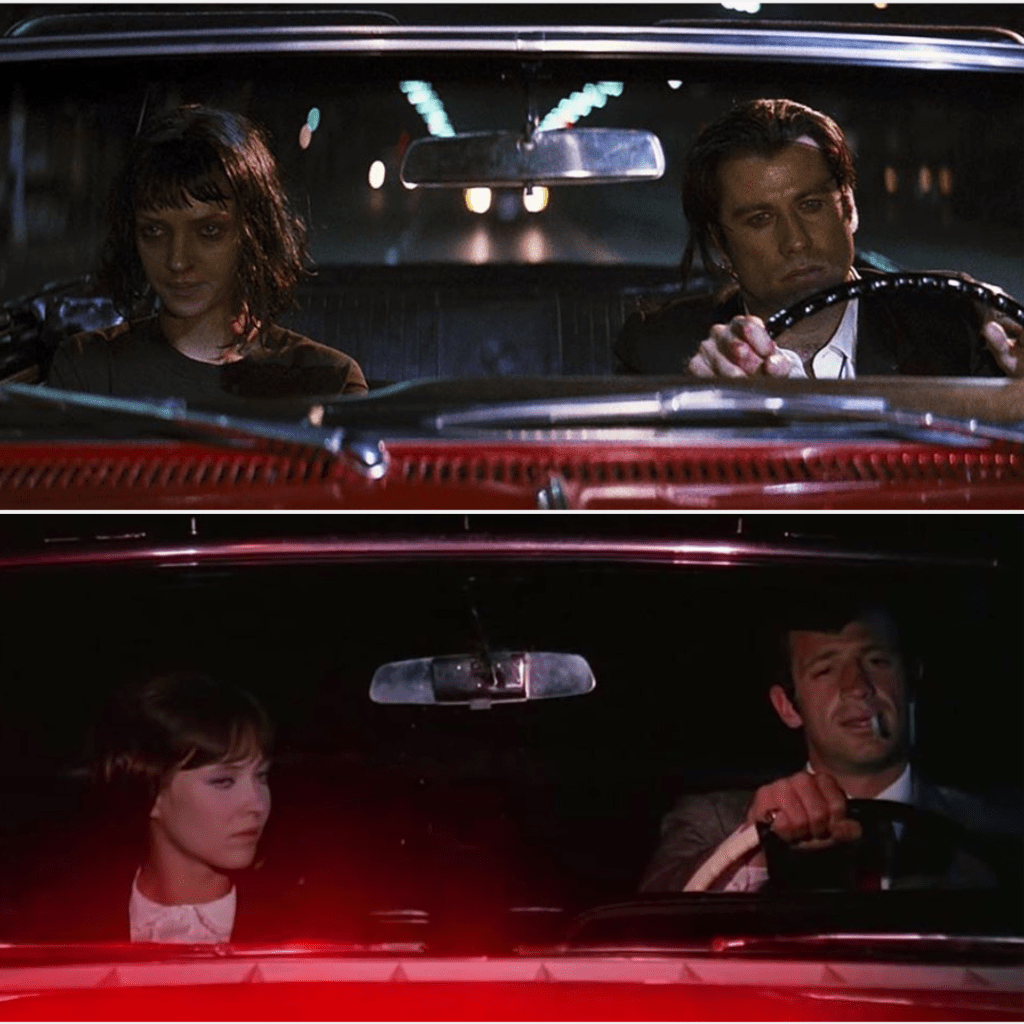
Some cinephiles criticize the way the director blatantly copies particular film shots (see below images), story concepts and makes slight variations to classic one-liners that are hugely recognizable. However, to understand where Tarantino finds his inspiration it needs to be understood that the director didn’t go to film school, he was a video store clerk who learned how to make films by watching them. Although there is a substantial amount of copying and “borrowing” from other cinematic works used in his films, the reason it works is that it comes off as entirely original. His use of cinematic influences from classic movies gives his own genre-blending films a timeless quality, at least in my opinion. Let’s be real here in the end, all art borrows from other art. No idea is truly original, as past ideas influence present ideas which will then influence future ideas. Tarantino is able to do something that no other filmmaker can do, and this is most likely the reason that Tarantino openly admits that he takes from other films. The ability to take various concepts that have worked in the past and put them together to make something new and fresh is why Tarantino is amazing at what he does.
Ranking All 10 Quentin Tarantino Films
Here is my personal ranking of all 10 directed Quentin Tarantino films. My first Tarantino experience started with Pulp Fiction in the 90s (way too young to appreciate or really understand the film) then years later I’d watch the Kill Bill movies. So that being said I have strong personal affinities for Pulp Fiction and both Kill Bill movies.
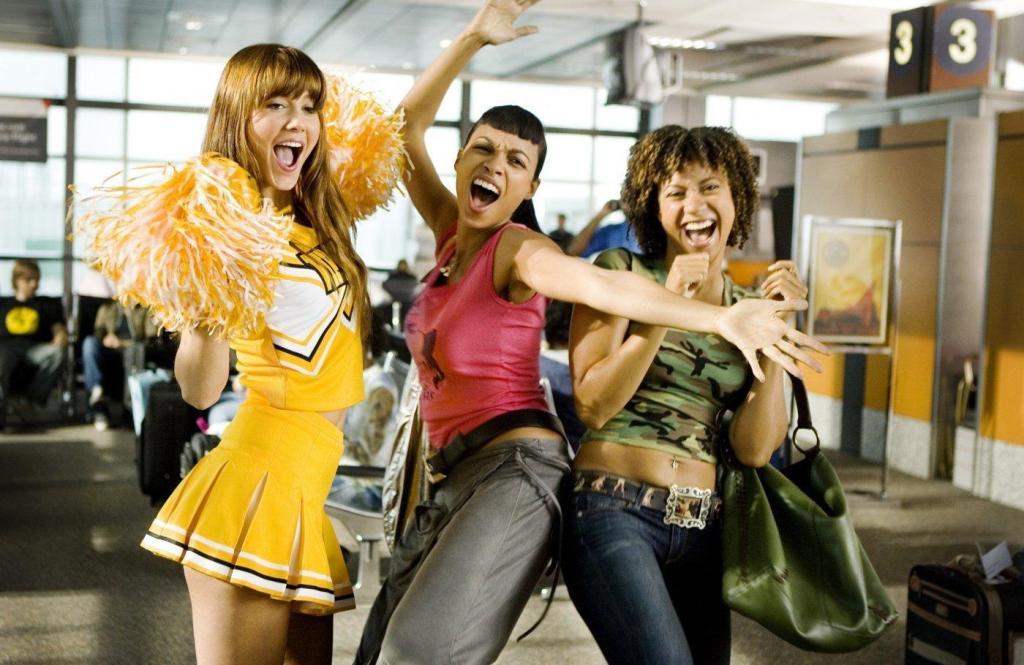
10. Death Proof (2007)
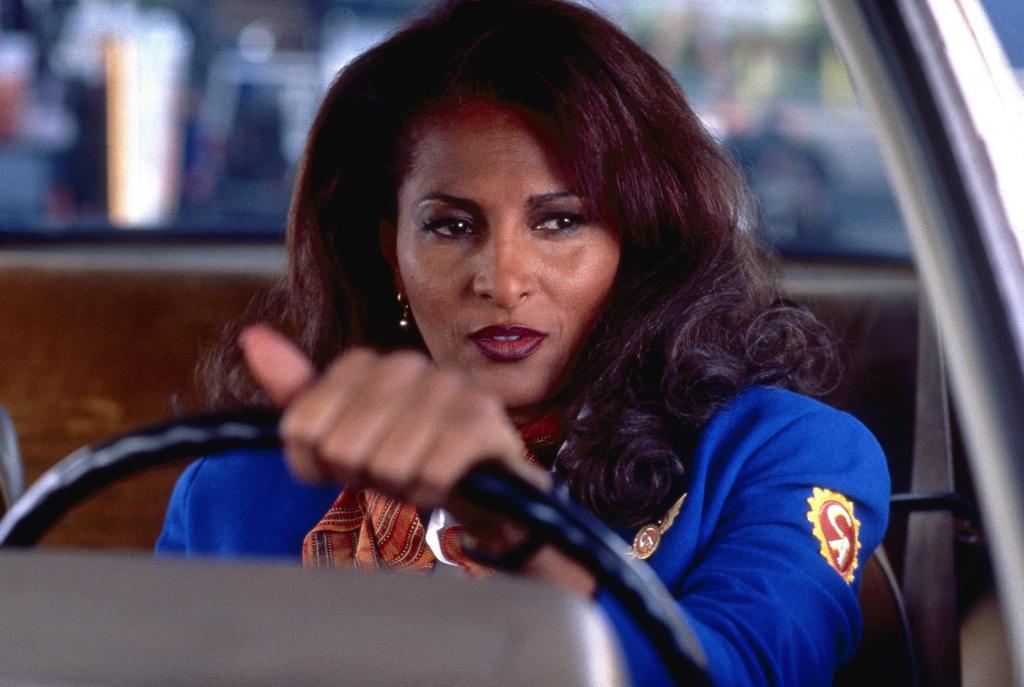
9. Jackie Brown (1997)
8. Once Upon a Time in Hollywood (2019)
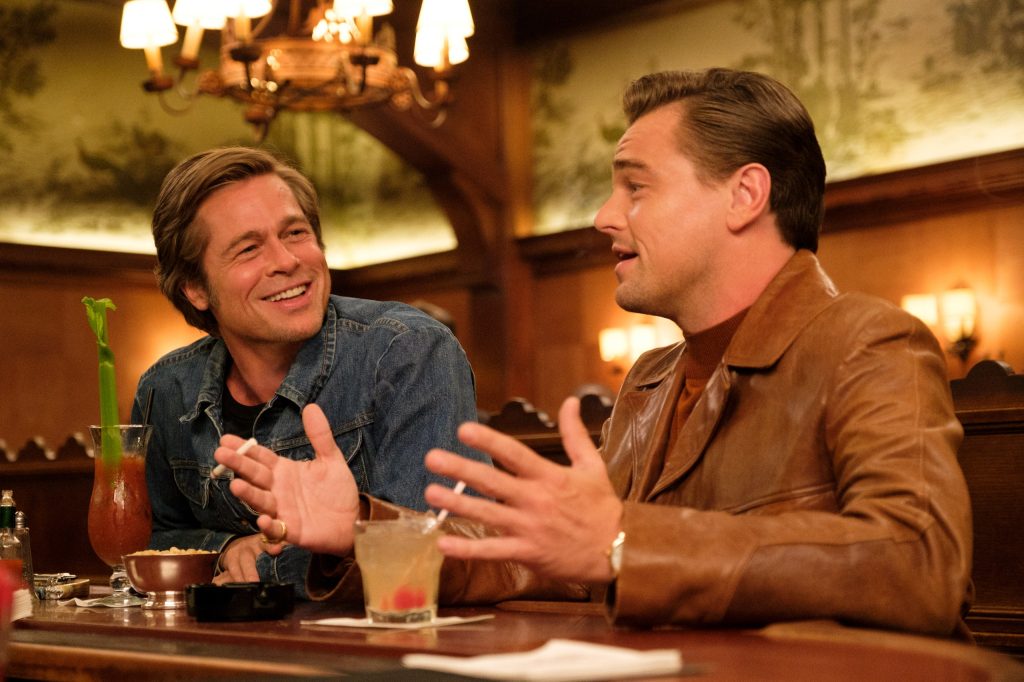
7. Django Unchained (2012)
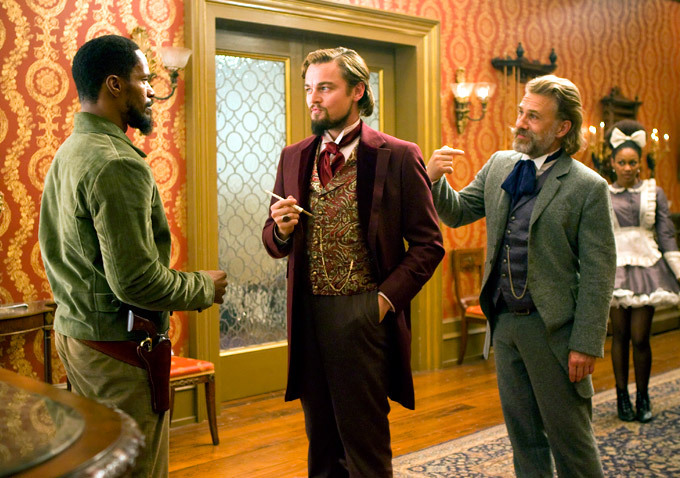
6. Reservoir Dogs (1992)
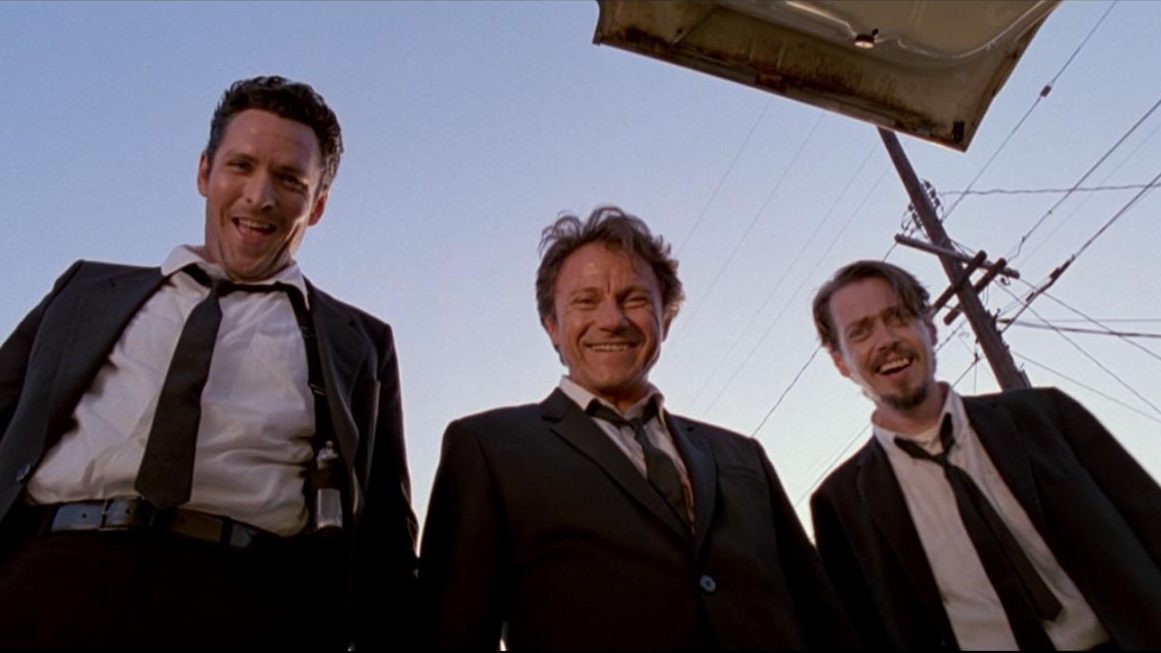
5. Kill Bill: Volume 2 (2004)
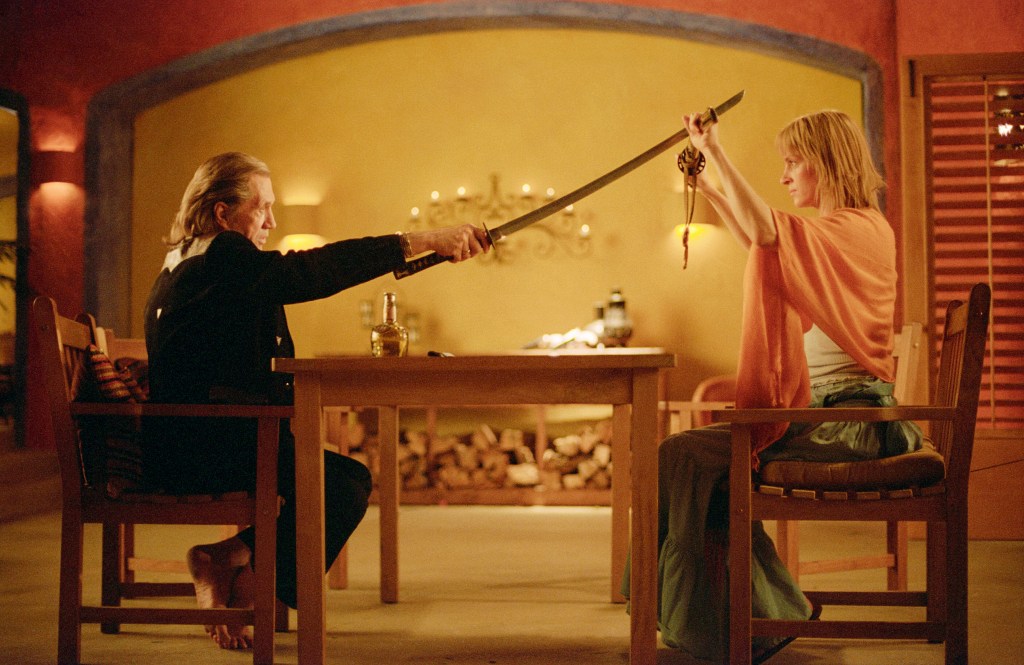
4. The Hateful Eight (2015)
3. Pulp Fiction (1994)
2. Kill Bill: Volume 1 (2003)
1. Inglourious Basterds (2009)
 The Fade Out: A Movie Blog