
JONAH: You know what I think you should do? Take care of it.
JAY: Tell me you don’t want him to get an “A word.”
JONAH: Yes, I do, and I won’t say it for little Baby Ears over there, but it rhymes with shmish-mortion.” I’m just saying — hold on Jay, cover your ears– you should get an “shmish-morshmion” at the “shmish-morshmion” clinic.
JAY: Ben, you cannot let these monsters have any part of your child’s life. All right?
–Knocked Up (Judd Apatow, 2007)
Mainstream Hollywood films like Knocked Up handle the issue of abortion as a taboo subject that cannot be a reasonable choice for the pregnant woman. In the case of Knocked Up the controversial issue is made into a joke in order to keep the discussion of this alternative as light and easy (even the recent HBO Max film – Unpregnant lightens the topic). There are four films that go to the other extreme and even though they centralize abortion in the narrative it is often excessive, especially in the use of the woman being the victim. These films are Vera Drake (Mike Leigh, 2004), 4 Months, 3 Weeks and 2 Days (Cristian Mungiu, 2007), Citizen Ruth (Alexander Payne, 1996) and Revolutionary Road (Sam Mendes, 2008). There are always two sides to the issue, which is present in real life, but these films take on the extreme, illegal cases where women become the victim. They each contain what Michelle Humphrey calls the “abortion warrior” who is usually a male that opposes the act of abortion and a helpless-shamed woman in desperate need of one. The helpless-shamed woman is portrayed as a victim, whether it is to legal manifestations or physical health. These films seem to leave out realistic scenarios in which women receive abortions and instead make it sensationalized and monstrous for extreme dramatic effect.
Throughout film history, and especially the Production Code Era, the character of the fallen woman has been seen in a number of films. The term “fallen woman” comes from the time period of Victorian art (Lee). The fallen woman is a female character that falls into a life of sin such as committing adultery or expressing sexuality and therefore she must be punished for her actions. In the case of The Ides of March (George Clooney, 2011) Molly Stearns (Evan Rachel Wood) is the ideal representation of the fallen woman. Molly is an intern working on the Democratic presidential campaign for Mike Morris (George Clooney). After she forms a sexual relationship with Stephen Meyers (Ryan Gosling), the Junior campaign manager, she informs him that she is pregnant, not with his child but with Mr. Morris’. Stephen knows if this gets out it will greatly harm Mr. Morris’ chance at the presidency so he gives her money to get an abortion. Molly, because she is pregnant aside from the normative nuclear family, is already seen as guilty before she is even able to make the choice. After she receives the abortion and having committed adultery she must be punished for her actions, so she commits suicide by overdosing. Just like the women in Vera Drake, 4 Months, 3 Weeks and 2 Days, and Citizen Ruth Molly is already seen as falling victim to sexual desires outside marriage and she must face the consequences.

Victims and Villains
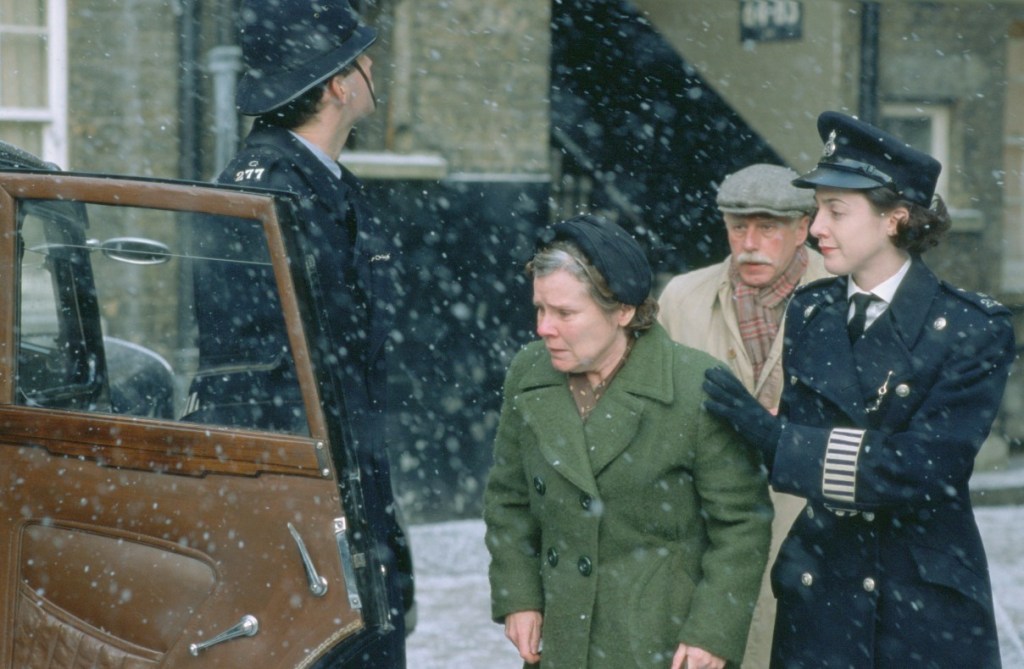
Mike Leigh’s Vera Drake shows the severe victimization of a woman by the legal system during a time where the choices of women were limited. The film portrays the rise and fall of an abortionist named Vera Drake (Imelda Staunton) living in 1950s London who does absolutely everything including giving at home abortions to woman who cannot do so by other means. Within the film there is a strong representation of the class struggle experienced in London during the 1950s. Vera performs abortions on underclass urban “women…who are poor or alone in England [and] they are single, adolescent, or already have too many children” (Humphrey, 16). These examples are then sharply contrasted with another story where “a well-off young date-rape victim enjoys a weekend in the country for her abortion” after going to a seemingly pointless psychological evaluation to determine whether or not she is eligible to get an abortion (Yacowar, 234). Despite this small aspect of the plot, the film really focuses on the emotional turmoil and legal consequences Vera faces because of what she is doing. The emotional turmoil and victimization she experiences are aspects that are depicted in the other films as well, which emphasizes the dramatic and extremeness of the film.
Each of these films also includes a character that Michelle Humphrey calls the “abortion warrior” and this is “the archetype of violent opposition to abortion” (15). This archetype can either be figuratively or literally a male. The use of the abortion warrior makes the situation more extreme than it should be because it adds more conflict. In the case of Vera Drake, the abortion warrior is represented both figuratively and literally as the law and those involved in Vera’s life. Whether it is doctors, lawyers, police officers or judges they are all males that view abortion as a crime. It is quite shocking that no one in the film, except Vera, stands in the middle of the debate or makes any defense for the abortions. Even Vera’s husband “can’t tolerate the act and her son rejects her even more viscerally, [along with] her defense lawyer [who] declares the crime inexcusable under any circumstances, then argues only to moderate her sentence” (Yacowar, 234). The use of the abortion warrior in Vera Drake is quite obvious and even at times incredibly harsh. There is absolutely no justice for Vera and no tolerance for her actions, which means the abortion warrior, wins out in the end of the film. However, the film “honestly exposes the harsh realities and social injustices in an unforgiving uptight society” and portrays the moral objector in a bad light (Ali, 1107). Contrasted with the abortion warrior is the use of the helpless-shamed woman; which is present throughout these films and intensifies the situation. In Vera Drake the women she provides her services to are usually helpless and shamed. Although the term seems negative, it is not always. Even though these women are vulnerable and disgraced, Vera does her best to fix their situation and get them out of the state of being powerless and most of the time alone. It is also obvious that after Vera is caught her physical and mental stability slowly degrades turning her into a helpless and shamed woman. Throughout the first half of the film, she is seen as a stalwart female that takes care of everyone and everything but going to jail completely breaks her. In the courtroom her only movements are standing up and down in respect of the judge or to answer his questions. The times she does speak, she is quiet and somewhat pathetic.
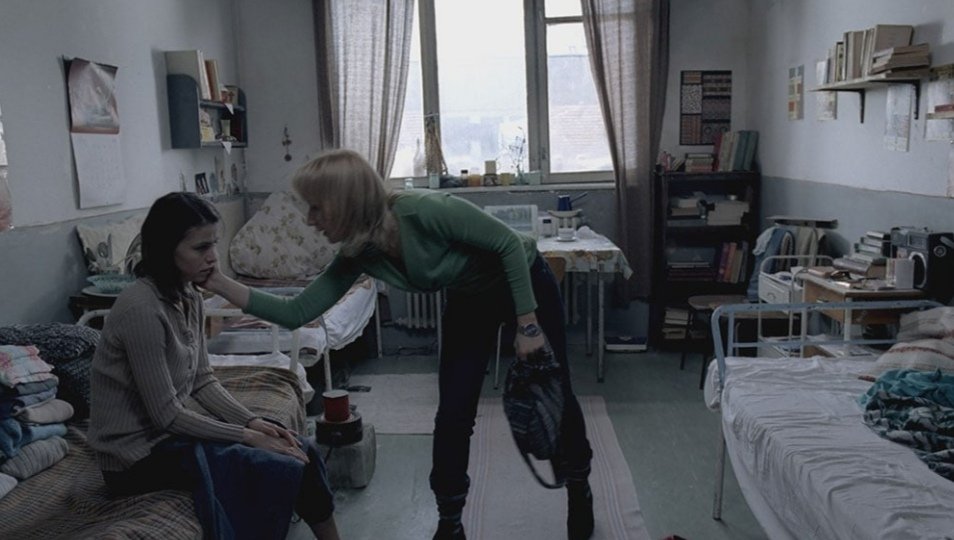
The second film is Cristian Mungiu’s 4 Months, 3 Weeks and 2 Days (2007), which portrays the extreme secrecy that young women under intense political oppression have to deal with in order to get an abortion. The film follows two college students, Gabita (Laura Vasiliu) and Otilia (Anamaria Marinca) on Gabita’s search to receive an illegal abortion. This Romanian film discusses the controversial issue of abortion in Communist Romania during the last years of the Ceausescu regime. During this regime the government focused heavily on increasing the country’s population and “by a 1966 decree, abortion was banned in Romania” (Uricaru, 17). Otilia is forced to participate in the secrecy that Gabita has put upon her. Throughout the first half of the film, Otilia undergoes complete secrecy as she prepares for Gabita’s abortion. This heavily emphasizes the importance of being careful during times when it was not available and it heightens the intensity of the situation. The girls are forced to contact a man they do not know, in hopes they can trust him enough to discuss a taboo subject. This makes them aware of the situation they are in and how important it is to be careful. If they are not secretive or mistake this man for someone else they could find themselves in jail for a very long time. Gabita and Otilia must be careful in who they can trust and the measures they must take in order to make sure the abortion goes according to plan. However, Gabita takes no responsibility for her actions and abuses her friendship with Otilia and purposefully puts herself in the role as the victim by being passive, irresponsible and wanting to be taken care of.
Gabita is viewed as the helpless but not shamed woman and she can be contrasted with the women in Vera Drake. Throughout the film she is seen as completely helpless and unable to do small things like going to the hotel to make a reservation. Gabita is portrayed as pathetic and there is no expression of “the emotions of fear or grief attending the decision to abort or reflections on her choices” (Wilson, 19). She deliberately places herself in the category of pathetic and helpless and ignores the fact that what she is doing might have great reprocutions on the people involved such as Otilia. By doing this it is obvious that she places herself in the role as the victim to get the sympathy vote but at the end of the film, Otilia receives the sympathy card and Gabita is viewed as demanding and irresponsible. The last few scenes where Otilia is frantically searching for a place to dispose of the aborted fetus she is seen as reliable and helpful, while Gabita has no remorse for her actions and even goes downstairs of the hotel and has an extravagant dinner.
Like Vera Drake, 4 Months, 3 Weeks and 2 Days represents the abortion warrior in a bad light, in the fact that he oppresses women and forces them to take actions into their own hands. In this filmthe abortion warrior is represented figuratively as the law and literally as Otilia’s boyfriend, Adi (Alexandru Potocean). The film takes place during the Ceausescu regime in which abortion was illegal and women’s bodies where not their own but a commodity of the government. Unlike Vera Drake the girls do not get caught and punished by the law. The law does not morally object the issue of abortion; it just disagrees with the control women can have over their bodies. The law views women that get abortions as disrespecting the government and their country, which heightens the secrecy of back-alley abortions. Adi is literally the abortion warrior that morally objects the act of getting an abortion. He realizes it is up to the woman but he offers an alternative that oppresses the woman once again. After Otilia tells him about Gabita, she informs him that she might be in the same situation. Adi is taken back by this news and tells her that he will take care of her and she does not have to get an abortion. Instead he suggests an alternative to get married, have the baby and indulge in the “making potatoes” lifestyle just like his parents. But to Otilia, who is an independent heroine, this is just another form of oppression and she does not wish to conform to that type of lifestyle. The concept of conforming and accepting the pregnancy is a strong characteristic for the abortion warrior and it is present in Citizen Ruth and especially Revolutionary Road.
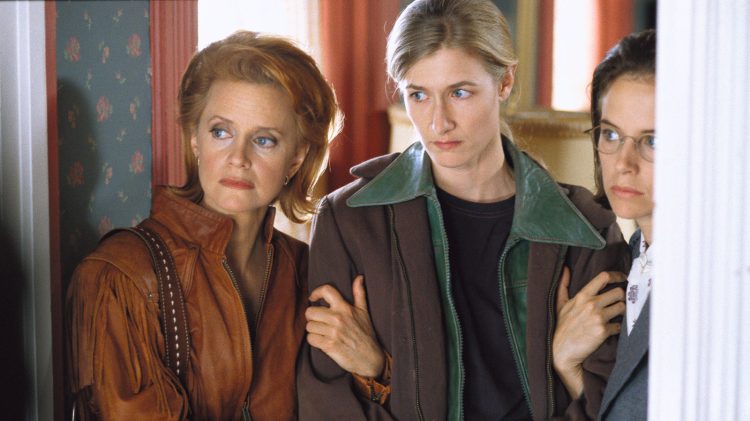
The third film is Alexander Payne’s first feature film, Citizen Ruth (1996), which focuses on the abortion debate and places a woman in the middle of the situation making her a victim of both sides. Citizen Ruth is about an irresponsible and child-like drug abuser named Ruth (Laura Dern) who gets herself in the middle of a pro-life and pro-choice war. She is portrayed as a pathetic female that throws temper-tantrums when she does not get what she wants. There are instants where she is seen as the shamed woman because she is unable to provide a better life for her first four children that she was forced to give up under the same circumstances. Throughout the film she is also unable to physically and mentally take care of herself, leaving everyone else to feed her as well as clothe her, whether it is members from the pro-life side or the pro-choice side. The film is completely over the top in a lot of aspects including her lack of knowledge when it comes to making a decision about getting an abortion or not. One obvious characteristic that is presented is that the film does contrast each side of the debate on abortion by “[parodying] both sides with equal exuberance” (Bregman, 291). Despite the over the top aspect of each side, they are both represented somewhat respectfully in the sense that the film understands the point they are trying to make. “For those opposed to abortion, there is one option- to carry the pregnancy to term [and] for the pro-choice movement, the issue instead is that a woman has the right to make a choice between having an abortion or carrying to term” (Bregman, 291). Aside from the legal circumstances in which Ruth is faced, excessive representation of the abortion debate makes the situation more dramatic.
In Citizen Ruth the abortion warrior is not a male figure, but a representative of those on the pro-life side of the abortion debate. Here, the abortion warriors are those urging Ruth to keep the baby and view abortion as extremely wrong. Unlike the other films, the opposition for the abortion warrior is up front and obvious throughout the film. Those involved in the pro-life side try and convince Ruth that abortion is like murder and tell her that they will help her out in any way possible. It is also important to note that in Vera Drake and 4 Months, 3 Weeks and 2 Days, one of the abortion warriors is the law, but it is the opposite in this film. The law, or more specifically the judge, tells her to get the abortion and that it would help possibly reduce her charges. This aspect is quite a change from the oppression of females by the government but it is still an example of the law telling a woman what to do with her body in a coercive way. However, the film does attempt to show how conformity is the better option when it comes to the decision about abortion. For Ruth it is better for her to conform to the demands of either side because she is incapable of doing things on her own so she needs the help of either side. The issue of conformity is the most important theme in Sam Mendes’ Revolutionary Road.

Finally, Sam Mendes’s Revolutionary Road (2008) exemplifies the victimization of women in the patriarchal society of the 1950s, even in matters of her own body. The film focuses on the rise and fall of the marriage between Frank (Leonardo DiCaprio) and April (Kate Winslet) Wheeler and the struggles they are faced with in the mid-1950s. Although the film’s main focus is not the aspect of abortion it does, however, greatly display how the effects of wanting a life outside the suburban lifestyle can influence the important decision of abortion. April has what most people would call a “pipe-dream” which is an unrealistic and unobtainable idea. When April met Frank he said Paris was the only place he had been that he wanted to go back. After a rough evening she decides make a plan to move to Paris and start their lives over in a new place. As the relationship unravels this unrealistic idea and the fact that she does not truly want to be with her husband are the causes she feels are important in her decision to get an abortion. She wishes to have something outside the suburban lifestyle and it seems as if the baby would get in the way of that dream. “While her husband opposes the termination, April finds liberation in a desperate act of personal freedom-trying to take control of her body” (Irbic, 83). April’s act of personal freedom ultimately leads to her death in an intense and disturbing end to the film where she performs an at home abortion causing her to hemorrhage and die.
The abortion warrior in Revolutionary Road is held in two different categories in the film, just like Vera Drake and 4 Months, 3 Weeks and 2 Days. The first and most obvious abortion warrior is Frank. Right after April tells him she is pregnant again and that it can be taken care of within the first twelve weeks, it is noticeable that he objects to the idea of abortion but does not say so immediately. As the tension builds between them it becomes increasingly more obvious that he is very much against abortion and is outraged that she would even consider it. At this point he calls her a bad mother and claims that she needs help. April is in a state of depression and isolation, and agrees that she needs help. By agreeing to his demands, April conforms to the patriarchal hierarchy that he is trying to represent. The second abortion warrior is more of a figurative representation and it is the societal demands of the lifestyle they find themselves submerged in. During this time period the idea of abortion was looked down upon with the exception of extreme cases such as rape. In the 1950s those that were in the white middle-class had certain unspoken ideals like women needed to stay home to have babies and do household chores while the men would work from nine to five. “Middle-class marital fertility was a sign of approved sexual pleasure and a seal of family formation” (Solinger, 165). This places April in a difficult position between conforming to societal demands or risking her life to break free from society. In Revolutionary Road April is lead to believe that she is helpless and shamed by Frank. It is quite obvious that she is capable of doing things on her own but as her relationship with Frank begins to dwindle this mind set changes. He leads her to believe that she is helpless and shamed by belittling her and telling her she is a bad mother and he questions if she even loves her children. Aspects like the helpless-shamed woman greatly add to the intensity of the film, especially in a character like April who is torn between society and her own choices. There are also a number of other aspects that create the extremeness of these four films.
The Extreme
It is clear that all four of these films focus on the extreme illegal cases of abortion dating back to the 1950s. The films highly sensationalize the act of abortion into a situation that victimizes the woman, instead of representing the decision to get an abortion as a well thought out alternative. Vera Drake and Revolutionary Road display the harsh effects of giving at home abortions, while 4 Months, 3 Weeks and 2 Days represents the abortion as a vehement situation surrounded by secrecy. Citizen Ruth shows the woman as a drugged-out basket case that must get the abortion or suffer severe jail time. These films show people all the wrong problems, issues and situations that come with abortion rather than representing it as a plausible alternative for women who need one.
In Vera Drake the extremeness is depicted in two different ways. The first is the representation of the negative effects of getting an abortion that results in hospitalization. Although the women depicted in Vera Drake have real reasons as to why they need the abortion, the film shows the extremeness of what could happen if the procedure goes bad. After Vera performs a seemingly routine abortion, Jessie Barnes (Lesley Sharp) becomes very ill and is forced to go to the hospital. This begins the chain reaction of events that leads to Vera’s incarceration. Even though this is a possibility in the realm of illegal abortions, the film sensationalized the situation by making this the cause of Vera’s downfall. Jessie Barnes, unlike April Wheeler in Revolutionary Road, survived the effects of getting an illegal abortion. Prior to Roe vs. Wade in the US and the Abortion Act of 1968 in the UK this was a major problem for women. “The World Health Organization estimates that a third of maternal deaths result from complications of illegal abortions” (Ali, 1107). It is understandable why Mike Leigh chose this as the aspect that incarcerates Vera, but the actual events in the film make it very intense. The scene where the viewer sees Jessie in the hospital is filled with screaming and nurses running around to comfort her. The second way it is represented in the film is that it also shows the extremeness of justice in the 1950s court system in London and how “the law prosecutes the ‘Veras,’ out of hypocrisy and arrogance” (Yacowar, 234). There are few films that show how those who perform abortions were punished but Mike Leigh’s film is the exception. And the fact that Vera is punished with two years in prison seems quite intense. The extremeness of the political system wins out in the end of the film, which leaves the viewers on the pro-life side of the debate pleased to see justice triumph over abortion because she is punished for her actions.

Even though 4 Months, 3 Weeks and 2 Days takes places in a time where women have no control over their bodies, it shows the extreme positions they are forced to endure. Both Otilia and Gabita are put in agonizing situations of desperation that make abortion into a traumatic and terrible act for both the characters within the film and the viewer. The anxiety created throughout the film makes the viewer curious as to what is going to happen. The actual events that happen are extremely vehement. There are multiple instances where the extremeness is explemified. The first is when both girls are forced to have sex with Mr. Bebe (Vlad Ivanov) in order for him to perform the abortion. What is extremely disturbing is that Gabita lets Otilia take part in the act without saying anything. This makes the viewer understand the extreme circumstances women were faced with during these times. The second instance is after the abortion has taken place and the fetus that is 4 months, 3 weeks and 2 days old is seen. This image is sensationalized in order to make the viewer very aware of the amateur methods taken when getting a back-alley abortion. The image of the fetus is almost always left out of films in order to avoid great controversy but Cristian Mungui adds this image to portray intensity. The third and final instance is the less sensationalized because it is simply the fact that Gabita shows no remorse for her actions. The women that received abortions in Vera Drake were forced into their situations and were not happy with the results but saw no other way. Gabita might have been forced into her situation but she seemed fine with her decision and the situation she put Otilia and herself in.
Out of the four films Citizen Ruth is the least explicit situation surrounding the abortion. Unlike Vera Drake where the woman becomes ill or in 4 Months, 3 Weeks and 2 Days where the whole situation is sensationalized, Citizen Ruth represents extremeness in the character of Ruth. Her actions and presence is very much sensationalized. Not only can she not control her drug addiction but she is unable to take care of herself. These characteristics make the decision to get an abortion understandable. A woman in those circumstances should not be able to have children let alone take care of them. But why have a woman in such bad condition? Why not replace Ruth with a woman that is able to take care of a child by not doing drugs or drinking? The fact that Alexander Payne made Ruth into such an extreme character is interesting. He made a film centered completely on abortion but over sensationalized it when he could have made a film that spoke out about the issue. Throughout the film it is obvious that “Ruth Stoops is an unlikely heroine: when she’s not stoned, she’s drunk; when she’s not maudlin, she’s suspicious. She’s thoughtless, manipulative, and… always on the lookout for a better deal” (Bregman, 2). Her decisions are outrageous and not well thought out which only adds intensity to the viewer’s experience. The intensity reaches it peak when Ruth is subject to a miscarriage, probably due to the alcohol and drugs. Although the director avoids having Ruth make a rational decision about the abortion having her endure a miscarriage is rather extreme. Any woman who has dealt with a miscarriage knows it is sad, intense and extremely hard to overcome.
Revolutionary Road embodies the extremeness of what could happen after giving oneself an at home abortion. “April, by herself, aborts the fetus, hemorrhages and dies. The act is a negation of many things, the marriage itself, the love that bound two people to each other, above all her own self-worth, what grounded her place in the world” (Sklar, 75). Her reasoning behind the act is understandable but the extremeness resides in the fact she dies. The final scene where she stands in front of the window with blood on her skirt can be taken as hauntingly beautiful. Not only is it her final appearance but it is brightly lighted to represent her liberation from the suburban lifestyle she was forced to live. Like Vera, April must be punished for her acts because they go against society’s rules and guidelines. For Vera who illegally performed abortions, the justice system must win in the end. For April, who gave herself an abortion, the demands of society win. Even though the viewer sides with the victim the concept of the fallen woman comes into play in these films. Just like Molly in The Ides of March, women who fall into a life of sin-whether morally or politically- they must be punished.
Contrasting Films


It is important to note that films like Vera Drake, 4 Months, 3 Weeks and 2 Days, Citizen Ruth and Revolutionary Road take on the idea of abortion but these are examples of extreme cases, there are limited films that take on the issue in a calm, realistic manner. Films like High Fidelity (Stephen Frears, 2000) and Greenberg (Noah Baumbach, 2010) have small examples of dealing with the issue in a normal real life situation. These films’ plots do not center on the issue of abortion but they are paving the way for films to cover the topic in a more straightforward manner. Stephen Frears and Noah Baumbach portray the abortion as a positive experience unlike the other films that either punishes the woman or ends ambiguously so the viewer does not know what happened.
The abortion plot line in High Fidelity takes up about three minutes of the film but shows a conversation between mother and father of the unborn baby. Rob (John Cusack) narrates how he slept with someone else while his girlfriend, Laura (Iben Hjejle) was pregnant. He explains how he didn’t know she was pregnant, but Laura knew that he cheated on her and had the abortion without consulting Rob. He only learns of the abortion when he talks to Laura about having children. She begins crying and tells him about the abortion and this is where he tries to be all self-righteous and state it was his baby too. At this point he then tells the audience that he just said that and he did not really mean it. That is it. The abortion incident just shows the ups and downs of an intimate relationship, which is how it takes place in real life. High Fidelity represents Laura’s abortion as a brief moment of crisis but it does not ruin her future happiness and shows how women can move on with their lives after an abortion. This is obviously not the case in Vera Drake, 4 Months, 3 Weeks and 2 Days, Citizen Ruth or Revolutionary Road. The women from these four films are found guilty and shamed for their sexuality.
Noah Baumbach’s Greenberg, like High Fidelity shows the woman handling the decisions in a calm, realistic manner. Florence (Greta Gerwig) is a “young woman who decides that abortion is the best option for dealing with an unplanned pregnancy” as a results from a relationship that has ended (Farber, 4). Like Laura from High Fidelity she realizes that an abortion is the best option for her and the film agrees. It does not punish her for her decision and the film even ends on a happy note where Florence ends up with Greenberg (Ben Stiller). Both women are viewed as well-rounded adults that are not shamed for their sexuality. These women are able to make the decision to get an abortion because it is the most responsible alternative. It is undeniable that “Hollywood has chosen to play it safe and keep abortion invisible” but Greenberg and High Fidelity represent positive experiences that make abortion explicit (Farber, 2). Mainstream films today, like in the case of Knocked Up show the alternative of abortion as a joke and that when women decide to have the baby everything turns out perfectly. This isn’t the case in real life, women that chose to have abortions do not get punished they are usually able to move on with life.
Conclusion
It is quite a shift in pace to see films express the idea of a controversial issue, but it would be more authentic to present the realness of the issue rather than the most extreme cases. Films like Vera Drake, 4 Months, 3 Weeks and 2 Days, Citizen Ruth and Revolutionary Road exemplify the extremeness that is sometimes involved with abortion but they turn it into a melodramatic and shocking situation. By framing the choice to have an abortion as extreme hardships and an agonizing physical experience, the films implicitly suggest that abortion is an unfortunate necessity. The debate over abortion still continues on today and it seems as if it might never end due to moral, religious and cultural reasons. Overall, it would make sense for a director to make a clear one-sided argument either for abortion or against it but it seems as if many of them tend to keep it in the middle. The directors that decide to portray the issue tend to over sensationalize the situation, making it more extreme than it happens in real life. If directors presented the issue of abortion as it happens in real life and the real reasons women get them it might help open the eyes of those skeptical to the idea. Maybe the real question is why directors portray abortion in such manner that somewhat steers people away from the alternative. This question, like many others involving abortion, might never be answered. However, films like High Fidelity and Greenberg tackle the issue in a calm, realistic manner and are hopefully paving the way for more films that involve the important issue of abortion.
Works Cited
Ali, Khalid. “Vera Drake.” British Medical Journal 329.7474 (2004): 1107. Web. 01 May 2012.
Bregman, Bertie, and Allan Rosenfield. “Hollywood Tackles The Abortion Debate.” Lancet 349.9047 (1997): 291. Academic Search Premier. Web. 16 Apr. 2012.
Farber, Stephen. “A Movie Breaks the Abortion Taboo.” The Daily Beast. Newsweek/Daily Beast, 12 Apr. 2010. Web. 01 May 2012. <http://www.thedailybeast.com/articles/2010/04/12/the-taboo-breaking-abortion-in-greenberg.html>.
Humphrey, Michelle. “A-Word, The Movie: Cinema And The Abortion Story.” MP Journal 1.5 (2007): 13-20. MLA International Bibliography. Web. 1 Mar. 2012.
Irbic, Boris. “Social Values In Mad Men And Revolutionary Road: Conformity An Loss Of The Dream In The Golden Era Of American Ascendancy.” Screen Education 54 (2009): 78-84. Communication & Mass Media Complete. Web. 8 Apr. 2012.
Lee, Elizabeth. “Fallen Women in Victorian Art.” Fallen Women in Victorian Art. 21 Dec. 2009. Web. 06 May 2012. <http://www.victorianweb.org/gender/fallen.html>.
Solinger, Rickie. Pregnancy And Power : A Short History Of Reproductive Politics In America. New York University Press, 2005. eBook Collection (EBSCOhost). Web. 9 May 2012.
Sklar, Robert. “Revolutionary Road.” Cineaste 34.2 (2009): 73-75. Academic Search Premier. Web. 8 Apr. 2012.
Uricaru, Ioana. “4 Months, 3 Weeks And 2 Days: The Corruption Of Intimacy.” Film Quarterly 61.4 (2008): 12-17. MLA International Bibliography. Web. 1 Mar. 2012.
Wilson, Emma. “4 Months, 3 Weeks And 2 Days: An ‘Abortion Movie’?.” Film Quarterly 61.4 (2008): 18-23. MLA International Bibliography. Web. 1 Mar. 2012.
Yacowar, Maurice. “Vera Drake (Mike Leigh, 2004), Alfie (Lewis Gilbert, 1966), And Alfie (Charles Shyer, 2004).” International Journal Of Media & Cultural Politics 1.2 (2005): 234-237. Communication & Mass Media Complete. Web. 15 Apr. 2012.
 The Fade Out: A Movie Blog