A Look Inside: 5 to 7
WARNING: Contains Spoilers!
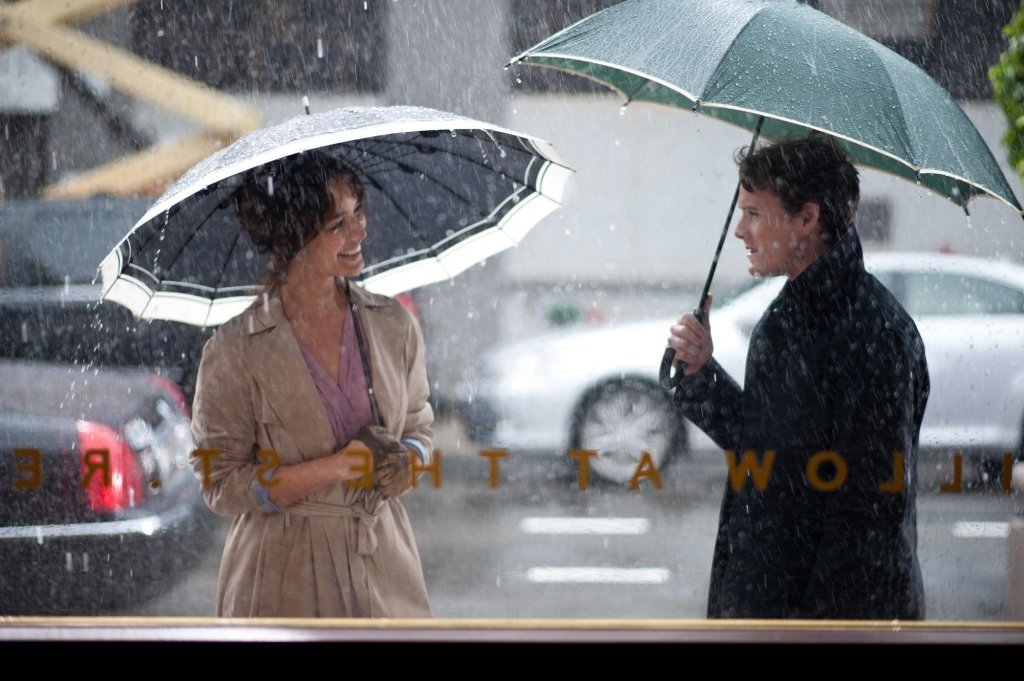
Some may say that an affair conducted between the hours of 5 and 7 p.m. may suggest trappings of a clichéd rom-com, but 5 to 7 (2014) is much more unconventional than that. The film 5 to 7 was written and directed by Victor Levin (mostly known for his producing & writing a few Mad Men episodes), and the story looks at an extramarital affair through fresh new eyes. As the story unfolds you start to discover the intricacies that lurk in the places many people tend to gloss over when making assumptions about someone’s love life. In my opinion there is a certain type of romantic that is drawn to doomed love stories because I believe they see and appreciate the honesty of reality. Generally, doomed love stories showcase the realities of love and seem more intense than your run-of-the-mill traditional love story and 5 to 7 is anything but traditional. Starring Bérénice Marlohe (Skyfall) as the beautiful French “sirène” Arielle, a mother of two who is married to a French diplomat, and Anton Yelchin (Star Trek) as Brian Bloom, the younger unpublished writer who falls for her beauty, elegance and charm. At first glance this could be just another traditional romance set against the towering skyscrapers and busy streets of NYC but in Arielle’s words “Put aside your notions about how people are, Brian. The world will surprise you with its grace, if you let it,” we can tell we are watching a unique film that will take an unconventional path and I am immediately hooked.
The beauty of 5 to 7 lies within the romance, of course, but by being able to film scenes in and around great NYC landmarks such as the St. Regis hotel, the Guggenheim Museum, Central Park and the New York Public Library gives it a sense of authenticity I haven’t seen in a while. As you watch you slowly start to wonder if you are watching a Woody Allen film as he is well-known for using New York City as his backdrop and does everything he can within the frame to show its beauty. It doesn’t stop there as there are several instances where you can see Brian emulating Allen’s neurotic behavior but also tying in the quirky and witty remarks. And let’s not forget Glenn Close and Frank Langella as Mr. and Mrs. Bloom with their witty and sarcastic dialogue that shows Levin’s Woody Allen inspiration. Both Allen and Levin ground themselves in authenticity and focus on classic style and the charm of real-world experience.
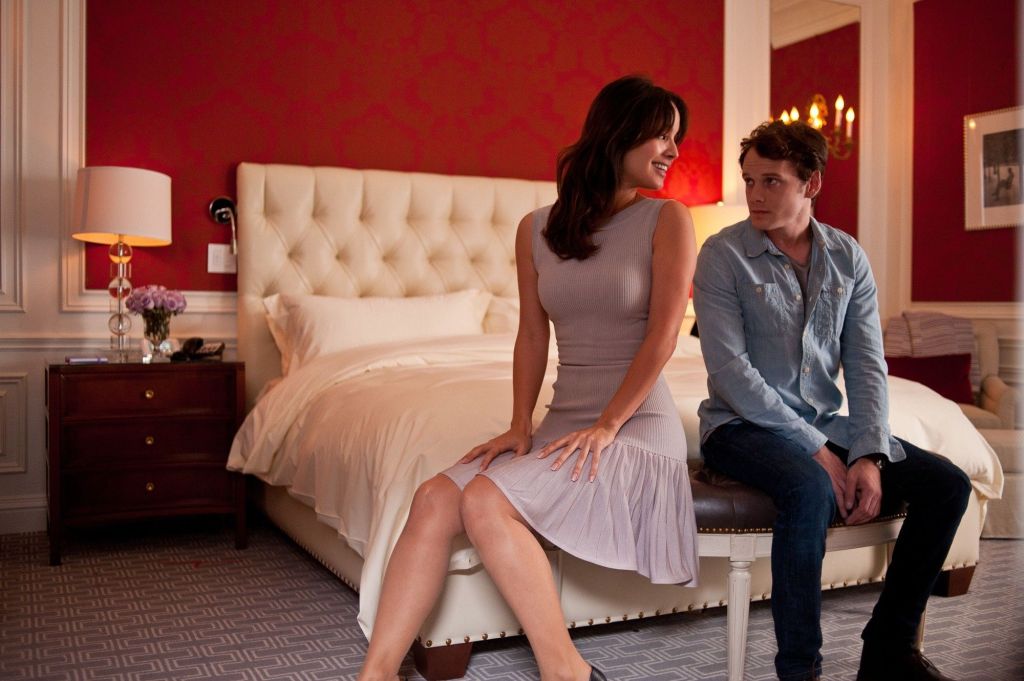
Staying grounded in the real world is a significant theme for 5 to 7, which asks realistic questions of its characters and its audience. Brian finds his preconceptions about the ethics of life and the boundaries of love tested throughout the film, and Arielle finds a surprise in her vulnerability and the depth of her feelings for Brian. As the story progresses Brian soon he finds himself unable to contain himself to their agreed upon time frame and wants more than she is able to provide him. In this moment we (as well as Arielle and Brian) are faced with brutally honest questions like ‘do you stay together for the sake of the children’ and ‘what are we willing to do for love?’ It is when these questions of how far someone with familial responsibilities should go for true love, we get a lesson in harsh reality coupled with the touching innocence of hope, and above all we are able to identify with the plausibility of these decisions. There are very few films that ask these questions in which you see the turmoil that is caused by the reality of the situation. It hits you hard as you watch the conversation unfold and makes you ask yourself the same kinds of questions – how far are you willing to go for love?
While I have never encountered this particular situation, I can understand the difficulty that Arielle faces. To have experienced a different kind of love than she was accustom to can truly shake you especially when you already love someone else. She had lived her life too quickly and accepted the respectful and affectionate love she had for Valery (Lambert Wilson) believing it was the only kind of love she’d ever know. Meeting Brian showed her a new kind of happiness and opened something inside her she had never known and no matter how tempting it is to forget everything and just accept that gift – she is unable to make that choice. She must respect the vows she made with Valery and feels her familial responsibilities are too strong to walk away from. On the other side, you see the pain and the suffering in Brian’s eyes and it makes you question whether they made the right choice. As the story goes on, you see the inevitability of change and ultimately the value of memory.
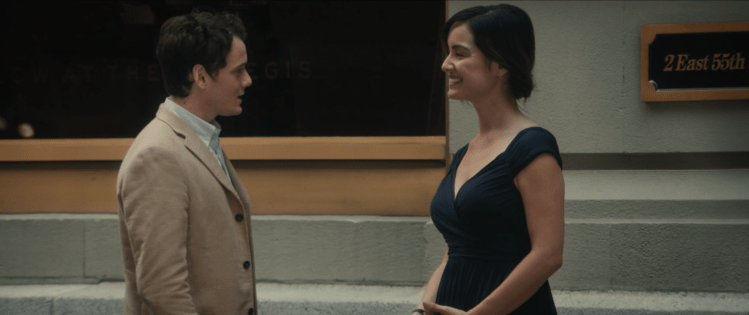
The idea that just because something doesn’t last forever doesn’t mean its worth is diminished and choosing to believe in love and memory is one of the most important lesson 5 to 7 teaches us. While we all have experienced different kinds of love and some even great loves, there is sometimes only one that remains perfect. Nothing can take that away from you and your memory despite all the heartache and suffering it might have caused in the beginning. As the story of Brian Bloom and Arielle ends you are left feeling a sense of peace knowing that regardless of their backgrounds, cultures, views on life and love their bond was never broken and they carried each other in their hearts.
In the end, Brian Bloom learns it is difficult to be a good writer if you live a mediocre life. To be a great writer of any kind takes courage to live a life where you “swing from the heels.” In 5 to 7, Levin is not afraid to break with the conventions expected of a rom-com, favoring honesty over unrealistic situations, however still ensuring that his lead character experiences enough of the extraordinary to reignite his passion for writing. For those who admire the idea of a honest romance, this makes 5 to 7 something special because sometimes things don’t work out the way you want but they work out the way they should. It is a story of love and loss alongside the reality of some relationships and understanding that no one love is the same.
“There would be other loves. Even great loves. But she was right, only one remained perfect.”
Anton Yelchin, as Brian Bloom
 The Fade Out: A Movie Blog