A Look Inside: A Teacher (FX on Hulu Series)

WARNING: Contains Spoilers!
A 17-year-old high school student who is looking to up his SAT scores to get into the University of Texas runs into his new English teacher at a local diner and she offers to tutor him. Their after-school sessions soon turn intimate but not for long, as controversy and chaos breaks out around them. This is the story of A Teacher, a 10-episode limited series on FX on Hulu. The series written, primarily directed and produced by Hannah Fidell is based on her directorial debut film of the same name, which only touches the surface of this provocative situation. After watching the film and the series, it is clear that Fidell’s goal with the recent series was to fully explore the ramifications of student-teacher abuse and create a conversation about these predatory sexual situations and grooming. While the dynamics in the film are very different than the series, the idea was to showcase a complicated story of male victimhood that was better represented through the compact 10-episode series.
Each of the episodes begin with the warning: The series contains ‘depictions of grooming’ that may be disturbing and by watching each of the 21-29 minute episodes on a weekly basis, you might not notice the subtle or not-so-subtle signs of grooming. One of the most interesting aspects of the series is that the audience is also being manipulated – manipulated enough to draw some sort of affinity towards the inappropriate abusive relationship. The story focuses on Claire Wilson (Kate Mara), who is a young (very young looking as well) English teacher at a Texas high school and Eric Walker (Nick Robinson) who is a student needing help with his SAT scores. Within the first few episodes the audience is shown their initial interactions which seem innocent enough. Yet beneath the surface so much more is happening and while a lot of people are shocked by the content, they are still drawn in. Rather simplistic in its plot and characterization, the series is still able to effectively communicate Claire’s ability to subtly groom, abuse and manipulate Eric. As they spend more time alone in inappropriate situations, one can find themselves both strangely rooting for and loathing this couple. We see Eric happy when he is with Claire, but we can also clearly see the scenes in which she has a great deal of power and authority over him, often initiating sex. We see the couple through Eric’s eyes, and if he is seemingly comfortable, the audience can enter into a purgatory in which the relationship’s morality can be blurry. While the relationship is completely inappropriate and abusive – the first half of the series plays like a tragic love story and you start to genuinely believe their relationship to be real. Even hoping despite the controversy, they make it especially after Eric officially turns 18. However, I personally caught myself having to remind myself that what I was watching was indeed abuse but the audience at this point has built an emotional connection to Claire, Eric and the ‘relationship’ they’ve cultivated making you question reality vs. fantasy and right vs. wrong.
At first glance Fidell hasn’t made Claire an obvious monster – but just an unhappy married woman in her 30s who actually wanted to be a teacher but as the series progresses we soon learn that she has led a complicated life and has continually done what other people wanted or expected her to do. At a certain point the audience then begins to believe that the relationship is an escape for Claire, however, the signs of grooming are there regardless of whether Eric or the audience can obviously see them or not. This is a turning point for the audience as we start to see her have a sort of control or power over Eric but the signs were there much earlier. In the first episode, Claire gains Eric’s trust by driving him home and helping him with one of his biggest goals: raising his SAT score. Due to Eric’s low-income status and lack of access to the same academic resources as his friends, Claire is the only tutor he can have. By being the only resource available to him, she fosters dependency. While not explicitly stated, it is clear that Eric feels like he is indebted to Claire, especially with these “special favors” she only gives to him. These slow yet impactful narrative elements help the audience unravel the desire for their relationship to continue or work out in the end.
Yes, the sexual relationship between the two characters is depicted as romantic as a relationship in this situation can be. However, there are moments when the audience can see Eric’s confusion and insecurity break through. Those moments are when it is most apparent that he is the victim in an abusive relationship and not just in a forbidden love affair with a married woman. I believe that this is not just because the audience is watching the relationship through Eric’s eyes, but also because of how we perceive Eric’s identity and his desire to want to be in the relationship. Studies have shown that grooming can often serve to make the victim feel complicit in the behavior, which is why when viewing the story from Eric’s perspective, we may have sympathy for the relationship and feel as if he is willing.
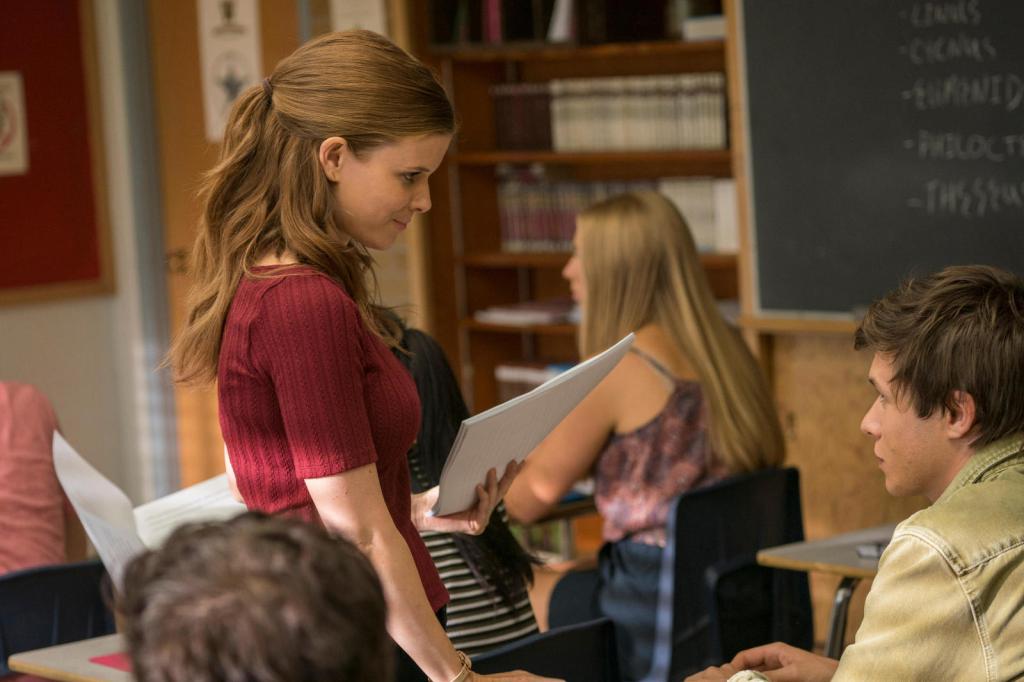
By the mid-point in the series all the cards are laid on the table and you get to see the full perspective of the damage the relationship has done. It is a slap in the face with reality and the audience can see now that they too were being pulled into a fantasy. The later episodes give more context on the aftermath of this predatory relationship and addresses the sexualization of a student-teacher relationship. After the initial backlash of the relationship the story jumps to when Eric is in college and his friend’s joke about his relationship with Claire and “bow down to him.” It is often thought that the male counterpart is usually deemed a more than willing participant in those types of relationships. Little is ever done around the male being a victim and A Teacher really dives into the complicated story of male victimhood. Research has shown that male victims of abuse or sexual abuse take longer to come to terms with it and actually see themselves as the victim, which Fidell highlights in episode 10. Eric, too has had a complicated life – being raised by a single mother, taking care of his two younger brothers while his mother works and working at a local diner himself. These minor narrative elements, highlight how Eric is much different than his friends who have no jobs or real responsibilities. (One even has a maid / cleaner) Along with no real male role-model Eric has felt this need to take care of everyone and this turns into guilt as the fallout of the affair has put Claire in jail, believing he failed to protect her. As he really begins to process what actually happened and realize how it was wrong and he was actually the victim, the audience sees Eric still struggling nearly 10 years later.
The final episode takes place 10 years after their first encounter with Eric becoming a youth counselor and Claire, after a short prison sentence is remarried with two children. The pair run into each other while Eric is in town for his high school reunion. As guilt overcomes Claire, she reaches out to Eric and asks him to have lunch. The final scene speaks volumes to how the two processed what had happened differently. During their meetup, Claire tells him that she has been a coward and couldn’t build up the courage to reach out to him to apologize but that she was happy to see they both moved forward with their lives. Eric quickly snaps and tells her that their relationship destroyed him and he lost years coming to terms with what really happened. Claire goes on to say how sorry she was and that she should have stopped him from pursuing her. Eric then goes on to tell her she is in denial and how she created those moments they had, finally he ends with “I have to live with this forever, and so do you.” This end gives the audience (hopefully) and Eric the catharsis he needed to process the lasting effects of the relationship.

With the series ending this way the audience was able to see the whole story and the consequences of these types of grooming relationships. After watching the series and the film it is clear that for the last 7 years, Fidell has worked through the underlying details of the student-teacher relationship because it varies so different from the original film. The 2013 film doesn’t carry this ‘beneath the surface’ mentality and leaves the audience believing something else entirely. The series was able to draw out the story over several hours and even “conclude” their story but the film left so much untouched and even throughout the relationship the dynamics felt off. A slight feature at just 75 minutes, the original version joined a forbidden sexual relationship already in progress between a reckless, immature, single, 20-something high school teacher (Lindsay Burdge) and her cocky, dominant male student (Will Brittain), culminating in an inevitable crisis when she can’t control her obsession with him. The relationship they had didn’t seem to show the power struggle between the two characters and even showed the teacher in a weakened position (mentality unstable at certain points) which Claire never showed despite her seemingly small efforts to showcase herself as a ‘victim.’ The series’ serialized format allows Fidell to develop more specific, detailed characters—and to stretch out their story over more than a decade, tracing both the origins of the central relationship and its long aftermath.
In the end, the series ended the way it needed to end and wouldn’t have been impactful ending any other way. While A Teacher has received mixed reviews, the fact it was able to give audiences this dilemma between the rights and wrongs of this relationship shows Fidell’s depth on this issue especially in a climate that so easily disregards the stories of male victims and portrays student-teacher relationships as normal. By pulling in the audience with a seemingly mutual courtship and then revealing the myriad of ways that trauma can stain two people’s lives is truly a unique and necessary aspect of the series. While the film wasn’t able to accomplish any of this back in 2013, the series shows the uncomfortable and complex reality of these relationships, which are distorted by enough grooming and manipulation that the victim is treated as a willing partner. And by revamping the characters Fidell was able to tell the complicated story of male victimhood not often shown in the film/TV world.
 The Fade Out: A Movie Blog