A Look Inside: Titanic

On December 19, 1997 one of the greatest films of all time was released and it was Titanic (James Cameron). While I know many people might not agree with my opinion of it being one of the greatest films of all time, today I wanted to showcase just how special and important this film is and will continue to be for me and the film industry in general. When Titanic was released on this day back in 1997, no one was quite sure what to expect because (a) at the time it was the most expensive film ever made and nearly doubled its original estimated budget and (b) had a run time of 195 mins which limited its daily screenings. But despite all of that, we were given an epic film that was able to beautifully link a teenage love story to the established details of the maiden voyage of the RMS Titanic. While Titanic did receive its fair share of negative criticism, it still stands as one of the last great Hollywood epics because of its connection to the past but more importantly for its deeper meaning and appreciation of history.
I vividly remember hearing about the film from my family and other kids at school who’s parents also saw the film (I was 8 years-old at the time). The first time I watched (some) of the film I was at my cousin’s house and we were hiding behind the couch as her parent’s watched the 2 VHS’s (PG-13…we couldn’t watch it so we had to sneak back into the living room). While I was really young and didn’t have a firm understanding of what was happening on screen – I still remember immediately loving the film. Years later when I would watch it on my own, I still remember that feeling of raw appreciation for the greatness that is Titanic. For me, there has always been and will always be a deep sense of love and appreciation for the story that unfolds in those 195 mins. From its extraordinary cinematography, visual effects, sounds, and exhilarating narrative and plot; Titanic is a blending of all that I love about cinema and has so much detail that I could talk for hours about the film and the real-life events. The film has inspired me to travel to Ireland (and obviously because it is an absolutely beautiful country) and visit BOTH Titanic museums – the one in Cobh and the more well-known one in Belfast. I have spent hours and hours reading, watching and researching the real people and stories of the ill-fated RMS Titanic. It is the first film I can truly remember opening my eyes to history, real history and I will be forever grateful for that. But what makes Titanic so great and why is it a film that can truly show this sense of appreciation for the past?
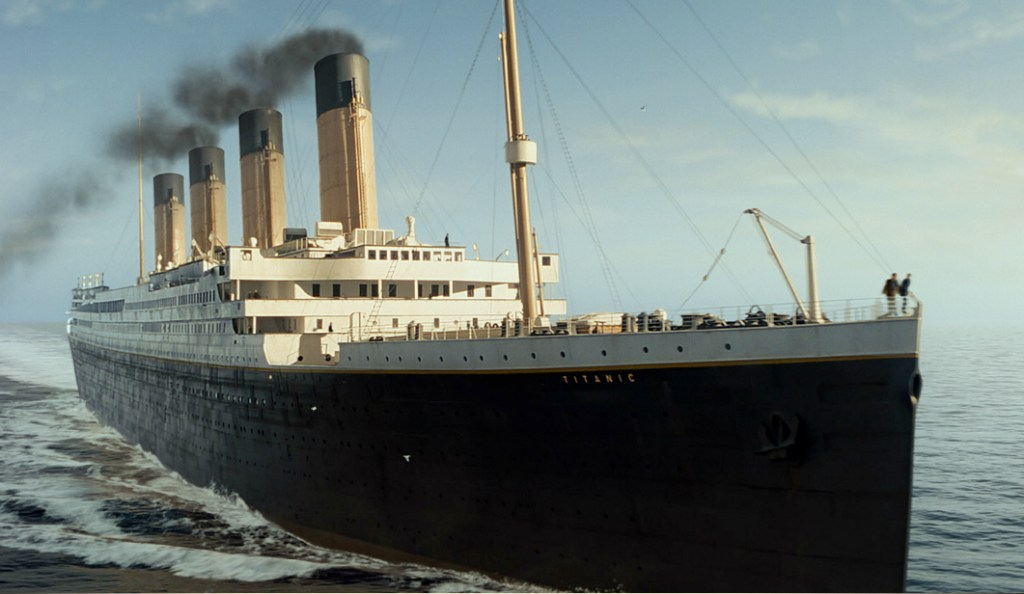
To begin, it is important to note that the scale of the film’s production was truly massive. I mean massive (at the time). From funding an underwater expedition that sent James Cameron and a crew down to the actual Titanic to building a full scale replica of half the ship that was the largest set ever built for a film at the time. They also built dozens of full scale interior sets that were based on the actual blueprints of the ship, many of which could be tilted and flooded as needed. They built miniatures of individual rooms as well as the Titanic itself that allowed them to show the full ship as it was in 1912 and as it exists today at the bottom of the North Atlantic. The list goes on and on but as much as they relied on practical effects, they also made use of many groundbreaking CGI techniques like digital doubles or CG face replacement years before they became common in the industry. The RMS Titanic was truly a modern technical marvel, the epitome of luxury and sophistication in its day and for the film to truly work on an emotional level, they had to create a fully realized vision of the ship in its glory. As Cameron puts it “if you didn’t appreciate the ship you couldn’t appreciate the sinking. So you had to appreciate it in terms, the subjective terms in how people felt about it before they knew they were on “The Titanic.” It just makes it seem like the idea that you’re gonna die, that disaster and doom are coming are so far away and so impossible to conceive and if you don’t start from that place, you’ll never understand what it was like to be on that ship.” Being a person that has always been so focused on details and continually gets feedback on my level of attention to detail, Titanic is a dream to analyze and dissect.
The sets, the clothes, the plates even the carpet match old photographs right down to the sculpture and woodwork; costumes incorporate fragments of vintage clothing; even the silver White Star Line ashtrays had to be right. It is truly magnificent to see the level of detail that went into the making of this film. Furthermore, this level of attention to detail went beyond just the construction of the ship & the sets, but extended even to the depiction of its passengers, many whom were based on real people that were known to have been on the ship, casting actors specifically for their likeness to their real life counterparts. Cameron & his team tried to ensure the stories of these individuals were told in truth, while he did get a few incorrectly or might have misinterpreted – this aspect of the story is just another reason why Titanic is so special. And when it came to the sinking, they studied the forensic science of the shipwreck and even did some experiments (which I would encourage you to look into if you love the science behind all this) of their own to make sure it was portrayed exactly as it happened, at least to the best of their ability based on the current science. But to many, all of this would have amounted essentially to a $200 million History Channel special if it weren’t for Cameron’s love story at the center and that my friends is what separates Titanic from the average disaster film.
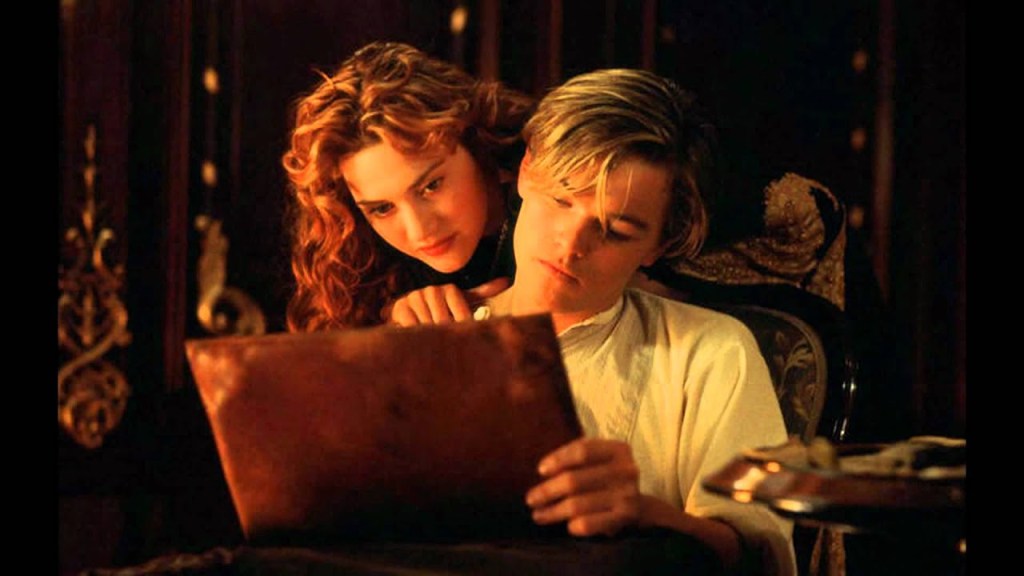
Sure, you can say what you will about some of the film’s cheesier moments or dialogue that might feel out of place for the time, but there’s a lot of subtext enriching the story beyond what you’d expect from the standard tentpole movie of the mid-to-late 90s. It’s a commentary on the nature of class inequality, gender roles, the dangers of ego and greed, our relationship with technology, and most important it serves as a reminder that life is short and we shouldn’t let it go to waste. By putting a fictional love story in the middle of this very real tragedy, Cameron gives the audience a direct line of empathy to this moment in history. If you did a breakdown of the film’s runtime, the first 21 mins are dedicated to the opening titles with a beautiful score by James Horner and the present day story with Brock Lovett (Bill Paxton) and a team of scientist-cowboys searching for the ‘Heart of the Ocean’ amid the RMS Titanic wreckage. That is followed by the next hour and 20 mins (nearly a feature length film on its own) being dedicated to Jack Dawson (Leonardo DiCaprio) and Rose DeWitt Bukater (Kate Winslet) from their arrival on the Titanic to their first meeting, early flirtations and eventual romance. I mean we get a full 3 act structure of just their love story with a clear beginning, middle and end with Rose planning to run away with Jack and start a life together once the ship docks. You take out that first 20 mins and cut the film there and you’ve got a complete romance film and a great one at that but we’ve just reach the half-way point. The rest of the film is essentially a full-stop disaster film but because we’ve spent so much time with these characters that we’ve come to love, the stakes feel so much higher than your average disaster film.
It is here where I felt the appreciation of the past and this film come about. As an audience we really care about what happens to them we want to see them and everyone else make it safely to the lifeboats even though we know they won’t. We know that some will get killed in the ensuing panic, crushed under the weight of this sinking titan, trapped with nowhere to go as the water gets higher or die simply from the cold of the open ocean. We see people once full of life, dreaming of a new start in the New World killed before their time. We watch their final moments consumed with fear, totally helpless to prevent their fate; It’s a horrific and heartbreaking sight and Cameron doesn’t pull any punches. There are no pauses for levity, he lets the sense of terror and panic permeate every scene. And suddenly those sweeping camera shots that once captured the beauty of the ship and Jack with his endless optimism, now give us an unrestricted perspective over all of the wreckage, helplessly watching as thousands face certain death. We witness acts of courage and acts of cowardice, of love and sacrifice, and we view it all through the lens of two characters we’ve grown to care for a great deal. A complete tonal shift from what we saw in the first half of the film not only creates a connection for the audience to empathize with larger picture of what’s happening but this genre blending makes the characters feel like they’ve been put into a story they don’t belong in. While I’ve never been in such a tragedy, I think that’s how all people must feel when caught up in such horrific situations/events.
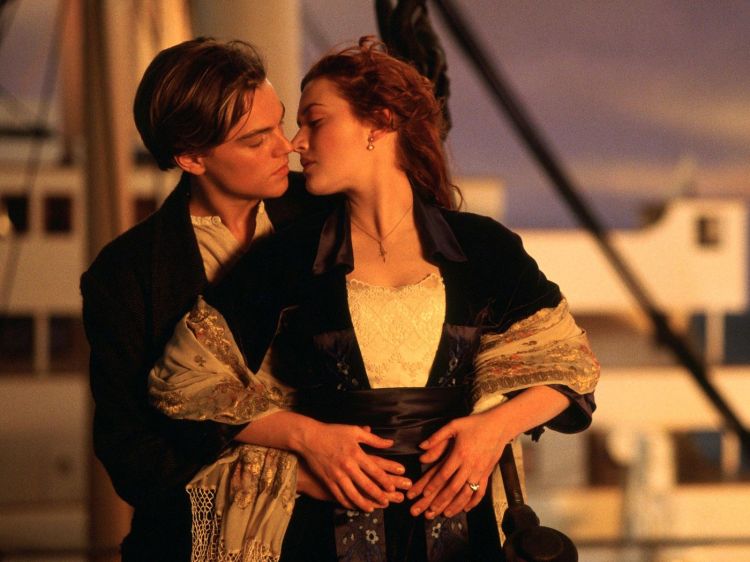
Before the story of the Titanic became a legend, these people thought they were taking the trip of a lifetime on the greatest ship ever built, “to many it was the ship of dreams.” They were told it was unsinkable and that they would arrive at the port in America in record breaking time. None of them were thinking they were headed towards death and loss, they were just living their lives as normal until one day or even one moment changed everything. And from my experiences at both the museums you truly understand that so many people on this ship were just looking for a better life and getting the opportunity to be on the ship was just as special. It’s a realization that sits with me long after the film ends, even after dozens of rewatches. You’ll hear people complain that they both could have fit on the floating door or maybe they should have just taken turns, whatever the case may be there had to be some way for Jack to survive but for me that’s missing the whole point. Jack and Rose are the empathetic heart of the story, our personal window into this real life tragedy and killing Jack forces the audience to feel the full weight of what happened on that day. I think for most people it is difficult to empathize with the past and even when looking at old photos or reading through a history book it feels separate from our own lives. It’s hard to imagine the people in those old photos as real people with the same complex emotions as us, but they all had mothers and fathers, friends, lovers, hopes and dreams and fears and James Cameron wanted us to feel the weight of all that was lost that night.
More than 1,500 people lost their lives that day in the sinking of the RMS Titanic and each and every one of those passengers and crew members had a life, they had a story and they had a family. Stories like Titanic, both Cameron’s fictionalized re-telling and the historical event itself remind us of how fragile life really is and how important it is to make the most of your life while it still yours to live. Despite the tragedy surrounding Rose, the silver lining of it all is that she doesn’t waste her life and she is able to break free from the people/ideals that were holding her back. She makes good on her promise to Jack, to never let go of the hope and optimism that he instilled in her, she goes on to live a life of adventure and love and dies peacefully in her sleep (or that is my interruption of the ending). I think this is why Titanic became the biggest film of all time; It offered the best spectacle that money could buy, competing with any other of the best in escapist entertainment but it also offered something more. Titanic hits everyone on some level because it truly has a little bit of everything – history, action, romance, humor, tragedy and it captures the best and worst of the human condition. I have always been a fan of historical dramas – it is a cinephile’s version of a visual history book. And while Titanic encompasses two stories – the first being a fictional love story and the second being the sinking, it is a look into the past and shows us that the past is real and it has meaning. We shouldn’t take those moments for granted but we also need to learn to appreciate the present and live your life to the absolute fullest.
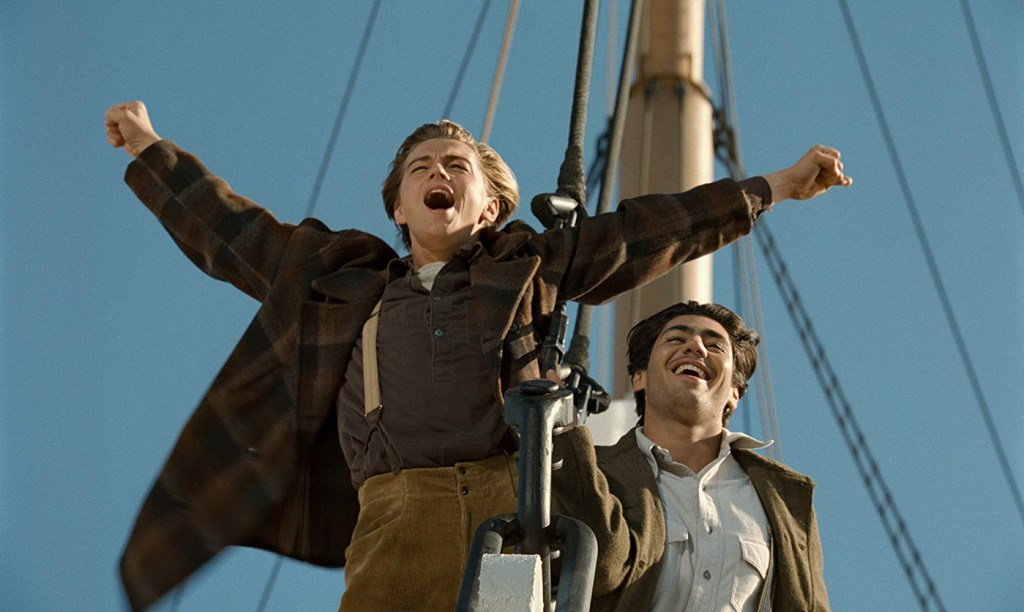
“I figure life’s a gift and I don’t intend on wasting it. You don’t know what hand you’re gonna get dealt next. You learn to take life as it comes at you…to make each day count.”
Leonardo DiCaprio, as Jack Dawson
 The Fade Out: A Movie Blog