Genre Analysis: Film Noir
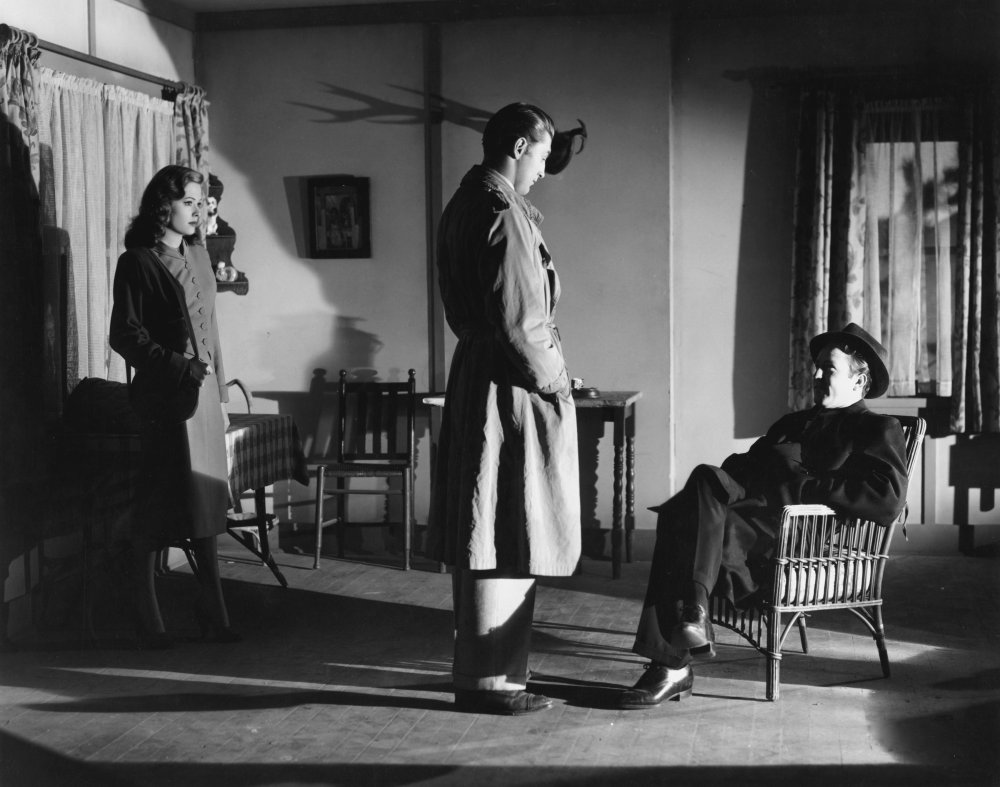
During Hollywood’s transition years of the 1940s and 1950s, two genres developed on the basic mythologies of American life. The first was the western which reflected the open frontier and helped mythologize American history. The second was the hardboiled crime film which reflected the dense modern city and emphasized crime in urban America “which [evolved] from the gangster film” and German Expressionism (Conley, 347). Both genres were popular in the 1940s and 1950s, but the second genre of the dark city life stood out a little more than the western because of its use of sexual tension and crime to allure cinemagoers who were “looking for more ‘adult’ films” (Spicer, 41). This new genre coined the name film noir, which came from the French critics meaning black (noir) film. Double Indemnity (Billy Wilder, 1944) was one of the first films to be considered film noir, which starred Fred MacMurray as a successful insurance salesman and Barbara Stanwyck, a seductive housewife who wishes her husband was dead. Double Indemnity was followed in 1946 by two big film noir films, The Big Sleep (Howard Hawk) starring Humphrey Bogart and Lauren Bacall, and the second was The Postman Always Rings Twice (Tay Garnett) starring John Garfield and Lana Turner. After Out of the Past in 1947 the genre of film noir was on the rise until 1952 when it started to decline until its demise in 1957. Film noir was a genre filled with seductive women, dark-slick alleys, criminals and ambiguous plots. Even though some critics believe film noir cannot be considered a real genre for a number of reasons, all aspects of the film noir make it into a psychological thriller for audience members.
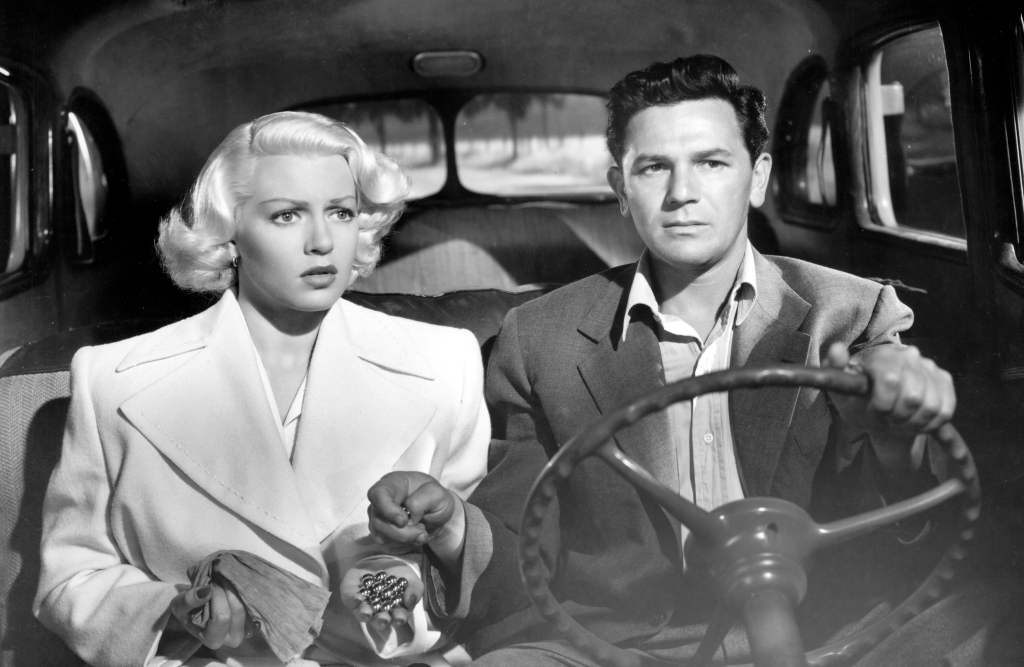
In the dark genre of film noir there is a representation of a seductive deceitful woman called the femme fatale. She became clear to the audience in the 1940s especially in Billy Wilder’s Double Indemnity. A femme fatale is a seductive, independent woman disillusioned by men and causes them to become completely obsessed with her and her life, sometimes including her husband. She almost always creates this asymmetrical relationship with the male protagonist and drives him to obsession, ultimately leading him unable to make rational choices. The femme fatale remains an example of female independence and non-traditional female roles and “it has been observed that the femme fatale in the films of the 1940s is a timely indicator of wartime misgivings about sex roles, marriage and sexuality” (Boozer, 20). With men off at war and woman off working, the normalcy of American society never really came back. Hollywood cinema wasted no time and took advantage of the postwar society. Although many films as early as 1941 can be considered film noir, it was not until 1944 when Hollywood cinema used postwar adjustments in its films. In Double Indemnity, Phyllis Dietrichson (Barbara Stanwyck) is one of the first know femme fatales and could not fit the definition any better. Like the typical femme fatale she is ultimately brought down by the male protagonist after having deceived him so greatly. In contrast, The Big Sleep’s main female character Vivian Rutledge (Lauren Bacall) is not the normal femme fatale because in the end she is not killed or “brought down” but she is changed by love. Following Double Indemnity and The Big Sleep emerged The Postman Always Rings Twice. The Postman Always Rings Twice is the film that put film noir on the map because “no [other] film noirs were popular enough to make the list of major box-office hits during the 1940-59 period” (Spicer, 41). Unlike Double Indemnity, the femme fatale Cora Smith (Lana Turner) is not brought down by the protagonist but by a pure strike of fate. In Out of the Past in 1947, Kathie Moffat (Jane Greer) is brought down not just alone but with her lover, Jeff Bailey/Markham (Robert Mitchum). Some critics believe Jeff Bailey is one of the most seducible male protagonists in film noir because no matter what Kathie did he was still followed her even if he was unsure in his decisions, which ultimately lead to their death.
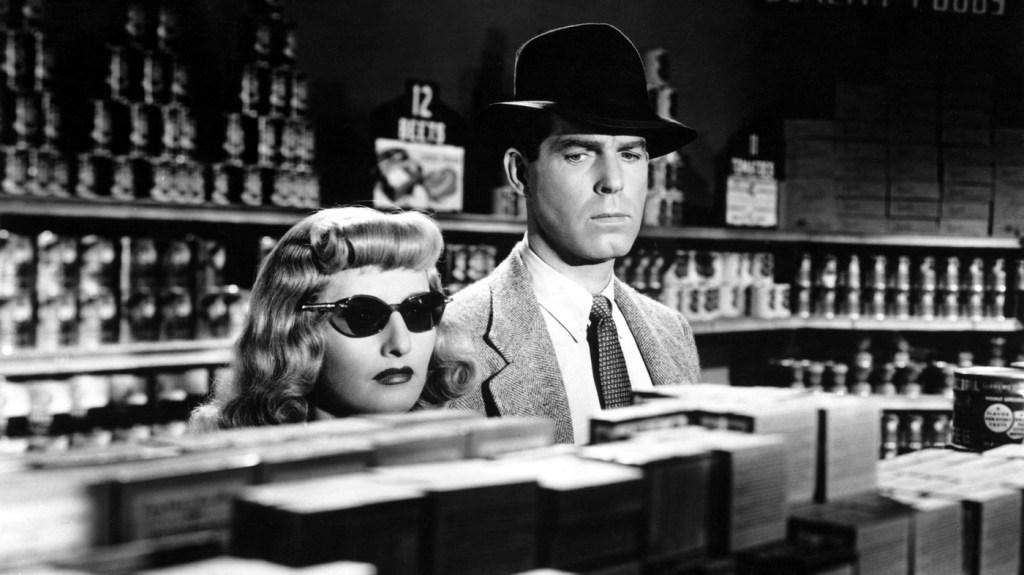
The character of the femme fatale was the icing on the cake for a psychological thriller because even through her deception and lies, the audience was hoping she would change and there would be a so-called “happy ending.” But in the end she was too deceitful and manipulative for the audience to mourn her death or demise. Not only does she psychological manipulate the male protagonist but she also manipulates the audience. Throughout most of the film she remains a woman running from a loveless marriage hoping to find a way out. She then turns out to be a heartless cheat just looking for a profit after her husband’s timely death. Her representations of independence “by way of sexual initiative” lead her to become more than just a bad woman with evil intentions but an important element in film noir (Boozer, 21). In Julie Grossman’s opinion “film noir’s lead female characters predominantly demonstrate complex psychological and social identity, resisting the spectator’s habit (traced in criticism and cultural responses) of seeing past her as opaque or ambiguous (thus a screen on which to project male fears and desires) or of fixing on her as the thing, a dangerous body, to be labeled and tamed by social roles and institutions” (1). Being the object of male fears and desires the femme fatale remains an example of female independence and non-traditional female roles.
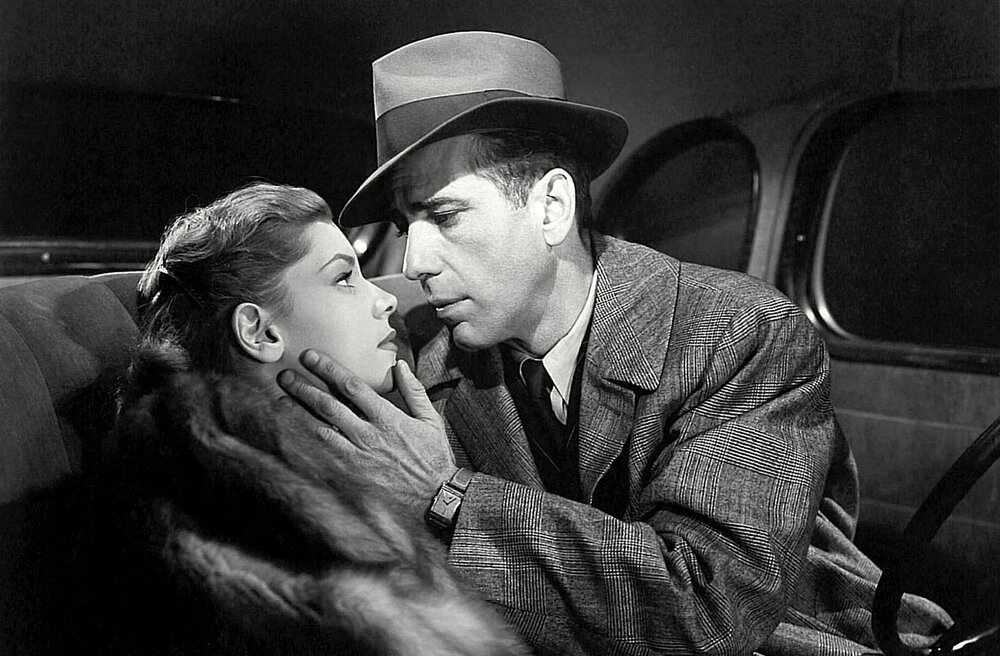
In contrast with the femme fatale there is the male protagonist who is driven by sexual desire and crime. The “most famous male protagonist was the private eye” such as Jeff Bailey/Markham in Out of the Past and Philip Marlowe (Humphrey Bogart) in The Big Sleep (Spicer, 7). Both of which were changed in some way by the femme fatale whether it was love or hate. However, in The Postman Always Rings Twice the male protagonist is just a mere drifter (John Garfield) who finds work at the local diner and in Double Indemnity the male protagonist is a successful insurance salesman (Fred MacMurray). Despite the occupational differences all four protagonists have many characteristics in common. Unlike his female counterpart who “is exhibited as the fetching and restless wife, he is a willing and opportunistic outsider already mistrusted of social authority” (Boozer, 21). The femme fatale merely sparks his sexual energies leading to their fatal attraction for one another. The protagonist usually finds refuge in the femme fatale after having alienated himself from the rest of society years before the meeting with her. The protagonist presents himself as an independent man who does not need anyone because they work better alone. In many noir films the voice-over narration helps the audiences understand his point of view and “his insecurity and disorientation as a noir protagonist” (Boozer, 21). The disorientation he feels is characterized by his relationship with the femme fatale and his realization of their similarities. The male protagonist is not only seduced by her sexual lust but he is also seduced by her money. Both the lust for sex and money leads to the downfall of the protagonist, whether it is through death or guilt.
Even with the characters such as the independent, strong femme fatale and the seemingly weak male protagonists, mise-en-scène plays a huge role in film noir. All aspects of mise-en-scène are extremely important in the films of film noir. The first and most obvious element is the setting, which always takes place in a dense city such as New York, Los Angeles or San Francisco. With the dense city life comes the dark alleys, unlit street corners and rain. Another obvious element is lighting, which plays a huge role in film noir and without it, it lacks that sense of mystery. Low-key lighting and the contrast of lights are used to create darkness both literally and morally. The use of cigarettes and trench coats also make up film noirs mise-en-scène. The elements of mise-en-scène really help create film noir’s instability, not only inside the film but in the film itself. Stemming from the elements of mise-en-scène emerges the complex chronological order of plot and narrative in all film noir films. The complexity of the plot helps create the psychological thrill and an unstable state of mind. Filled with ambiguous endings and flashbacks, “film noir therefore was deemed to unsettle spectators, forming a disruptive component of an American cinema that had habitually sought to reassure and comfort its audience” (Spicer, 2). Not only was the male protagonist alienated from the obvious but so was the audience. Film noir showed audiences the side to American society that Hollywood had just discovered and found incredibly thrilling and interesting.
Film Noir’s dark cinematic style makes it out to be a different genre compared to all others during its years of 1941 to 1957. Even though the height of noir was in the late 1940s and 1950s, many of its elements can be traced through films in the years following its decline (neo-noir) and even today (post-noir). The psychological thrill of film noir gave audience members something they had yet to experience in cinema. The decline of film noir was inevitable for a number of reasons and with its decline, the femme fatale was sure to follow having lost its meaning over the years. Billy Wilder’s Double Indemnity in 1944 was a breakthrough in film noir. It had the lone knight submerged in crime and sexual desire centered around a labyrinth. Hollywood cinema competition with the television and the focus on postwar American society lead them to make more mature “adult” films to bring the audience back in. Double Indemnity, The Big Sleep, The Postman Always Rings Twice and Out of the Past helped accomplish that goal with the male protagonist, femme fatal, dark shadowy alleys and the darker side of American society.
References:
‘Film Noir,’ Andrew Spicer
‘The Lethal Femme Fatale in the Noir Tradition,‘ Jack Boozer
‘Locations of Film Noir,’ Tom Conley
 The Fade Out: A Movie Blog