A Look Inside the Films of Woody Allen
Today, I want to celebrate one of my favorite writers/directors, Woody Allen. I have always been a fan of Allen since my early days in college – I watched Annie Hall (1977) on VHS and fell in love with his stylistic innovations/witty dialogue and simplistic directing. I had actually seen Match Point (2005) years earlier but wasn’t overly familiar with films from Allen at the time. Since my discovery of Annie Hall I have seen almost all Allen’s movies and while there are some that are better than others I have truly enjoyed watching his directing style develop and change over time. While a number of people (and Hollywood in general) have given up on Allen due to the false sexual abuse allegation from the 90s – I continue to support the director for his amazing and unique films that have influenced a number of actors and directors today.
While Allen jokingly states that he was actually born on November 19, 1935 – his birthday for all intensive purposes is December 1. He was born and raised in Brooklyn and lived a troubled childhood with his parents often dealing with a “rocky” relationship. Since his early days in school Allen has always had a passion for gambling, magic, jazz and baseball before he discovered the wonder of the cinema, theatre and stand-up. In his later teens he started making money by writing jokes/gags for a local popular newspaper columnist. Jumping in time a few years after he become successful as a writer for a number of comedians, working as a stand-up comedian himself and working a little as a playwright he started his film career in the late 60s. Allen considers his first directorial debut the film Take the Money and Run (1969). However, Allen’s first movie was actually the Charles K. Feldman production What’s New, Pussycat? (1965), for which he wrote the screenplay. He was disappointed with the final product, which inspired him to direct every film he wrote thereafter except Play It Again, Sam (1972). From then on he has been writing and directing films, at least one every year since 1982.
Hidden Gem Spotlight
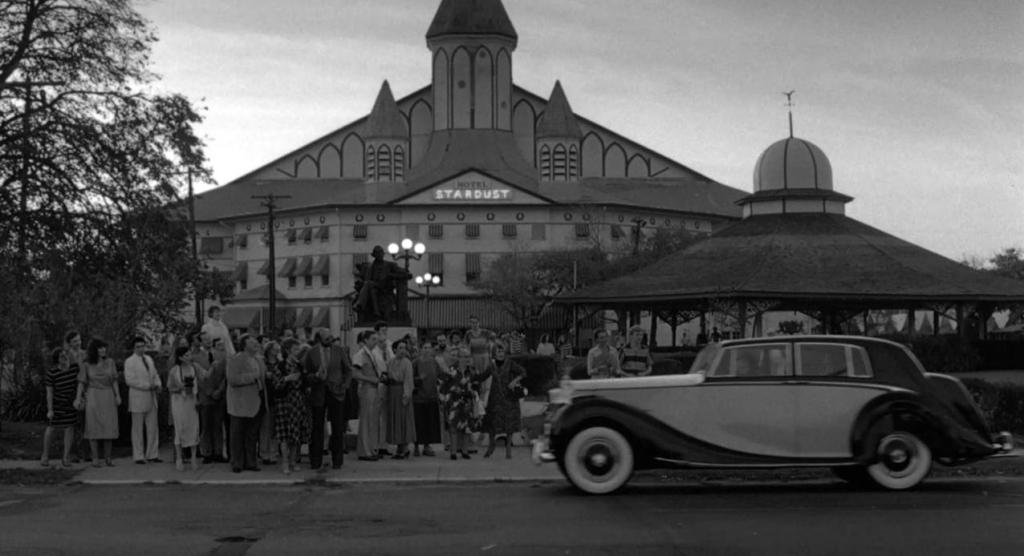
I think I’ll just spotlight the entire 80s for Woody Allen because I think it gets overlooked far too often. Everyone talks about his films with Diane Keaton, his early “funny” films, and his recent mixed review films from the last 20 years are all well-known and discussed…. but his 80s films, from his 8 ½-inspired Stardust Memories (1980) to The Purple Rose of Cairo are often forgotten. These films, among many others, in what is called the “Ingmar Bergman” Era (1978 – 1992) are a departure from his funny films from the 70s. Stardust Memories in particular was heavily misunderstood by audiences, thinking it was a reflection of him and his career and feelings toward his success and career but it’s really about going inside the mind of a man who seemingly had everything (wealth, fame, a good life) but he was suffering from anxiety and depression and his wealth and fame meant nothing. The intention of Stardust Memories was Allen trying to grow as a filmmaker and deepen as a writer by moving to drama without giving up comedy. Allen mentioned in his recent memoir ‘Apropos of Nothing‘ that his goal as a filmmaker is to always grow and work outside his comfort zone.
Directing Style & Stylistic Innovations
Woody Allen is not just a writer (though he’s among the best in the history of cinema), in my opinion his best work has great visual prowess (Manhattan) and/or incorporates a rigid formal structure such as Hannah and Her Sister (1986). He is known for a very distinct, minimal directing style, preferring to capture dialogue scenes in master shots if possible. I definitely consider him an actor’s director, and I think that shows in the line of top actors practically lining up to work with him (or they did). Allen’s best stretch of writing and directing from 1977-1989 has spectacular images that are more than iconic. These iconic shots are in part because of Gordon Willis, a cinematographer known for his work with Francis Ford Coppola on The Godfather films. Willis made 34 total films as Cinematographer and 8 of those are with Allen (from 1977 with Annie Hall and ending with Purple Rose in 1985). In my opinion this was a great period of director and cinematographer collaboration with Willis teaching Allen a lot behind the scenes. Throughout his career Allen worked with a number of well-known cinematographers ranging from Michelangelo Antonioni’s cinematographer (Blow-Up, 1966) Carlo Di Palma from 1986 to 1997, Sven Sykvist (famous frequent Bergman collaborator, of course) on Another Woman, Crimes and Misdemeanors and personally I think there will be a delayed appreciation for Allen’s most recent work with Vittorio Storaro (work includes Apocalypse Now and The Conformist) in Café Society (2016) and Wonder Wheel (2017).
When he was at his height his films were perfectly shot and creatively edited, in part because of the list of amazing cinematographers. I mean think of how Annie Hall must have looked to people in 1977…the cuts to cartoons, breakaway dialogue segments and interaction with memories, the narrator, etc. And while these seem more common today but were anything but common back in 1977. It is clear that Allen was influenced heavily by Bergman but he was equally influenced by the Marx brothers and his best work combines the two beautifully plus some other things like Russian literature and Greek philosophy.
The Early “Funny” Years (1966 – 1976)
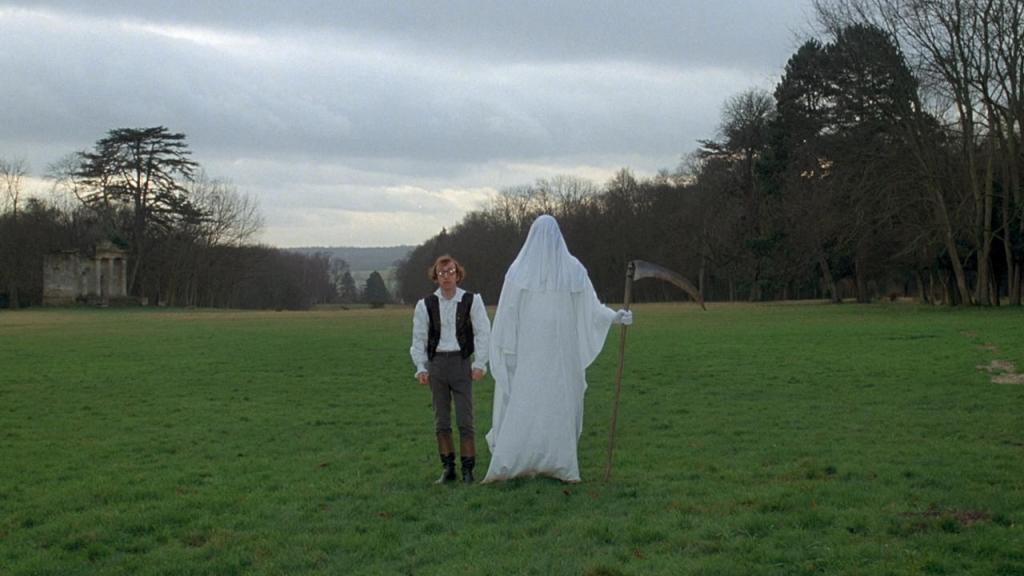
The start of his career started with slapstick classics such as Take the Money and Run, Sleeper and Bananas. These were an easy transition from what he had been doing in his stand-up performances and on the occasional TV show. In my opinion this is really where audiences became familiar with the neurotic “Woody Allen character” that he is known for and many people rank films from this era as their favorites but I personally disagree but I do understand the value they had in his career. At the time these types of films were the testing grounds where he tried out different genres and would return to some of them at different points later in his career. In all honesty, it’s a brilliant idea although I don’t think it was fully his intention.
While I have watched most of them, I am personally not a fan of them because they felt relatively empty compared to the deeper and more meaningful films starting with Annie Hall.
Annie Hall (1977)
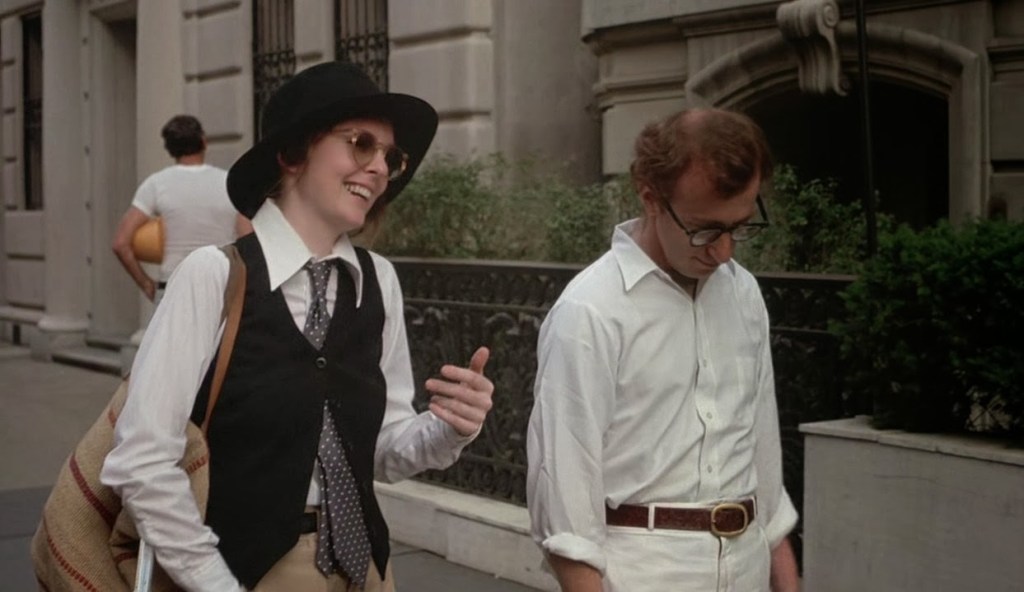
When looking at Allen’s career, I think Annie Hall deserves it’s own category because it marks one of the most important moments in his career. This film is the changing point in his career because up until this point Allen led his writing/directing with jokes and the comedy but here he led with the feelings/emotions and then the characters added the jokes and wit. Annie Hall was truly grounded in that adult feeling, a feeling we hadn’t really seen from Allen on screen and this is the film that made critics see him as a filmmaker and not just a comedian. While in school we, of course, watched Annie Hall and one of my professors said that this film contains every imaginable narrative device. From the start we are shown a direct address to the camera then there is a standard narrative with a voice-over, then a scene of subtitled subtext (PURE GOLD) and then the hyper-mediated cinematic experience scene.
Despite all these astonishing cinematic elements, Annie Hall is a film that offers an insightful, relatable and moving look at a love story about falling in and out of love. That, at least for me, is what makes this film so great because of that universal feeling of being in love and sometimes unfortunately out of love.
The “Ingmar Bergman“ Era (1978 – 1992)
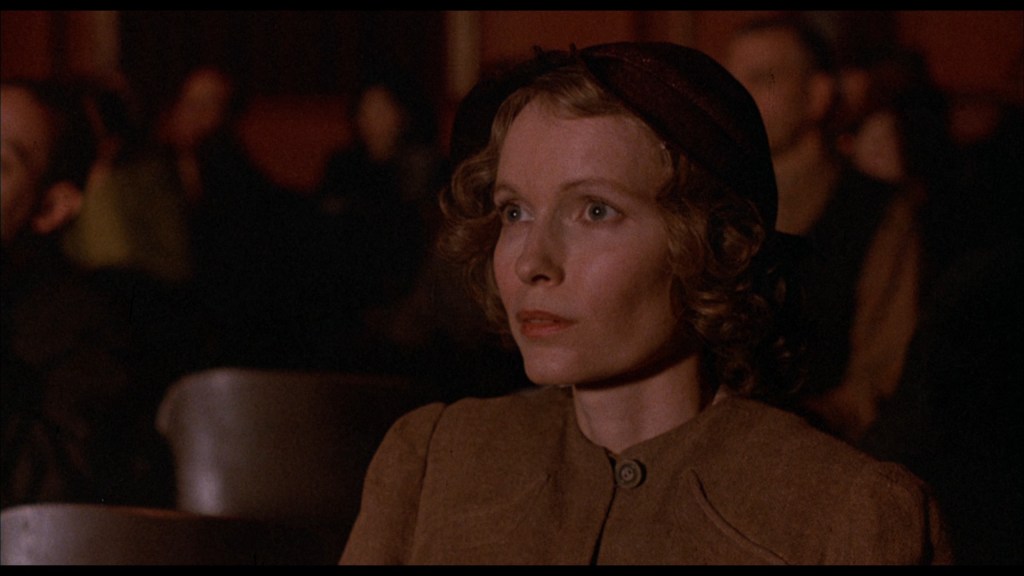
For me, personally, most of my top 10 fall into this era because it was a real departure from his “earlier, funny ones” that he was so well known for. After Annie Hall Allen’s films took…well a dramatic turn meaning he focused more on dramas with a few “funnier” ones intermixed with darker films. During this era there are several films that have a Scandinavian influence, actually an Ingmar Bergman influence. We also see a departure from his leading woman, Diane Keaton to Mia Farrow (who was NEVER his wife even though people think they were married).
As I previously mentioned, I feel the 80s in particular seem to be a forgotten period in Allen’s career with the expectation of Hannah and Her Sisters which won three Academy Awards and was nominated for a few more. While he never cared or seemed interested in awards, I’ve always felt he was a writer that just wanted to write about what he wanted and more importantly what he knew. As I will talk about a little later, Woody Allen has always had some piece of his story (big or small) relate back to his real life and these films from the 80s are just the beginning.
The Weird Slump Years (1993 – 2004)
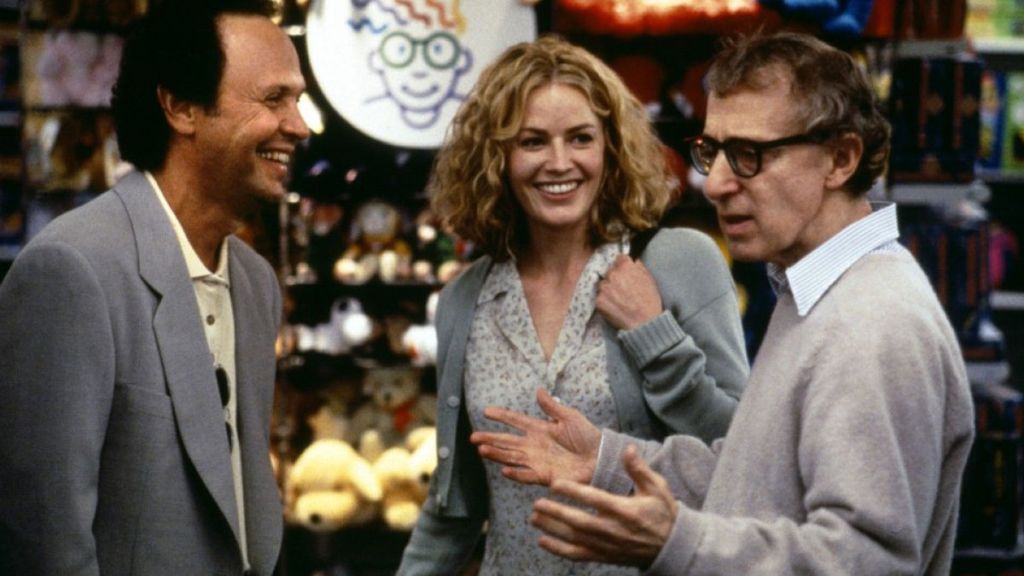
For the next 11 years, things were rocky in Allen’s career which in my opinion is linked to the drama and fallout of the false sexual abuse allegation from 1992. Outside of the personal drama happening I think Allen knows that this was a real slump in his career admitting that Hollywood Ending (2002) was the biggest disappointment in his film career and gliding over these years from a cinematic perspective in his recent memoir.
A notable favorite from this era probably would have been Manhattan Murder Mystery which reunited Allen and Keaton (who are still very close friends today). This was a joy for Allen to make because it was an amusing, solid narrative and being a fan of comedy all his life it good gags/jokes. There’s not much else to say about this decade expect there was a musical….maybe Google Woody Allen musical next time you’re bored.
The Exploring Era (2005 – Present)
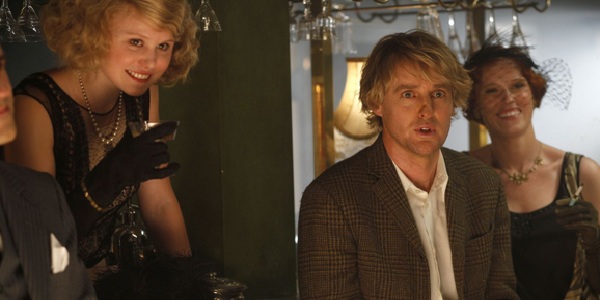
By the mid 2000s it was clear Woody Allen was a writer and director that was going to do anything he wanted in terms of the films he was looking to make. Films from 2005 onward were, in my opinion, distinctively Woody Allen because they always included some bit of his interests from philosophy to magic. Unfortunately, we have his missteps this century fresh in our memory that sometimes it seems gems like Blue Jasmine, Vicky Cristina Barcelona, and Match Point are few and far between.
The last several years we have seen his films take on darker and darker themes such as murder and it’s consequences. With films like Midnight in Paris and To Rome With Love appearing more autobiographical and seem more like films of an old man looking back on his life. But the biggest and most notable difference in his recent films would be their location. Woody Allen has been known for almost filming exclusively in New York but start with Match Point he started shooting films and setting films in some of the world’s most beautiful and exotic cities from Paris to Barcelona. I feel that these films are his love letters to these cities and can highlight some of the best aspects of the city that feels real.
Common Woody Allen Themes
I believe it is safe to say that Allen is a writer and director who bares his emotions and neuroses on screen and it is for this very reason that so many of his films feel so personal. Not only does he write and create stories that have aspects of his life, he uses the city as a sophisticated backdrop and has mentioned in interviews that he loves shooting cities especially ones with the hustle, bustle and of course, rain plus he picks cities he loves and admires. He truly believes that the most memorable parts of his films are the the backgrounds and that, that will be the thing people will remember about his films.
Outside of the background/city, a majority of elements from his films are intensely personal. There is almost always a character, a place, an object or a story that reflects on a part of his life whether it is big or small. Notably Allen has his trademark title with the simplistic black background and white Windsor font accompanied by jazz music.
Throughout his career he has had several reoccurring narrative themes including:
1. Life & Death
I would consider this his most “common” theme and I believe it is a concept he truly struggles with on a personal level. The idea of life and death is universal and it is rarely outlined on screen like it is in his films. The idea of mortality ties in nicely with another common theme of existence.
2. Meaning of Existence
Woody Allen has long struggled with his own mortality and his existence in this world thus he has written his characters in the same way. On screen in a number of his films he usually shows his character (or himself when he acts) surrounded by other people having fun but he’s just sitting there constantly stuck in his own head.
3. Relationships (including love, infidelity & sex)
We all have known love and it is yet another universal theme that he explores in his films but he always adds an extra layer or two. While I feel sometimes he put sex at the front of the love story I think it is an accurate depiction of a relationship just not shown that often on screen.
4. Neurosis
Allen is well-known for his own neurotic behavior and it translates on the screen into a number of his characters from Alvy (Annie Hall) to Gil (Midnight in Paris) and most recently Gatsby (A Rainy Day in New York). In my opinion neurosis goes hand-in-hand with someone’s struggle with mortality so I think it fits perfectly into a number his narratives.
5. Consequences for one’s actions
I would say this is a recent theme I have started to notice and most obviously seen in Match Point, Cassandra’s Dream and Wonder Wheel. The purpose of this reoccurring theme, I am not sure but it is something I have enjoyed watching unfold on screen.
With these themes and a number of others, the best part of his films really lies in the personal touches that I mentioned earlier. While I might not follow a lot of director’s careers like I have Woody Allen’s I can see a little piece of his life in every film from Radio Days being loosely based off his childhood and growing up in a household with extended family to Dorrie (Charlotte Rampling) from Stardust Memories being loosely based off Allen’s second wife Louise and even his latest films like Blue Jasmine and Wonder Wheel having influence from Tennessee Williams (one of Allen’s idols).
Top 10 Woody Allen Films
*These are my Top 10 Woody Allen films based on my own personal affinity
Honorable Mentions
Love and Death (1975)
Probably my only “favorite” from his earlier funny films. While a little too over-sexualized it includes Russian literature and cliches plus it is also obviously inspired by Bergman.
Zelig (1983)
An interesting documentary style comedy about how we all want to be accepted, to fit in, to not offend. I enjoyed this idea that we often present a different person to different people knowing which person might best pleased. (Fun fact: He shot this movie and A Midsummer Night’s Sex Comedy together…at the same time…wild!)
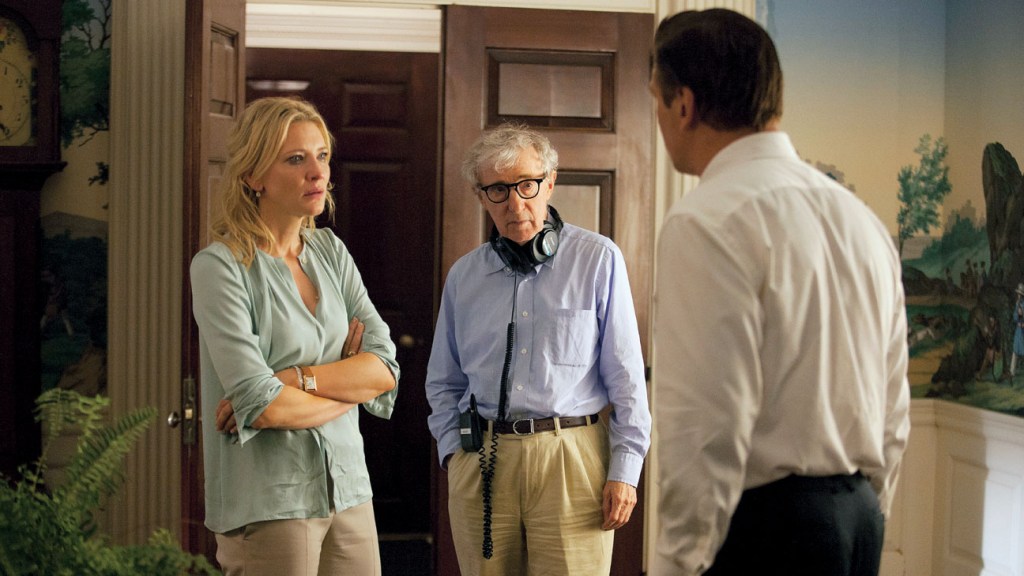
Blue Jasmine (2013)
One of the best things about this film was the performance given by Cate Blanchett. Being a part of Allen’s later “exploring era” – we are presented with some pretty heavy material but for me this kind of film showcases Allen’s wide range as a director with an influence from his idol Tennessee Williams.
10. Husbands and Wives (1992)
The film is about two couples: Jack (Sydney Pollack) and Sally (Judy Davis), and Gabe (Woody Allen) and Judy (Mia Farrow). The film starts when Jack and Sally arrive at Gabe and Judy’s apartment and announce their separation. While this was a box-office failure the film did receive two Academy Award nominations including Best Original Screenplay for Allen. What I enjoyed about this film was that is shows that many ‘rational’ relationships are actually not as durable as they seem on the outside. This is because somewhere inside every person in a relationship there is a child crying ‘what about me!’ And while we say we want the other person to be happy, what we actually mean is, we want them to be happy with us, just as we are, on our terms.
9. Broadway Danny Rose (1984)
Broadway Danny Rose is another black-and-white film from Allen that follows Danny Rose (Woody Allen) who is a hapless theatrical agent who, by helping a client, gets dragged into a love triangle involving the mob. For me, this was pretty laugh-out-loud funny on a few occasions and might be higher on some people’s list but there are films that resonate more with me. I truly enjoyed Danny Rose and feel he is probably one Allen’s most touching characters plus with Gordon Willis as the cinematographer we are shown yet another visually appealing film.
8. March Point (2005)
I originally had this at #10 but after watching it again, I decided to move it up. Match Point follows Jonathan Rhys Meyers’ character who marries into a wealthy family, but his social position is threatened by his affair with his brother-in-law’s girlfriend, played by Scarlett Johansson. I think I enjoy this film not only because the outstanding performances and chemistry between Rhys Meyers’ and Johansson but because the film deals with a variety of themes ranging from morality, greed, and the roles of lust, money, and luck in life. There are just so many layers to the film and the Rhys Meyers character has this darkness around him that you just have to watch.
7. Stardust Memories (1980)
Some consider Stardust Memories a bust and I think that is in part due to the audience feeling they couldn’t relate it as much as his other films. Which I think is fair to say but what I think upset the audience the most is that most people saw this as a reflection of his career and how he viewed his fans but he says that isn’t accurate. He was heavily inspired by Fellini’s 8 ½ which is why it ranks in at number 7 on my list, plus it covers off on several themes such as depression, anxiety and the meaning of life. For me, I just enjoyed the realness of this film because despite seemingly having “everything” people can still be unhappy and they can still struggle with their own personal demons.
6. Crimes and Misdemeanors (1989)
Crimes and Misdemeanors is Allen’s most daring and challenging film. It’s one that not only ponders the meaning of existence but also how the interpretation of life’s events plays into our own beliefs. Allen beautiful juxtaposes these questions in the telling of two stories, one a drama (the crime of murder) and the other a comedy (the misdemeanor of questionable flirtation). This film had personal meaning for him because of that juxtaposition he confirmed he could handle serious material and still have the element of comedy intertwined.
5. Hannah and Her Sisters (1986)
Hannah and Her Sisters is a story about three sisters whose lives are intricately linked by their famous yet overtly dramatic former movie-star parents and their relationships with men. For me, the performances were very well-done and the intertwined actions and reactions of the three sisters and their counterparts make for fun social experiment. Sometimes sad, other times laugh-out-loud funny, the film bounces elegantly yet playfully between moments of beautiful human desire and fear.
4. Midnight in Paris (2011)
Starting in the mid-to-late 2000s Allen started making a lot of films abroad. He was really excited for Midnight in Paris and once he cast Owen Wilson he rewrote the script to fit him and has mentioned he loved having Adrien Brody play Dali and having Rachel McAdams was brilliant but the real excitement was Lea Seydoux as Gabrielle. Midnight in Paris is another film that I could watch over and over. The screenplay is excellent and to this day Allen’s originality still impresses me. I think I enjoyed this film so much because the sense of nostalgia it shows that we all have. We (probably mostly cinephiles) all want to live in a different time because it was the best time in history and we have this romanticized idea of it which probably isn’t accurate but really it’s about having the opportunity to be yourself and dream the way you want to dream. It was a truly beautiful film.
3. The Purple Rose of Cairo (1985)
This film holds a special place in my heart. I first watched The Purple Rose of Cairo in my Introduction to Film Studies class and while I loved that class this was probably the best film I was shown during the semester. According to Allen, he considers one of his best films he’s ever made probably because so much of Cecilia’s (Mia Farrow) character comes from Allen himself. I think the best part of this film is the reality it shows between films and their audience. As a cinephile – I think we can appreciate the idea that films are a sense of escapism for us and this film is the essences of escapism on screen. It is the very essence of reality and fantasy. (Fun Fact: there is a scene from this film that inspired my blog name “The Fade Out”)
2. Manhattan (1979)
Manhattan is Allen’s love letter to New York and it is a film that juggles the delicate moments of human life in the midst of big city aspirations in the world’s most interesting place in the 70s. The look, feel and sound of Allen’s Manhattan captures a time and place that is forever unique to America and to American cinema. It’s perhaps the most beautiful film in the Woody Allen’s library with the black-and-white frames adding a sense of nostalgia for the present. It is a story about unrequited love, social approval and loss, it’s also an essay on maturity, suggesting that it might have little to do with age.
1. Annie Hall (1977)
I feel for a lot of people, you can’t beat Annie Hall but I do know some would argue this film might be overrated but I can honestly say, it isn’t. This film is universally relatable and is the first film with Allen’s now trademark humor, deeply introspective characters and playful plot developments that surround themselves around one central theme — the romantic relationship. It is a film that holds you in from beginning to end with his originality and humor. Annie Hall includes a little bit of everything but yet it manages not to feel overworked with the jokes coming off naturally and (I think) still relevant to modern audiences.
 The Fade Out: A Movie Blog