A Look Inside: Interview with the Vampire
Throughout history there have been a number of books, movies and TV series dedicated to the luxurious yet grotesque lives of vampires. In 1994 there was a film released that brought the sub-genre of vampire cinema back into the world of film and it was Interview with the Vampire: The Vampire Chronicles (Neil Jordan). Even though the film received mixed reviews and is known for the poor casting choices, there are many aspects that make it an important addition to the vampire cinema genre and in my opinion brought the genre back into mainstream media. Interview with the Vampire is based on the 1976 novel with the same name by Anne Rice, who also wrote the screenplay for the film. Director Neil Jordan accomplishes Rice’s flashback story thoughtfully rather than trying to mold it into a film with a structured plot. While Interview with the Vampire can be interpreted in many different ways, it still has a number of similarities and differences to other films in the vampire cinema genre.
WARNING: CONTAINS SPOILERS!
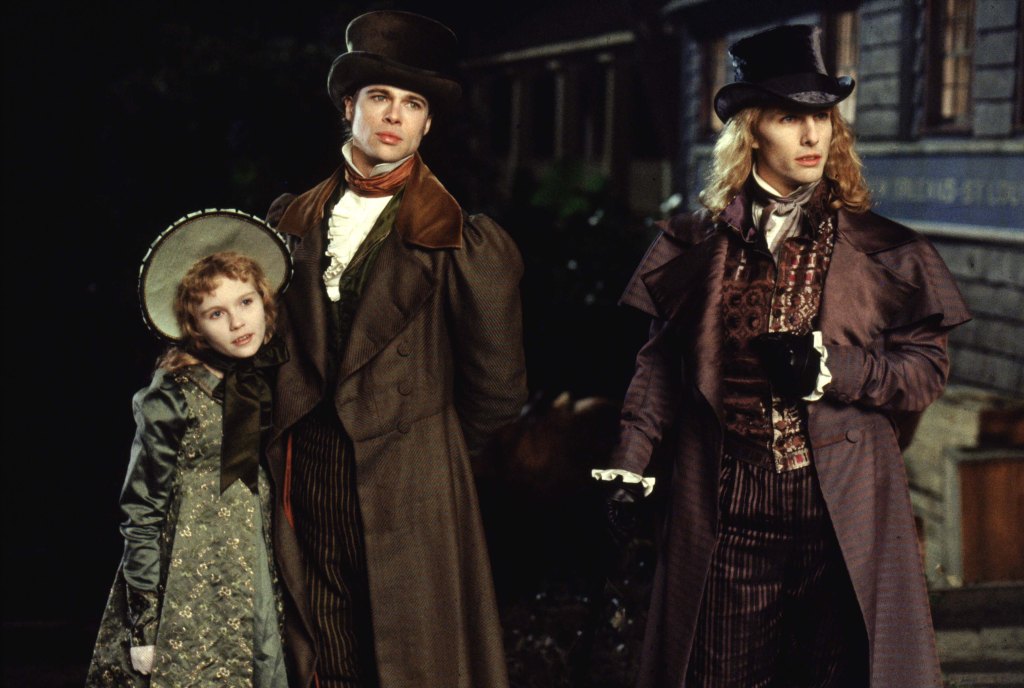
The films starts off in modern-day San Francisco where go-getter journalist Daniel Molloy (Christian Slater) is in a room with Louis de Pointe du Lac (Brad Pitt) who claims to be a 200 year old vampire and wants his life story to be told. His story starts off in 1791 Louisiana just six months after the death of his wife and child during childbirth. Unable to cope with this loss, Louis longs for death so he can join his family in the afterlife, but this longing draws attention from the sophisticated yet manipulative vampire, Lestat de Lioncourt (Tom Cruise). Lestat gives Louis the ultimatum of death or a life of being forever young and beautiful, Louis makes the choice to go on living with the “dark gift.” Quickly becoming regretful of his choice, Louis goes on eating rats and other creatures instead of taking the lives of humans like his counterpart Lestat who takes pleasure in killing. In time Lestat feels pity for Louis and transforms a young girl, Claudia (Kirsten Dunst) who would inevitably die from the plague, into their vampire daughter. The three live together for over thirty years until Claudia realizes her fate of being young forever and never growing up to be a real woman which causes her to feel jealously and rage. Feeling a sense of guilt Louis finally tells her the story of how she came to be and while Claudia is devastated she quickly forms a plan to get rid of Lestat in order for them to be free from his evil and manipulative ways. Claudia, in order to make amends with Lestat after she throws a temper-tantrum, brings him twin boys who are poisoned with laudanum which is fatal to vampires. She slits his throat as he begins vomiting from the poison and then Louis and Claudia get rid of his body in a nearby swamp.
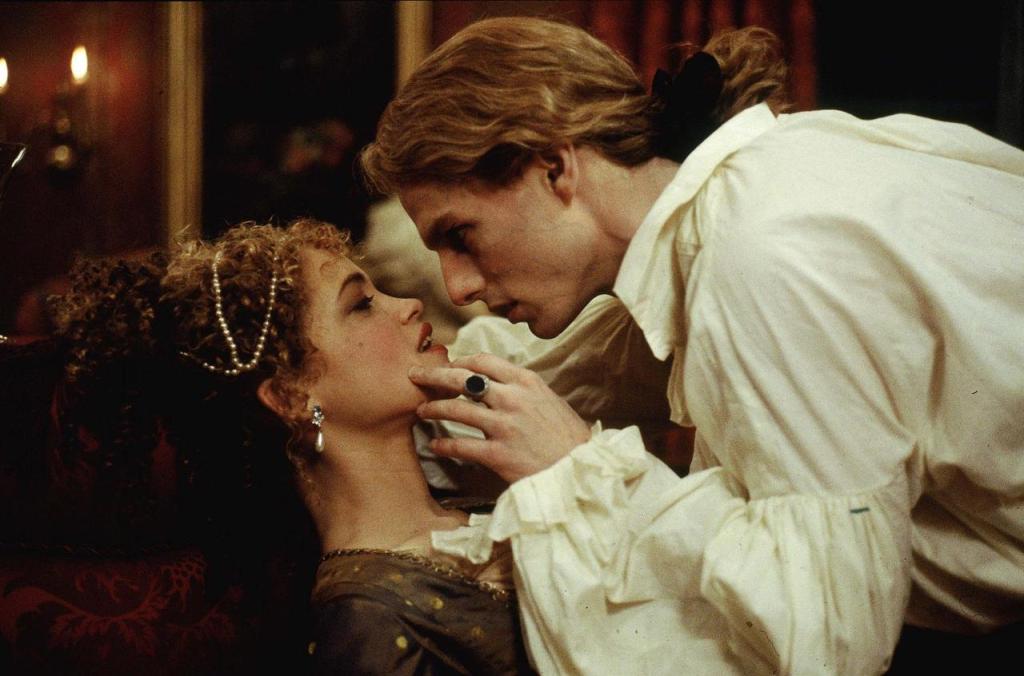
Louis and Claudia being free, plan to move to Europe but just before their ship sets sail, a ‘zombie’ like Lestat appears and tries to attack them. His attempt failed and due to his weakened state and the two set fire to their home in New Orleans and flee to the ship bound for Europe. Louis and Claudia find peace in Paris and it seems as if their lives are “perfect” until one night when Louis meets Santiago (Stephen Rea) and Armand (Antonio Banderas) by chance. Armand tells Louis that there are other vampires in Paris and they are a part of the Théâtre des Vampires, which is a coven of vampires pretending to be humans, pretending to be vampires. Louis and Claudia attend a performance and Armand shows them the theatre’s lair, where they all live and he proclaims to be the oldest living vampire in the world. Unamused by this lifestyle, the two leave and return to their lives but on the way out Santiago, who is able to read minds, discovers that they have killed Lestat. Meanwhile, Claudia begins to worry that Louis will soon leave her and brings a mother-figure named Madeleine (Domiziana Giordano) back for Louis to transform into a vampire. He does so regretfully but then the group theatre members kidnap them because they murdered Lestat. Back at the lair they put Louis in a coffin and tell him he will be in there forever while Claudia and Madeleine are put into an airshaft with an open roof and the next morning they are burned alive by the sun and turned into ash. Armand, horrified at what happened rushes to save Louis, who soon finds Claudia is nothing but ash. In a raging fit of anger, Louis sets fire to the Théâtre des Vampires trapping himself inside as well but he is saved from daylight and the fire by Armand. Armand once again offers Louis a place by his side but Louis rejects him and leaves, knowing Armand had allowed Claudia’s murder so that he could have Louis to himself. As decades pass, Louis never recovers from the loss of Claudia and dejectedly explores the world alone. He eventually returns to New Orleans in 1988 and finds Lestat at their old home in a terrible state living off the blood of rats and rejects his offer of joining him again, Louis then goes to San Francisco where he finds Molloy. Molloy is amazed at the story and asks Louis to turn him into a vampire, Louis is outraged that Molloy has not understood the tale of suffering he has experiences so scares Molloy into fleeing the apartment. After a daring escape, Molloy rejoices in having got the story but soon encounters Lestat who gives him the opportunity he never had, life or death.
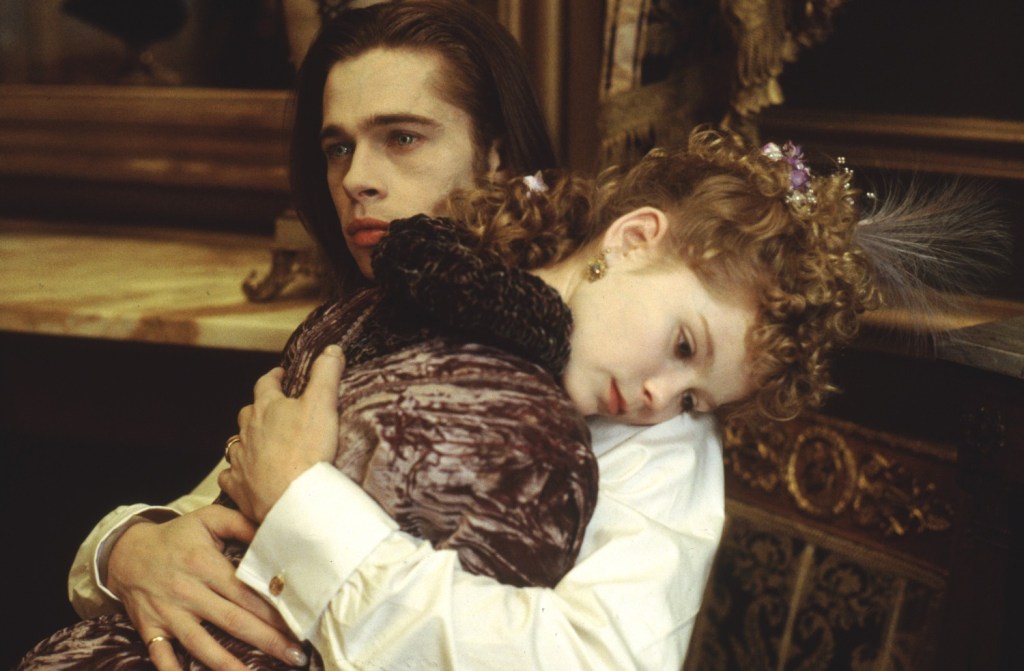
The depiction of vampires in Interview with the Vampire can be interpreted in larger cultural terms. One of the biggest interpretations it its outlook on people’s desire to be forever young, which can be seen throughout the vampire cinema genre. However, in Interview with the Vampire this idea or desire is shown in a different light, it is shown in a more regretful self-hating way. In numerous other vampire films, the vampire has lived for many centuries and has not modernized with the new age, usually living in a mansion or castle isolated from the “real world.” But here Louis has lived for more than 200 years and progressed with the times, but this progression has shown that he has lived far beyond his time. We can see the disadvantages of living for centuries from watching people & society change but the hardest concept to overcome is the idea of being forever alone. With such a gift, Louis quickly learned that he cannot have everything because there will be consequences. Even though many people desire immortality both Anne Rice and Neil Jordan portray the realistic aspect of what it would be like to live forever and the consequences that come with such a “dark gift.”
Another striking depiction of vampires in this film is the new kind of family shown. In the past the “family” of vampires usually consist of the master vampire and his daughter/lovers which includes little interaction between them. In this film, the family is drastically altered and resembles a different lifestyle, not seen in other films up until that point. Not only is this lifestyle different from the vampire genre but it is different from other dramas of the time. The typical American family during that time consisted of a mother, father and their children; this film consists of two young males and their vampire child. Even though this family ultimately destroys itself, unlike many traditional families, this different family is structured to do so. This idea of a new family leads into the idea of homosexuality, which is prominent in a number of other vampire films. Although there is no sex shown between Louis and Lestat, there is definitely an undertone of sexual tension as shown with the way the film was shot. Lestat and Louis live together for a number of years, share a children and the responsibilities of taking care of her and finally the scene in which Lestat creates the vampire version of Louis can be interpreted as the closest thing to sex as the film allows.
Another important cultural aspect that is interpreted in the film is the use of God and religion, another aspected depicted heavily in vampire cinema. Typically, you see vampires representing sin and temptation, however, in this film there is an overwhelming sense of grief, regret and guilt rarely shown in other films in the genre. Louis is constantly regretting the “dark gift” he chose and lives a life filled with terrible guilt, when given the opportunity to get rid of those feelings he is told by Armand to ‘deny them and run away from them.’ In Christianity you are told the best way to overcome grief, regret and guilt are to face and accept them, something vampires have yet to accomplish, especially Louis. Lestat, then, can be represented as an evil “God” and in his mind he is an all powerful god and tells Louis “God kills indiscriminately and so do we.” Louis believes otherwise and continues to live a life where he believes he will be demanded and will suffer for what he has done.
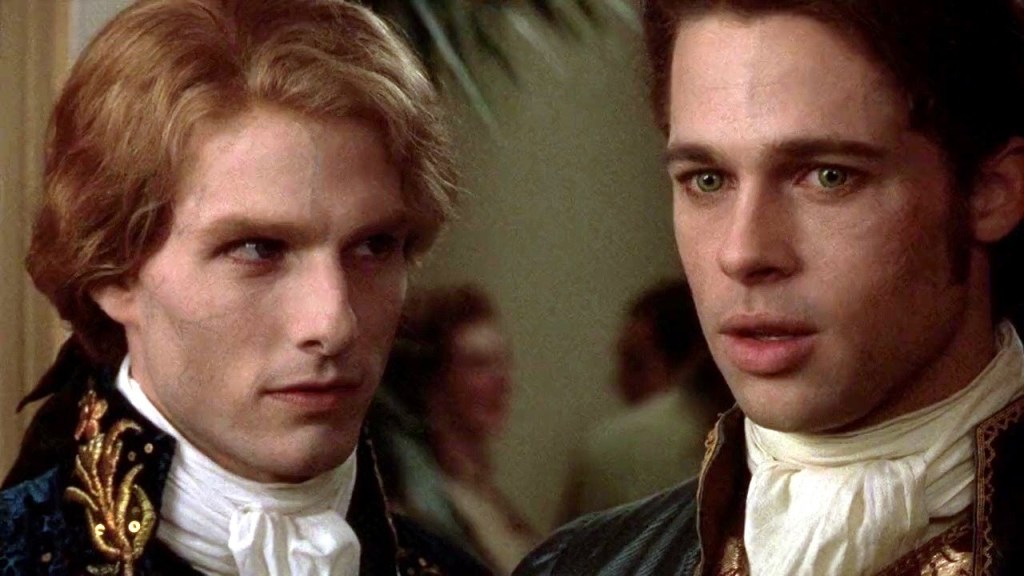
There are many similarities and differences between Interview with the Vampire and other films before and after its making. For instance, the character of Louis can be compared to Countess Zaleska in Dracular’s Daughter (Lambert Hillyer, 1936). Like Countess Zaleska, Louis feels remorse for having killed people and wishes to get rid of the ‘evil’ inside themselves. In Countess Zaleska’s case, she succumbs to the evil and accepts her fate but Louis continues to live a life with such grief and regret. In both these films the audience is also made to identify with the vampire rather than anyone else and also empathize their lifestyle, maybe more so in Interview with the Vampire than in Dracula’s Daughter. Louis counterpart, Lestat, is more comparable to Count Dracula in Dracula (Todd Browning, 1931). Both Lestat and Count Dracula are manipulative vampires who desire to kill anyone and anything in order to survive. One being different between Interview with the Vampire and other vampire films is the fact that it shows the actual life of a vampire over an extended period of time, rather than the moment that begins their demise. In Todd Browning’s Dracula the audience does not see Dracula’s life before he met Reinfield or Professor Van Helsing rather the days leading up to his death. Another important difference is the lack of restoring order; Interview with the Vampire leaves the audience with the image of Lestat regaining his strength and Louis off continuing to live life (or so we assume). In other vampire films, the vampire always receives what they had coming, which is usually a stake through the heart. Neither Lestat or Louis were killed, the only main vampire character who died was Claudia, whose death was unfortunately inevitable.
In the end, Interview with the Vampire accomplished its goal of making people see the realistic aspects of living forever through the eyes of a regretful vampire. Neil Jordan stuck true to Anne’s Rice’s novel which is filled with the wild eroticism of vampires and a different take on the personality and lives of vampires. Despite the negative reviews it received, Interview with the Vampire holds true to many aspects of the traditional vampire tale and gives the audience a new outlook on what it is truly like to live forever, a new style of the vampire family and images of religion not previously touched on in other vampire films.
 The Fade Out: A Movie Blog