A Look Inside: All About My Mother
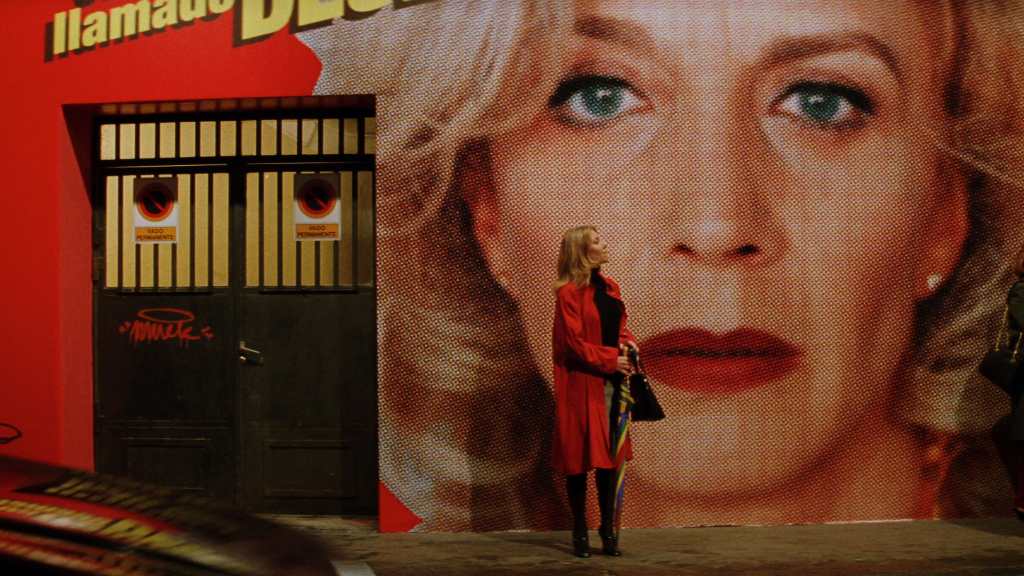
It is simple to see the film All About My Mother (Pedro Almodovar, 1999) as an art film for many reasons. According to David Bordwell’s essay “The Art Cinema as a Mode of Film Practice” the art film “is both feasible and illuminating” (56). The film All About My Mother follows the process when it comes to defining art cinema. The film gives a clear set of formal conventions and follows the functions of style and theme that are consistent with art cinema. The functions of style and theme are realism, authorship and ambiguity. Although, All About My Mother lacks a strong sense of authorship, it focuses heavily on realism and ambiguity by covering controversial topics and ultimately leaving the spectator questioning what happened at the end of the film.
First, it will be wise to discuss the concept of realism according to David Bordwell and how it is reflected in All About My Mother. There are many different aspects when considering realism it could the use of real locations, real problems or real psychologically complex characters. This film creates a reality centered around real problems and real psychologically complex characters. The real problems presented in the film are AIDS, transvestitism and existentialism. The real problems are presented to the character Manuela (Cecilia Roth) who meets people throughout the film dealing with these “issues.” Manuela is presented as the real psychologically complex character as well as the people she meets. The characters within an art film “may act for inconsistent reasons or may question themselves about their goals” (Bordwell, 58). There is only one goal that is consistent for Manuela throughout the film and that is finding Lola (Toni Canto) who is Esteban’s (Eloy Azorin) father. The rest of her goals and desires are not obvious in the film, she quits her job as a nurse and moves to Barcelona and becomes an assistant to an actress. She tends to slide from one situation to another with no real consequences or even goals. She also has the pleasure of meeting equally as psychologically complex characters such as Rosa (Penelope Cruz) who is a pregnant nun with AIDS and Agrado (Antonia San Juan) who is a transsexual prostitute.

Second, is the idea of ambiguity which plays a huge part in the function of art cinema. After losing her son in a car accident Manuela is completely distraught and goes to find her son’s heart which was donated to a man in A Coruna, Spain. Her purpose of following the heart is left unsatisfied and clearly undefined. The ending of the film is probably the biggest ambiguity of all. There is absolutely no closure on what happens to baby Esteban, Manuela or even Lola. The normal classical narrative ends with closure and resolution but the art film places ambiguity in the narrative for realism and giving the spectator the pleasure of knowing “in life things happen this way” (Bordwell, 60). It can be seen that the ambiguity makes the film seem more real because life doesn’t always end with the happy family or the guy getting the girl, etc. The ambiguity leaves the spectator believing that the character’s life continues and just doesn’t stop because the film does, metaphorically speaking of course.
The third and probably weakest idea is the concept of authorship, which does play a role in art cinema but does not seem to be so obvious in All About My Mother. Director Pedro Almodovar presents the themes of sisterhood and family in the film. Both of these are themes that can be seen in a number of his films. It can seen that these themes are “presented as a structure in the film’s system” via the author (Bordwell, 59). Although themes of family and sisterhood are presented in many classical Hollywood films, Almodovar gives them a slight freedom not seen in classical Hollywood cinema. He presents them in a new way that is not seen in other films and he makes it his own.
Overall, the functions of style and theme of art cinema are upheld in the film All About My Mother. Even though realism and ambiguity are more obvious than authorship it does not lack the outstanding qualities it takes to be considered an art film. Both the characters and narrative create a sense of ambiguity that lasts till the very last shot in the film. Director Pedro Almodovar stayed true to the use of his themes such as sisterhood and family; which are present throughout the film. He also stays true his style of creating characters that are realistic and do not always get the happy ending.
Reference: David Bordwell’s “The Art Cinema as a Mode of Film Practice”
 The Fade Out: A Movie Blog