
Ranking from Worst to Best
Over the last 28 years, David Fincher has directed a total of 10 movies from inside the mind of the creator of Facebook to the mind of the Zodiac Killer and I’ve decided to rank each of them. He had been in the film industry long before he started directing and it wasn’t until 1992 that Fincher got his chance to direct and release a feature-length film which was Alien 3.
In my opinion, Fincher is great at his attention to detail when it comes to visual styles and performances. I believe he has a desire for perfection when making his films and he guides his intention with the camera, frequently opting for a detached and observational point-of-view for the audience which adds so much for the viewer. Most of Fincher’s films explore the dark impulses of humanity; things such as jealousy, lust, perversion, and compulsion. These themes can be seen in his most unrefined films as well as his most polished, reflecting a consistently troubled and cynical vision of human nature. Let’s get to the ranking of these films!
10. Alien 3 (1992)
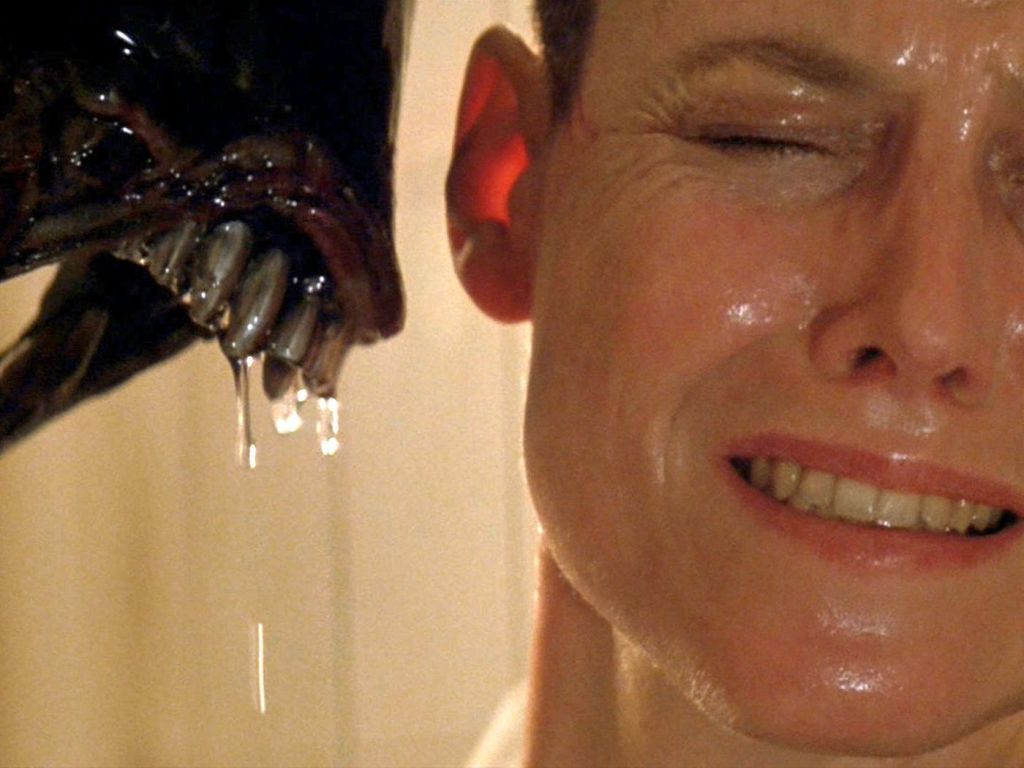
The first film on this list was his first feature film to direct and thankfully this didn’t stop him from continuing his directing career. Alien 3 wasn’t a great film overall but it has been said that this is in part due to 20th Century Fox inserting themselves into the filming process which resulted in a choppy version of what Fincher had originally imagined when taking on this film. Despite a boring script and the films inability to “thrill and scare” like the first 2, Fincher was able to incorporate his signature nihilistic style which does shine through a few times throughout the film. I can safely say that this film would remain in the number 10 slot for a majority of film lovers out there.
9. The Game (1997)
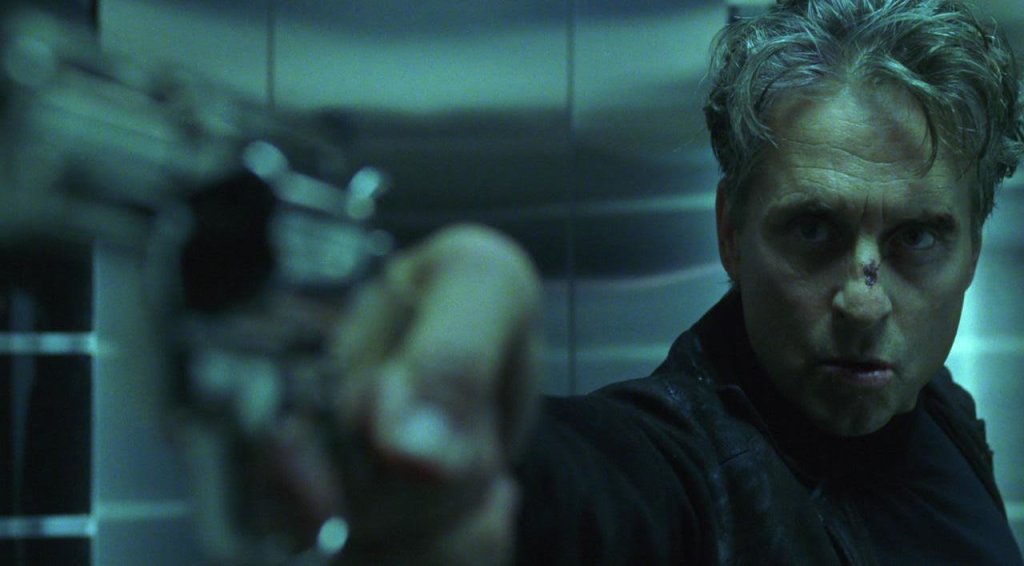
Second on the list was Fincher’s third film to direct, The Game, and this script caught his eye by toying with the audience’s perception of knowledge and linear information. I believe he did a solid job at directing but I think the number of plot twists and turns was too much for the average audience and the film falls flat with the weight of it’s own complex narrative. While the film wasn’t the best, Michael Douglas did an incredible job for his performance of Nicholas, the cynical investment banker who becomes obsessed with the possibility that his life has become embroiled in a far-reaching conspiracy. Themes that would be pivotal to future films directed by Fincher. I’d consider this a notable watch if you haven’t seen it yet.
8. Panic Room (2002)
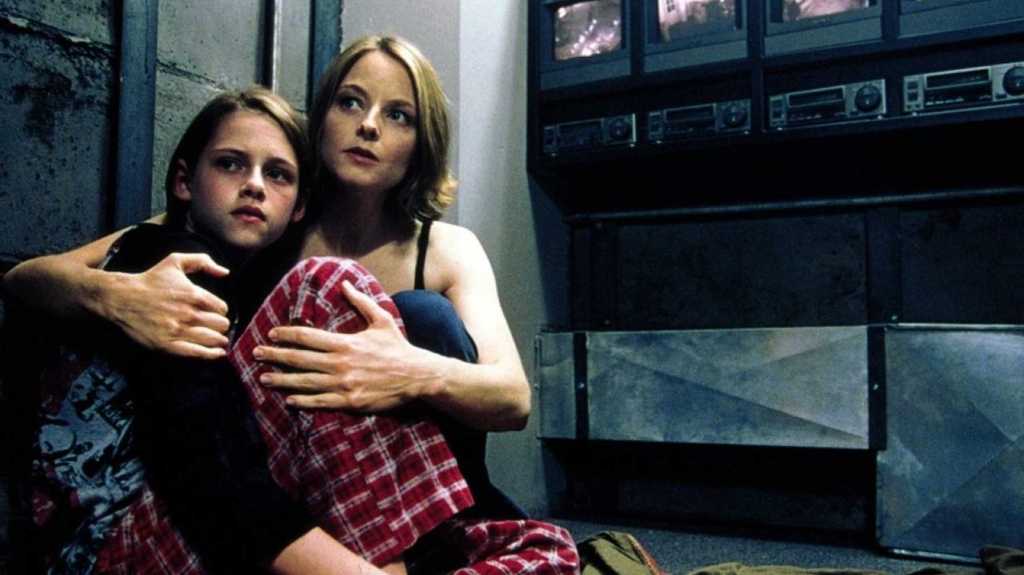
Panic Room for me is the first film to really cultivate Fincher’s unique visual approach to camera. Fincher’s fifth feature is based on one of the most terrifying premises ever conceived for a motion picture: What if Jared Leto broke into your apartment?? Terrifying, I know! Aside from that, Panic Room makes some of Fincher’s most favorite motifs literal such as darkness, obsession, the relationship between safety and technology, and women whose strength is forged through self-preservation against a world of primitive men. Starring Jodie Foster and a young Kristen Stewart, Panic Room is very entertaining and very-well executed despite a rather simplistic premise and script.
7. The Girl with the Dragon Tattoo (2011)

I rewatched this recently and I do love the darkness of this film but when comparing it to Fincher’s other films I feel The Girl with the Dragon Tattoo ranks in at number 7. This was a 2011 adaptation of Stieg Larsson’s crime novel (with the same name) centered around the vigilante hacker Lisbeth Salander, played by Rooney Mara who completely disappeared into her role and did it very well. Also starring Daniel Craig, the film beautifully crafts a cinematic experience that is probably more about the central character (Mara and Craig) confronting their own personal traumas as it is them investing the 40 year old disappearance of a powerful businessman’s grandniece. The addition of the soundtrack by Nine Inch Nails veterans Trent Reznor and Atticus Ross adds to the films grimy and dark aesthetic.
6. The Curious Case of Benjamin Button (2008)
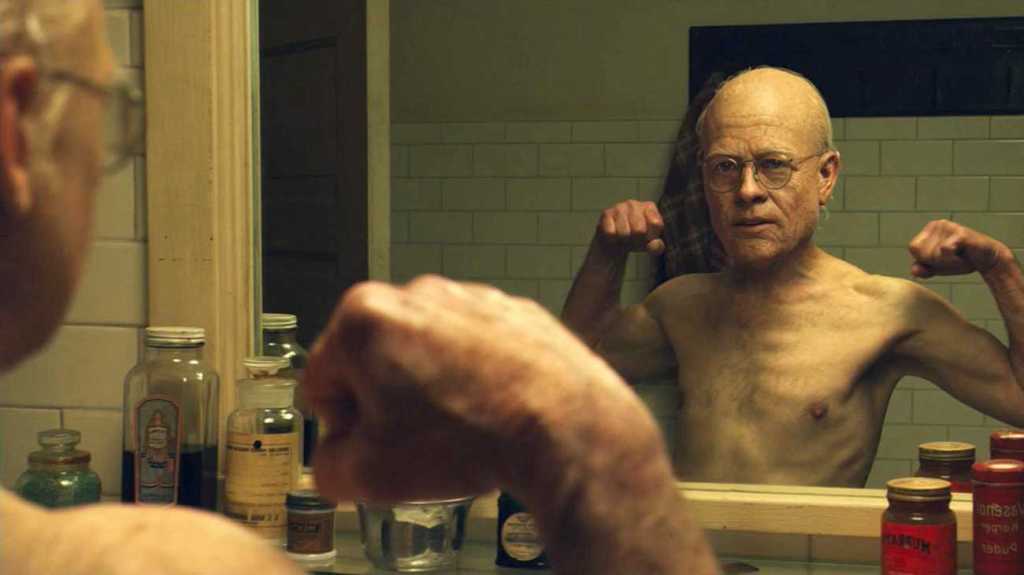
Did you know that The Curious Case of Benjamin Button was based on a short story written in 1922 by the amazing F. Scott Fitzgerald? A lot of people probably didn’t notice that but I was very happy to see this one come to real life with Fincher’s direction and for me the film did not disappoint with stellar performances by Brad Pitt and Cate Blanchett. While a lot of people were frustrated by the inevitable anticlimax of its ending (and the overall film length) — there are moments of this 166-minute epic that are as touching as anything that Fincher has ever done…well, maybe that’s a low bar since Fincher isn’t exactly known for being “touching.” I think this should be added to your list if you haven’t seen it yet.
5. Gone Girl (2014)

Gone Girl is Fincher most recent feature film which is based on the 2012 novel with the same name by Gillian Flynn (she also wrote Sharp Objects, check out my post here). Being his most recent, I can see this film as a total culmination of his signature style from the detached and impersonal camera behavior to a sinister and shocking script. Gone Girl hides so much thematic content behind the surface level mystery it presents in the first 20 minutes and as the film continues it begins to reveal its own inner workings. The film explores ideas of miscommunication, deceit and socipathy alongside the manipulation of news media and gender politics inside and outside of marriage. This film as a lot of elements and a lot of depth and does not disappoint. Trent Reznor and Atticus Ross’ tinkling score may not be quite as memorable as the one they made for The Social Network, but it’s just as instrumental to the film’s overall atmosphere.
4. Fight Club (1999)
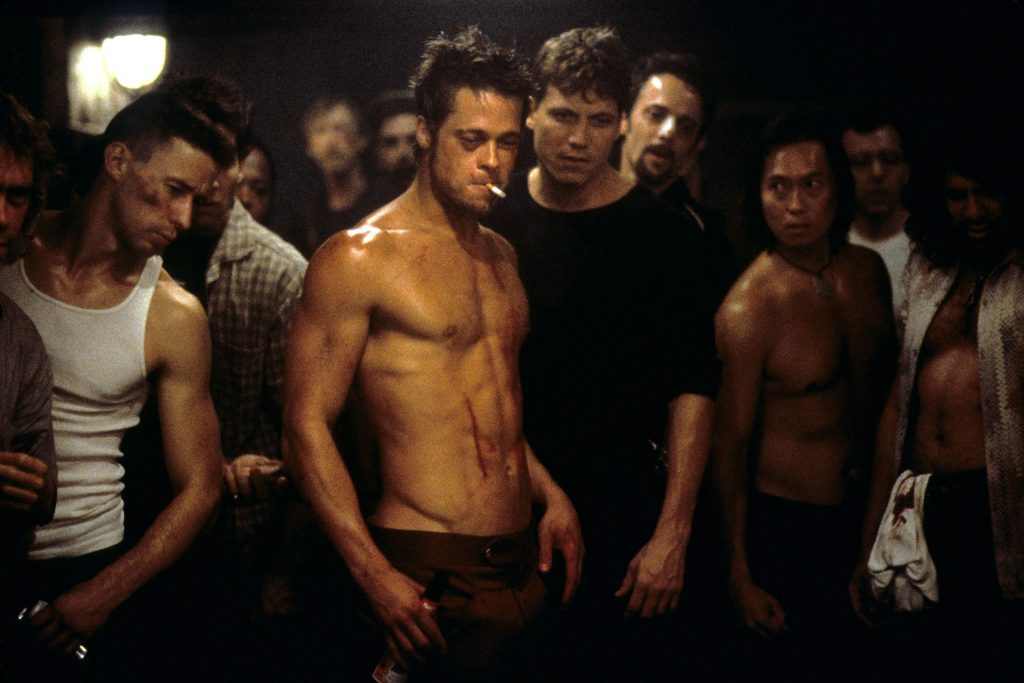
Fight Club is arguably the biggest cult classic of the 1990s and rightfully so. Fincher’s drawn to scenarios that heighten that dynamic more than the average drama: Cat-and-mouse detective stories, obsession and strained marriages. In Fight Club, an average white American man is so alienated from his identity that he becomes his own nameless hero manifesting an imaginary friend from all the boring things he’s been conditioned to want and become. With Brad Pitt, David Fincher found the perfect specimen to make that man as real to audiences as he is to the story’s narrator — a superstar who could seduce us and make us resent him for it at the same time. This is a movie you can still watch today and find it extremely entertaining and relevant.
3. The Social Network (2010)

While many argue the accuracy of the film’s contents, I believe that the screenplay, direction and outstanding performances by Jesse Eisenberg as Mark Zuckerberg and Andrew Garfield as Eduardo Saverin prove that this film is about so much more. The Social Network shows how primal human concepts such as greed, success, fame and jealously can destroy relationships and ultimately human connections. While the film isn’t as dark as some of Fincher’s others films, there is a sort of unease about the story as it unfolds partly due to Trent Reznor and Atticus Ross’, whose sparse, melancholy score perfectly encapsulating Zuckerberg’s self-imposed loneliness. This is a film I will be able to rewatch time and time again, as well as listen to the score by itself.
2. Zodiac (2007)

Along with Se7en (to be mentioned next….), Zodiac is another disturbing film directed by Fincher and given the background it makes sense. Personally, I love films centered around a real event, person or situation so for me this was a great film about the decades-long search for the identity of the notorious Zodiac killer that terrorized Northern California in the 60s and 70s. As a viewer that did a lot of research after watching the film, I could tell that Fincher meticulously researched this story and his great attention to detail and authenticity really shows in every shot of the film. The use of the detached camera keeps us just outside of arm’s reach to the characters and we are just there to watch as they slip further and further into depression and obsession.
1. Se7en (1995)

Finally, number one on this list was Fincher’s second film to direct, Se7en. For me, Se7en is the pinnacle of Fincher’s cynical and depraved exploration into man’s lesser primitive nature. Both dark and disturbing, the film bears and oppressive air that clings as much to the audience as it does the central characters. A neo-noir that launched a handful of careers, galvanized others, and instantly asserted itself as one of its decade’s major cinematic flash points, Fincher’s second feature will always have value when things seem hopeless. Holding true to the themes and elements that make him unique, Fincher ambushed Hollywood and its audiences with an unforgettable film about living in a world so dark that sometimes we can’t see it clearly. If you haven’t since this film, I highly recommend stopping what you’re doing and watching this 90s classic.
 The Fade Out: A Movie Blog