A Look Inside: HBO’s Sharp Objects
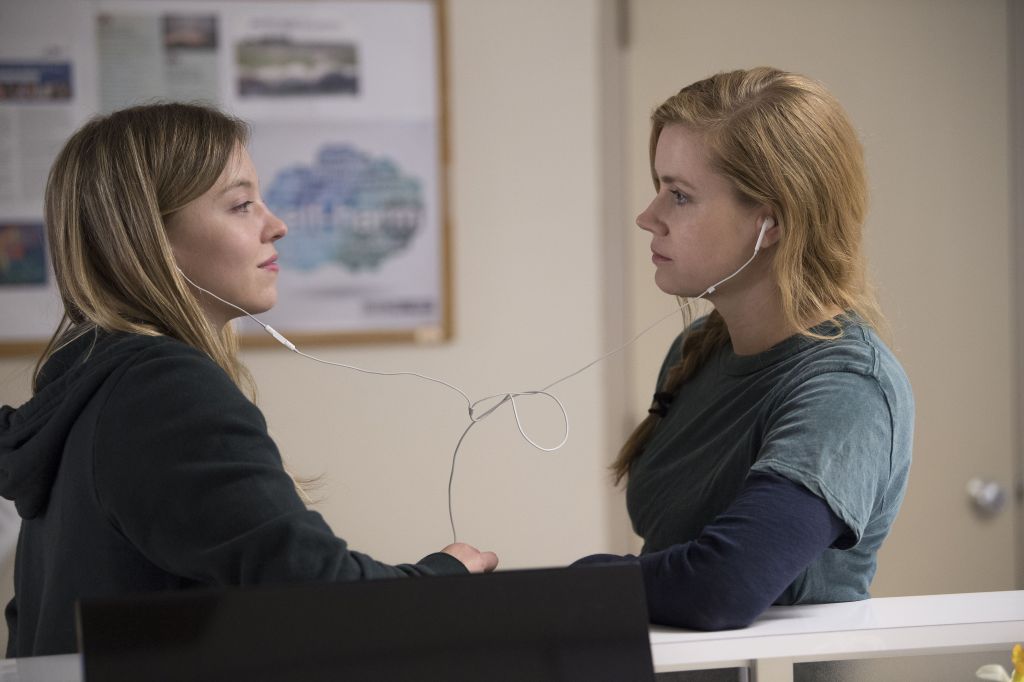
With the incredibly wonderful and talented Amy Adam’s turning 46 years-old tomorrow (August 20th) I thought it would be fun to take a deep dive into the HBO miniseries Sharp Objects (2018). Sharp Objects is a psychological thriller series based on Gillian Flynn’s 2006 debut novel of the same name that premiered on July 8, 2018 on HBO. The story follows Camille Preaker (Adams), an emotionally troubled reporter who returns to her hometown of Wind Gap, Missouri to cover the murders of two young girls. Upon arriving home, she finds herself once again under the critical eye of her mother, Adora (Patricia Clarkson), a small-town socialite, which forces Camille to confront her personal demons. While the series received many positive reviews for its visuals, dark atmosphere, direction, and acting (which are all AMAZING) I think the real beauty lies in the series’ ability to show how music can be used as an escape and the importance it plays for a number of the characters we follow throughout the story.
The first image we see as the series opens is a needle slowly descending onto a warped record. The warbling sound of Franz Waxman’s theme from A Place in the Sun (George Stevens, 1951) plays as images of rural Missouri move across the screen. This is the opening scene of each episode of Sharp Objects, however to most, the song playing is a different one every time when in reality, it is the same melody just treated different from a hip-hop version to a piano version. This musical motif plays a pivotal role in Sharp Objects both thematically and aesthetically, and it also has a personal history that goes back decades with Jean-Marc Vallée, the series’ director. Growing up he’d watch a TV documentary about cinema which contained Waxman’s theme and he thought to himself that there was something so romantic about it. This idea of musical romanticism, became the basis for the character Alan Crellin (Henry Czerny), who sits lonely at his stereo playing starry-eyed classics. There is such contrast between his dreamy musical escape and the dark, brutal story being told.

Vallée is known for his ability to integrate music so powerfully into his work (notably Big Little Lies and Demolition) and this was noticed by Led Zeppelin who allowed the series unprecedented use of their discography. If anyone knows about Led Zeppelin then they know that they are a band famously picky about relinquishing rights to film and TV projects. Sharp objects uses music to place the audience in each scene, if you’re paying attention you’ll notice that all music featured in the series is diegetic, coming from a source (a stereo, headphones, etc.) within the scene. This gives us as the viewer an immersive experience while watching. It also shows how each of the characters use music as a way to escape the present moment from Alan being rejected (constantly) by his wife and Camille playing it in the car to calm herself.
The most important aspect is that majority of the characters in Vallée’s work are in-part defined by the music they listen to. As you watch the series unfold you will notice the difference between what Camille’s editor, Curry (Miguel Sandoval), listens to and what is played in the local bar or in Alan’s room. However, in Camille’s case the music she listens to was harder to define. As the story progresses you will begin to notice the fact that Camille wants to be different and she is not like the people from the town she grew up. To really sum it up, she’s rejecting the establishment. For Camille music wasn’t something she naturally cared about (like Alan) but instead music came to her. In the third episode, we learn a lot and particularly why Led Zeppelin is always Camille’s go-to band to choose on her cracked iPod when she gets into the car. While at the treatment facility, where she has placed herself after years of self-harming, she really connects with her roommate, Alice (Sydney Sweeney), who introduces her to the band. Upon meeting, Camille even mentions her lack of interest in music but Alice is able to show her how to “get out of here” and this really amplifies the idea of music as an escape. Tragically, Alice dies by suicide while in the treatment facility—a moment that changes Camille’s life inevitably, and causes Led Zeppelin to become a real form of self-medication for her to use to cope with her pain around all the tragedies in her life. For Camille, she learns to use music as a way to get out of that moment/those feelings whenever she wants. It becomes a form of escape and Vallée decided that this escape had to be Led Zeppelin. To him, they are a band that presents anti-establishment energy and individuality which I think is very accurate and plays so well into the series.
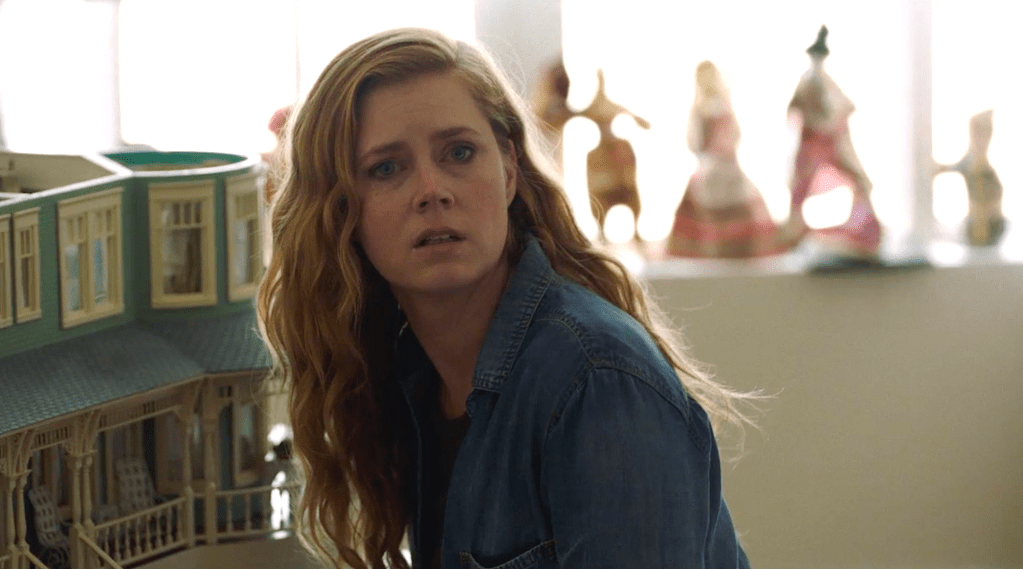
I think Vallée and the music supervisor Susan Jacobs are trying to convey the important of what music really does and how it plays a pivotal role in Camille’s life and even Alan’s life but more importantly how it represents this escapism idea of music. As I previously mentioned music isn’t just background music here it is an integral part of the story and characterization. I believe for Led Zeppelin that is their whole motivation for making music, to communicate and say that music is a hell of a lot deeper and meaningful than just sales or chart rankings. Sharp Objects is impressive on so many levels but I think the use of music plays a huge part in the success of the series. While the content is something only some people experience, I see music as an escape as something that is universal and everyone can relate to. In film and TV series, everything is placed there for a particular reason and music is no different sometimes it’s there for the beauty of the melody or for their lyrics or for the specific atmosphere you just have to look a little deep to see it.
“It’s safer to be feared than loved.”
Amy Adams, as Camille Preaker
 The Fade Out: A Movie Blog
One thought on “Music as an Escape”