A Look Inside: Eternal Sunshine of the Spotless Mind

With Charlie Kaufman and Michel Gondry’s 2004 science fiction romantic drama film, Eternal Sunshine of the Spotless Mind now streaming on Netflix in the US I thought it would be the perfect time to take a deep dive into what makes it a great film. Eternal Sunshine follows an estranged couple that have erased each other from their memories and the complications and ramifications that follow. We’ve all had those moments of wanting to forget the past and just move on but without those moments do you think you’d still be who you are today? With the stellar cast of Jim Carrey, Kate Winslet, Kirsten Dunst, Mark Ruffalo, Elijah Wood and Tom Wilkinson we are shown a nonlinear narrative that really explores the nature of human beings, memory and how it all relates to romantic love and relationships.
To start this off I will say that every couple of years I stumble upon a film that transcends its traditional “entertainment” purposes and goes for something more divine, ambitious and philosophical. When a film like this comes along, it reassures me that film is indeed the greatest art form of our time because there is the possibility of so much depth to be portrayed in a matter of minutes. For me, Eternal Sunshine is one of these films, it is a life changer and can only really have this impression on me when it is viewed alone (Just a tip if you haven’t watched it alone before, try it out). It is a film that demands the presence of thoughts we usually put aside when surrounded by other people, things we only think about when we’re alone. It reaches for something personal like troubling memories buried deep in your mind and it can be viewed as somewhat therapeutic when watching it. If you haven’t seen this incredible film yet, I strongly suggest you stop reading at this point, as I am about to explore some of the film’s more thought-provoking themes as it relates to memory.
WARNING: Contains Spoilers!
Eternal Sunshine of the Spotless Mind revolves around Joel (Jim Carrey), a man stuck in the repetitiveness of everyday life until he meets the spontaneously carefree Clementine (Kate Winslet). Their relationship escalates into a supposedly dead-end when he learns that she had him erased from her memory through a company called Lacuna. Furious and confused, he contacts the inventor of this advanced procedure, Dr. Howard Mierzwaik (Tom Wilkinson). Out of sheer desperation he resorts to the only logical solution at the time, removing her from his memory as well. But as he begins to re-experiences the passionate days of their earlier relationship, he falls in love with her all over again and realizes the mistake he is making.

The way I see it, Eternal Sunshine as a narrative is broken up into three sections: the consequences of forgetting, the seduction of imagination and finally reflections. Each of these sections relate back to the idea that our individual units of meaning like memories are extremely important as they give us context and motivation for our internal narratives that sometimes need to be preserved regardless of the pain they might cause. It is important to understand that remembering is a process that is subject to a variety of different factors (examples: social or emotional) and it is those factors that determine what and how we remember. For example, we tend to remember what we don’t like about someone after an argument more than we engage with memories that portray them positively.
With that in mind, let’s dive into the consequences of forgetting as it relates to the overall idea of memories. Ultimately, I think this is the concept that most people can define when they watch Eternal Sunshine mainly because it is the most obvious of all 3 concepts/sections. The question to ask here is: is ignorance really bliss? And as the film progresses the answer is no, having a spotless mind does not bring eternal sunshine or “bliss.” You may forget a past memory but you can’t forget the impulses, instincts and emotions that arose from that past incident. Memories are in some sense untouchable because they shape who we are as individuals. Taking a step back to the scene where Dr. Mierzwaik tells Joel that this procedure is technically brain damage. The procedure is not simply removing the pain of the relationship but its removing context by taking away scenes in your own story. However, while the issue might be the inability of remembering for Joel as he ditches work and takes the train to Montauk, he is powerless to the feeling he gets to make this choice. Another example would be the simultaneous subplot involving Mary (Kirsten Dunst) discovering that she had her love affair with Dr. Mierzwaik erased. Basically, the big flaw in Lacuna’s procedure of erasing memories is that it can successfully erases memories but can’t erase feelings.
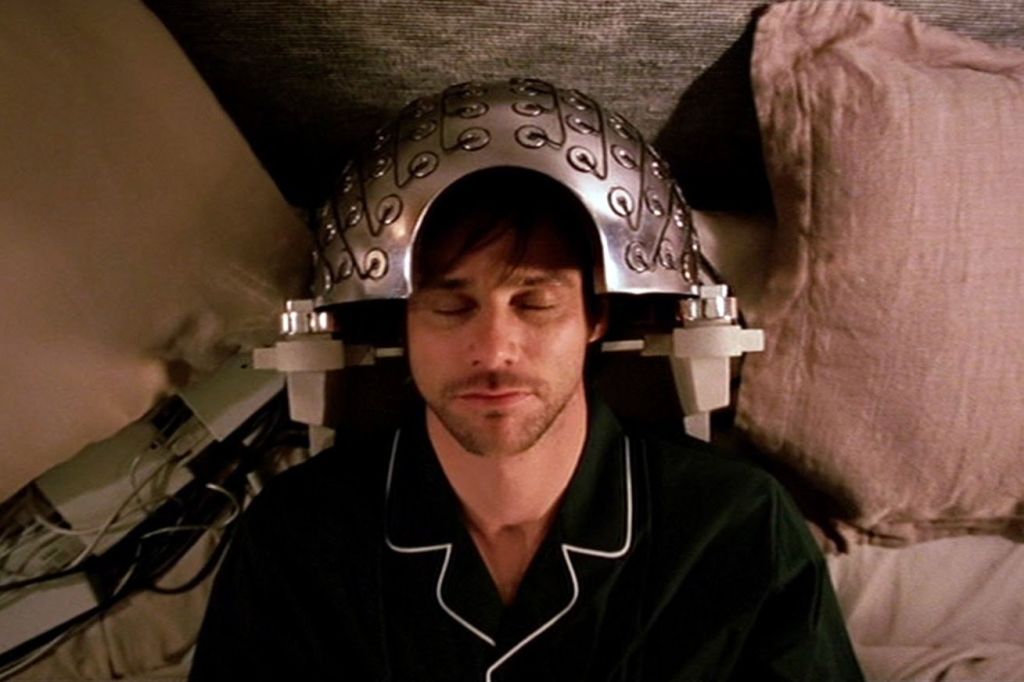
The seduction of imagination is a critical part of the overall narrative as we begin to explore Joel’s desire to preserve the memories of Clementine within other memories. While the consequences of forgetting are a bit pessimistic, the film does hold an optimistic perspective on the creative dimension that comes with remembering and the use of imagination. Emily Keightley once said “memory is a vital resource for remembering and imagining is a vital process in making coherent sense of the past and connecting it to the present and the future.” By trying to hide Clementine with those other memories Joel begins to appreciate how memory, remembering and imagination are all linked and uses his memories as materials for his imagination. Joel begins creating a story within his past that is deliberately constructive and meaningful so it is able to reinforce a narrative pattern in his life where Clementine isn’t just a flawed human being but is a savior looking after him in life. Which ironically is the symbol of the thing he has to let go of to fully process and even Clementine warns him that this isn’t the abstract concept she wants to be for him. Once he is able to let go of this idea he is able to meet her again without this friction between his idea of her and her. The scene that defines this moment is when Joel and Clementine finally bid farewell inside his head. She leans in and whispers those famous lines, “Meet me in Montauk.” Clementine is merely a projection in Joel’s mind guiding his escape. Here, she represents his will to hold on and he does so through the fact he knows her so well he is able to predict where to find her based on memory.
Our final section is probably the most important, which is the idea of reflections and the importance they have in relation to the overall nature of memories. The resolution doesn’t come from them forgetting the scars but instead they’re ready to accept each other’s flaws and incorporate their bad past into the present. After a break up, the very memories you once cherished, the ones that drew a smile on your face whenever you remembered them seem none existent. Going back to my earlier point, it’s probably due to the recently bad incident or argument blocking all the wonderful things from your thoughts. I believe this is an act of sort of self-preservation to let the bad memories stick and allow great ones to slip through our fingers because it makes moving on much easier. After Joel and Clementine learn they’ve had their memories of each other erased because things just didn’t work out, they are able to reflect on this and choose to travel that same road again anyway. I think it’s a perfect ending to a perfect film. As we’re so often told throughout life, it’s about the journey not the destination. They know what is waiting at the end of that road and they choose to walk down it anyway. The journey they’ve been on before together has been erased and therefore, they choose to re-experience it. Maybe they will arrive at the same conclusion as before because that’s the only way they’ll understand the nature of their previous destination. Or just maybe, they share a tiny ounce of mutual hope for a different outcome. After all, they know the pitfalls and hidden traps on that journey and avoiding them is all that needs to be done to arrive at a different more hopeful destination. This is exactly how second chances are meant to be taken.

While at times we wish to erase or forget the past it is important to remember that to have no memories at all is to suffer a sort of trauma and to be preoccupied with the imagination of the past is to be unfair to those around us in the present. Most importantly, the choice to forget the past or the mistakes we’ve made is to trap oneself. At the end of it all, this film is a philosophical teaching on how to live your life, always admit your mistakes and never, ever, forget about them. It is absolutely necessary to realize that we all have our flaws and imperfections as individuals but we are destined to love each other despite them and sometimes the only thing we need to do is say it’s okay.
“People have to share things. That’s what intimacy is.”
Kate Winslet, as Clementine Kruczynski
 The Fade Out: A Movie Blog