WARNING: May Contain Spoilers!
Johan Renck and Craig Mazin’s 2019 historical drama tragedy miniseries Chernobyl followed the events of the Chernobyl nuclear disaster of April 1986 and the clean-up efforts that follow, both physically and politically. The series is celebrated for its thought-provoking depiction of the dangers of nuclear technology and its detailed account of the causes and consequences that unfolded as a result of manipulation by the Soviet Union. While many view Chernobyl as an outline for government corruption by analyzing several sections of the series, it actually reveals a compelling examination of some human’s ability to adequately balance denial and truth and the consequences of that struggle.
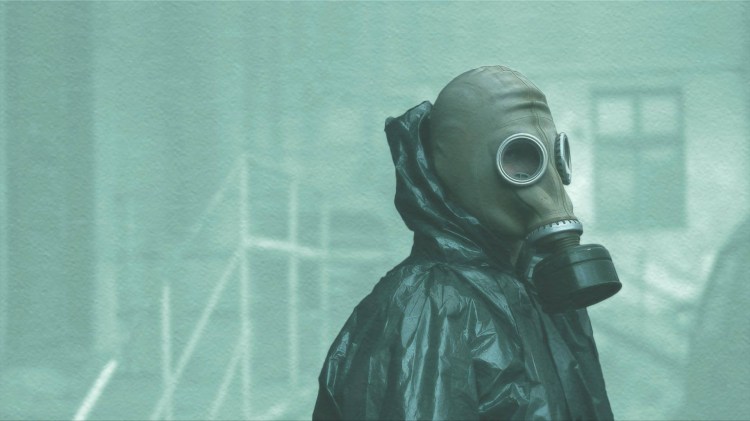
The first opening sequence taking place two years later to the day sets viewers up to make sense of Chernobyl’s visual style and its exploration of how the truth will always find a way to emerge from manipulation and the distortion of information. The addition of deliberately dull colors such as dark browns, grays and sickly greens creates the artistic sense of an industrial wasteland and the toxicity of radiation and of bureaucracy. The choice to make this scene, where Valery Legasov (Jared Harris) details the truth about who is to blame for the events, the first suggests that even with knowledge, power and authority, denial cannot last forever, and only the truth will set you free. Fade out to the night of the explosion where the need to eliminate panic translates into the denial of something major actually happening not only by those involved but by almost all those in the nearby town of Pripyat. Each of the series themes such as power, knowledge, authority and guilt are heavily depicted throughout and by a number of the characters with a strong juxtaposition between those who know and those who don’t (i.e. the firefighters and first responders). As the story goes on it functions as a sci-fi series but really in a very different sense of the term. It is a ‘semi-fictional’ recreation that aims to portray the understanding of the science behind this real-life event. By drawing on other popular genres like disaster and legal dramas, Renck and Mazin were able to amplify a common premise of the sci-fi genre, which is the inability of society, in this case the Soviet Union, to deal with its own technological advancements. Like the best science-fiction, Chernobyl builds a steadily creeping unease (also important to note the sounds used from a real active nuclear plant added to this as well) rather than diving into a number of shocking twists and turns. And with that some character’s choice throughout can make a stomach turn and end up in knots as they deny the reality of the situations they are in, which is typical as seen in a number of these genres.

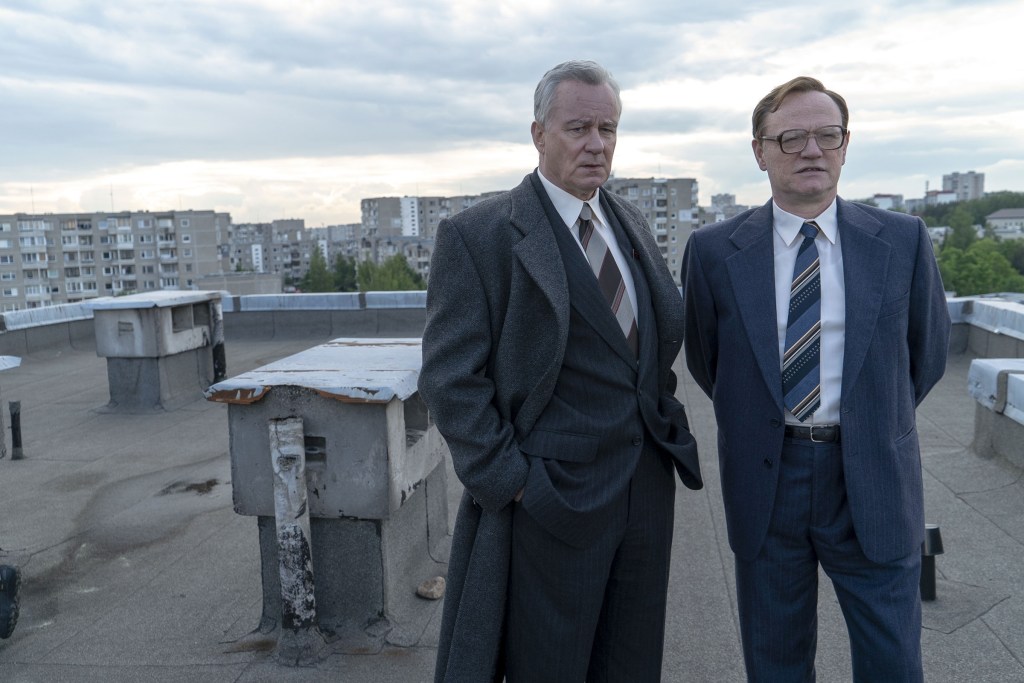
This denial of reality is also translated into not accepting the blame or responsibility for what happened or even denying access to documents that reveal the truth about the equipment used at the nuclear plant as Ulana Khomyuk (Emily Watson) experiences. As the series progresses it isn’t just the toxicity of the radiation that is causing deaths, but the government and it’s need to lie, deny the truth and deceive even those working for them. Boris Shcherbina (Stellan Skarsgard) experiences the government’s toxicity firsthand in “The Happiness of all Mankind” (episode four) when he learns that the government used the propaganda numbers, which reported much lower levels of radiation, to inform Germany who let them use the rover called STR-1 to clean up debris from the roof of the plant which then failed because it couldn’t withstand the real radiation levels. While Shcherbina was shocked that they would do this, his shift from complete denial to seeing truth happened earlier on in the series. The scene in which Legasov (Harris) details the truth about life and death and the reality of the fact that they won’t live beyond five years reveals a turning point for him. Even with the power and authority he had, Shcherbina couldn’t deny that fact any longer and there is a noticeable shift in his character. This also demonstrates that by setting the realistic tone throughout there is a nerving awareness through all five episodes that most, if not all, characters know that it is too late to change anything and ultimately accept their fate but that doesn’t mean they know the emotional turmoil they are about to endure.
However, it isn’t until the opening sequence of “Vichnaya Pamyat” (episode five) when the turning point of the series reveals the real transition from denial to truth. This is showcased the morning before the explosion where those living in Pripyat enjoy the day, unknowingly, as intense pressure builds within those working at the nuclear plant. Interesting enough as the sequence continues a transition to the local indoor pool symbolizes the series’ turning point. It is well-known in film theory that water, in this case the pool, represents an interconnecting threshold between two places. Here it is the connection between life and death as well as denial and truth. While we have seen life, death, denial and truth throughout the previous four episodes, here is it where the truth is told, and the outline of the events is given. As the episode continues the climax is reconstructed out of chronological order and executed with great attention to detail. The courtroom testimony provides the catalog of error that not only occurred that night leading the reactor to explode but some years before that with a government cover-up on known facts of how that reactor works and previous issues encountered. The details that are uncovered are a testament to reason against the malevolent power of corrupted political authority and the sublime force of nuclear technology. By denying the truth the Soviet Union and those involved not only succumbed to the dangers of radiation but the brutal reality of living in denial and the consequences that follow.
Chernobyl shouldn’t be judged on its historical accuracy but on how it demonstrates some human’s failed attempt to balance denial and telling the truth and ultimately the repercussions of withholding information. The series themes of power, knowledge, authority and guilt can be appreciated if there is an understanding of the unique capacity it holds in its vision of how reality is made up of both hidden physical and political forces. Chernobyl is a definite must watch!
“Where I once would fear the cost of truth, now I only ask what is the cost of lies?”
Jared Harris, as Valery Legasov
 The Fade Out: A Movie Blog